
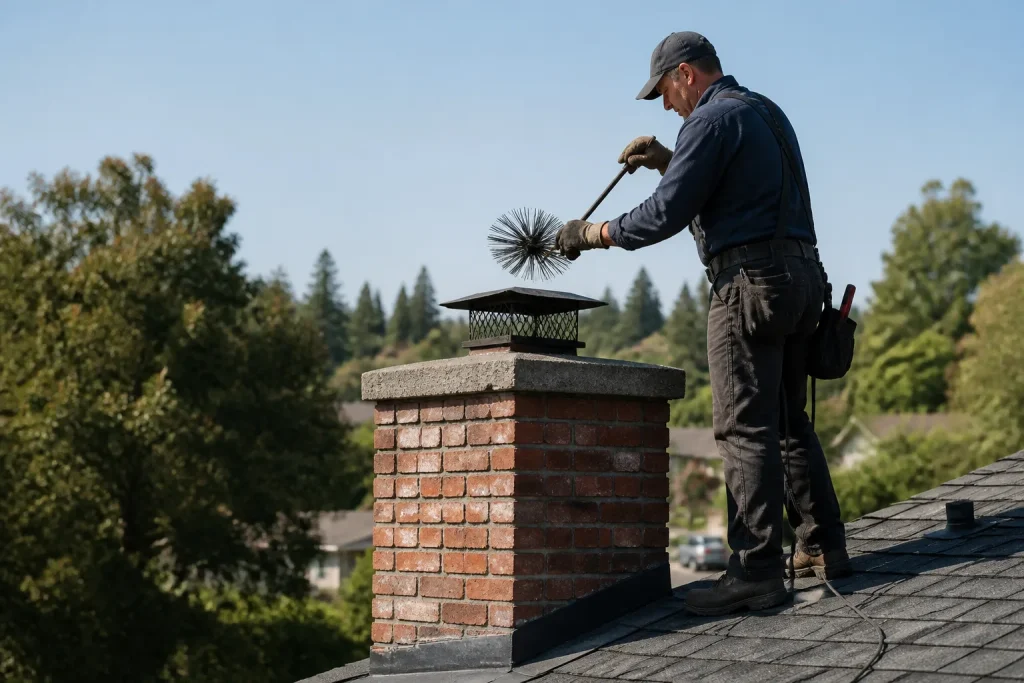
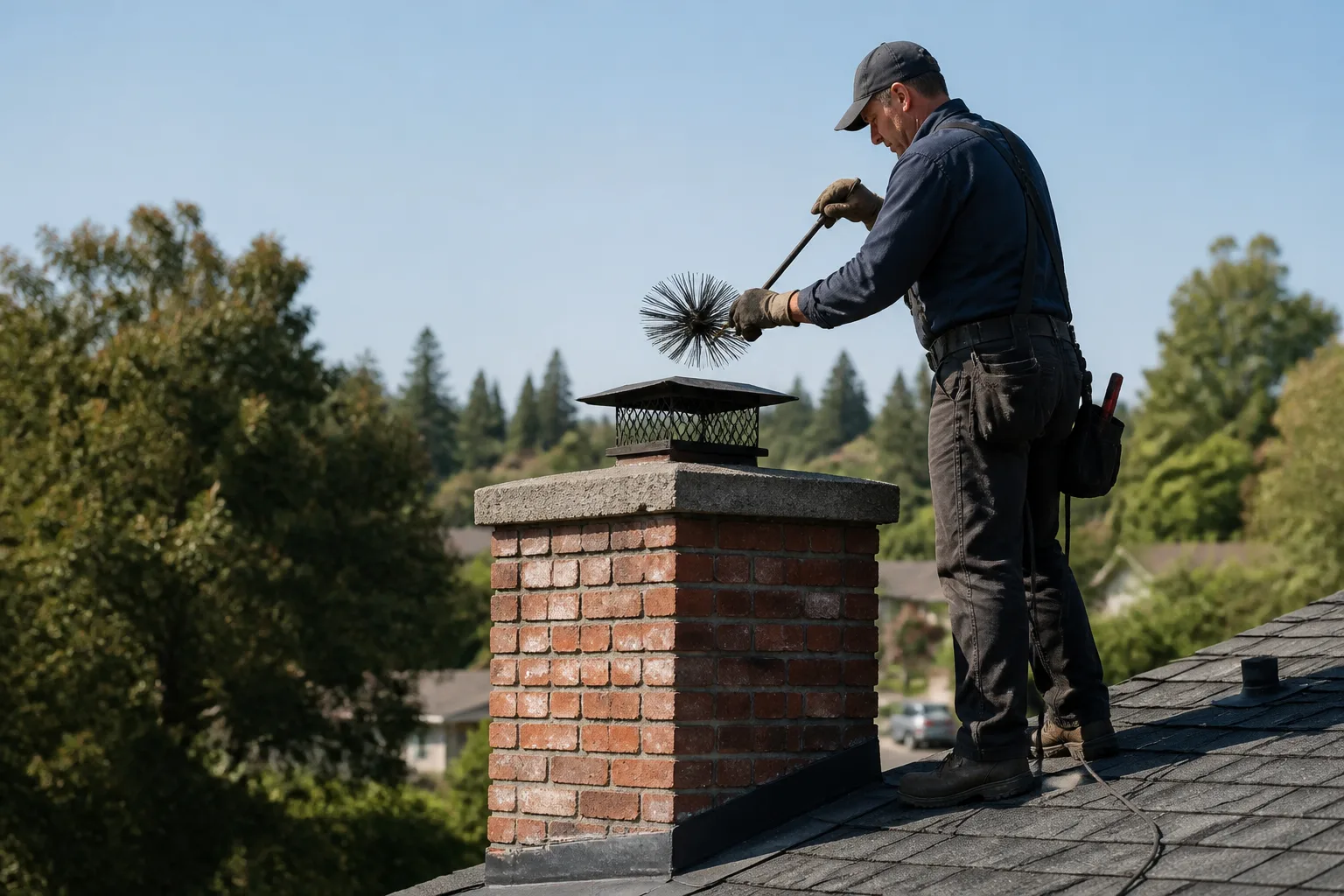
How to Choose the Right Chimney Cleaning Company in Del Paso Park
Choosing a chimney cleaning company in Del Paso Park comes down to three things: what equipment they actually carry, what they do when the inspection finds damage, and whether they can hand you photographic proof of your flue’s condition before you pay. A sweep that costs $89 usually means the technician is there to sell you a liner, not document your chimney. A sweep that costs $200 to $300 and includes a camera report means someone is actually looking at the fire risk.
If you’d rather skip the research and talk to a specialist directly, call (855) 341-8804 for a free estimate.
The Credential Question Most Homeowners Get Wrong
CSIA certification is the credential the industry points to, but it’s not a guarantee of what equipment the technician will show up with. A certified sweep without a camera inspection system can still miss the liner crack that causes a house fire two winters later. In Del Paso Park, where many homes date to the 1950s and 1960s, those older clay tile liners have had decades to crack, spall, and separate at the mortar joints. The certification tells you the technician passed a test. The equipment tells you whether they can actually see what they’re supposed to be inspecting.
Here’s what to ask before booking:
- Do you carry a chimney camera system? If the answer is no, or if there’s hesitation, move on. A visual inspection from the top and bottom cannot see mid-flue damage, and mid-flue is exactly where clay tile liners fail first.
- What vacuum filtration do you run? A proper chimney sweep setup uses a triple-stage HEPA filter. Anything less puts fine particulate back into the air of the room where your family watches television. Ask the question and see if they can answer it without pausing.
- Will I get a written inspection report with photos? Not a verbal summary. Not a scribbled note. A report with images of the flue interior, the crown, the cap, and the firebox. In our experience, companies that don’t photograph their work often don’t want a record of what they missed.
- Do you carry repair materials in the truck? This one separates sweep-only companies from repair-capable ones. A technician who stocks DuraFlex liner components or HeatShield resurfacing material can address a finding immediately. A technician who has to “refer you to a partner” is about to send you into a sales funnel, not a repair process.
Why “We Clean, We Don’t Repair” Is a Red Flag
Here’s a scenario we’ve seen play out in Del Paso Park more than once. A homeowner hires a cleaning-only company. The sweep finds a cracked flue liner and writes it up. The homeowner then has to find a repair contractor, get a second inspection, compare quotes, and coordinate scheduling. Weeks pass. The fireplace stays cold or, worse, gets used anyway. The accountability for the original finding gets lost somewhere between company one and company two.
Ask the company directly: “What happens if your inspection finds a liner defect or a damaged crown?” A credible answer sounds specific: “We’ll show you the camera footage, explain whether it’s urgent or can wait, and quote the repair from the same crew.” A non-answer sounds like: “We work with some great partners who can help with that.” Translation: they don’t do the work, they don’t warranty the work, and they have no stake in whether the repair actually gets done.
The structural gap is simple. A company that only cleans has no reason to be thorough about finding damage because damage isn’t their revenue. A company that cleans and repairs has every reason to find what’s actually there, because they’re the ones who’ll be held responsible if the repair they recommended fails. That’s not a conflict of interest. That’s accountability. We stock and install HeatShield resurfacing product and DuraFlex liner systems precisely because we don’t want a finding we made to end up on someone else’s truck.
Equipment Questions You Should Ask Before Anyone Parks a Truck
Most homeowners ask about price first. That’s understandable. But the price question without the equipment question is how you end up hiring a guy with a shop vacuum and a chimney brush from a hardware store who charges $79 and leaves creosote smeared above the damper where you can’t see it. Here’s the equipment checklist that matters more than the quote:
The four non-negotiable equipment questions
- Do you run a camera system on every inspection, or only when I pay extra? Camera inspection should be standard, not an upsell. If a company charges extra to look at what they’re claiming to clean, what exactly are they cleaning toward?
- What’s your vacuum setup? Look for a high-CFM industrial vacuum with true HEPA filtration. A chimney sweeping without proper containment leaves a fine dust film on everything in the room, and that dust includes creosote particulate.
- Do you carry professional-grade materials or hardware-store parts? We work with DuraFlex, HeatShield, Gelco, Olympia Chimney, and Copperfield products because those are the lines certified chimney professionals across the country install. A company using generic caps or unlisted liners is cutting corners you can’t see from the ground.
- Can you show me what you found before you recommend anything? A camera report with photos ends the “the chimney guy said I need three thousand dollars of work” anxiety. You should see the crack, the spalling, the water damage. If someone wants you to take their word for it, don’t.
Del Paso Park homes built in the post-war boom often have specific chimney configurations: masonry chimneys with unlined or clay-tile liners, shallow fireboxes, and caps that haven’t been touched in thirty years. A technician familiar with that housing stock knows where to look first. A generalist who spends most of his week on gutters and dryer vents does not.
How to Spot a Bait-and-Switch Before You Book
There’s a pattern in chimney sweep advertising, and once you see it, you can’t unsee it. It goes like this: “Chimney cleaning $69.95. Call today.” Then the technician arrives, spends twenty minutes on the roof, comes down shaking his head, and tells you the flue is in dangerous condition and you need a full reline or the house will catch fire. The $69.95 was never a cleaning. It was a lead-generation fee.
Here’s how to identify the bait-and-switch model versus a flat-rate transparent one:
- The quote is dramatically lower than the market. A legitimate sweep in the Sacramento area runs roughly $180 to $300 depending on the chimney’s condition and accessibility. A $69.95 sweep cannot cover the cost of sending a trained technician with a camera system and HEPA vacuum. Someone is subsidizing that visit, and that someone is you, on the back end.
- They can’t tell you what’s included. Ask: “What exactly happens during your sweep?” A transparent company will describe the process: run rods through the flue, vacuum with HEPA filtration, inspect with camera, photograph the crown and cap, provide a written report. A bait-and-switch company will talk about “thorough cleaning” and “safety inspection” without specifics.
- Every problem requires the most expensive fix. If the quote always lands on a full liner replacement regardless of what the camera shows, that’s a sales script, not a diagnosis. A repair-capable company will tell you when a chimney can safely wait, when a partial repair will work, and when a full reline is genuinely the only option.
The flat-rate model looks different: you see the price before booking, the scope is defined, and any repair recommendation comes with camera footage you can watch yourself. That’s the standard to hold any Del Paso Park chimney company to.
How to Verify a CSIA Credential on the Spot
Anyone can put “certified” on a website. The CSIA (Chimney Safety Institute of America) maintains a publicly searchable directory of currently certified sweeps. Here’s what to do:
- Ask the company for the technician’s CSIA ID number. If they hesitate, that’s your answer.
- Look up the number on the CSIA website. Certification lapses, and some companies keep advertising credentials after they expire.
- Ask about specific experience with your chimney type. “Have you worked on many 1960s masonry fireplaces in Del Paso Park?” A real technician will answer with specifics: the common liner failures, the crown spalling patterns, the missing or rusted cap issues they see repeatedly in the neighborhood.
One more question worth asking: “What’s your process if the inspection turns up a liner defect?” This is the single question that reveals whether a company is a fire-safety specialist or a generalist wearing a chimney hat. A credible answer sounds like this: “We’ll show you the camera footage, explain the severity, tell you honestly whether it can wait a season or needs attention now, and if it needs attention, we’ll quote the repair from the same crew using the same equipment that found it.” A non-credible answer is: “We’ll write it up and you can take that report to whoever you want.” That’s not a process. That’s an exit.
When to Call a Pro
If you’ve lived in your Del Paso Park home for two or more years and haven’t had the chimney inspected, that’s the threshold. Creosote buildup doesn’t announce itself. Neither does a liner crack. You find out about both in one of two ways: a camera inspection during a cleaning, or a chimney fire. One costs a few hundred dollars. The other can cost the house.
Here’s what we pulled out of a chimney over near Del Paso Park’s older ranch homes a while back: a bird’s nest about the size of a basketball, wedged just above the damper, packed with twigs, dry grass, and the remains of what looked like a windbreaker. The homeowner had used the fireplace twice that season with that nest sitting there. If a spark had reached it, the story ends differently. That’s what a camera inspection is for.
Related services in Del Paso Park: if you’re having the chimney swept, it’s worth having the dryer vent cleaned at the same time. Both systems fail the same way: blocked airflow and heat buildup. And if the inspection does turn something up, know that chimney repair from the same crew is a phone call away. For a full rundown of our service area, see our Chimney Sweep Del Paso Park home page or the dedicated Chimney Sweep in Del Paso Park service page.
The Bottom Line
Choosing a chimney cleaning company in Del Paso Park is less about reading reviews and more about asking the right questions before anyone climbs a ladder. Ask about camera systems. Ask about vacuum filtration. Ask what happens when the inspection finds something. Ask to see the photos they took. A company that can answer all four with specifics is a company that inspects like they mean it. A company that can’t is one you should pass on.
If you’re in Del Paso Park and need a sweep, a dryer vent cleaning, or a repair, Chimney Sweep Del Paso Park offers free estimates. We carry our own camera system, run HEPA filtration, and stock DuraFlex and HeatShield materials so the repair conversation can happen the same day as the finding. Call (855) 341-8804 to schedule.
Frequently Asked Questions
A standard chimney sweep in Del Paso Park typically costs between $180 and $300. Pricing varies based on the chimney’s height, accessibility, creosote buildup level, and whether the home has a standard masonry fireplace or a prefab unit. Be wary of quotes below $100, as those often function as lead-generation visits rather than actual cleanings. Call (855) 341-8804 for an exact quote; estimates are free.
Yes. Without a camera inspection, the technician cannot see mid-flue damage, which is where clay tile liners in older Del Paso Park homes most often fail. A camera inspection produces photographic evidence of the flue’s condition, so you know exactly what’s inside your chimney before the next fire season. If a company doesn’t include camera work, you’re paying for a cleaning, not an inspection.
A chimney sweep company cleans flues and may flag issues for someone else to fix. A repair-capable company like Chimney Sweep Del Paso Park can clean, inspect, and repair in the same visit, using professional-grade materials like HeatShield resurfacing product and DuraFlex liners. That means the same crew that found a problem fixes it, and you never get handed a report and sent to find another contractor.
The CSIA and NFPA both recommend annual inspection and sweeping as needed. In Del Paso Park, where homes often have older masonry fireplaces, we recommend at least one inspection per year before burning season. If you use the fireplace more than twice a week during winter, or if you burn pine or other resinous woods, more frequent cleanings may be appropriate.
Written by the team at Chimney Sweep Del Paso Park, serving Del Paso Park since 2014.
Need Chimney Cleaning Help?
Call Chimney Sweep Del Paso Park - licensed & insured, with free written estimates in Del Paso Park.
(855) 341-8804