
Last updated November 2, 2026
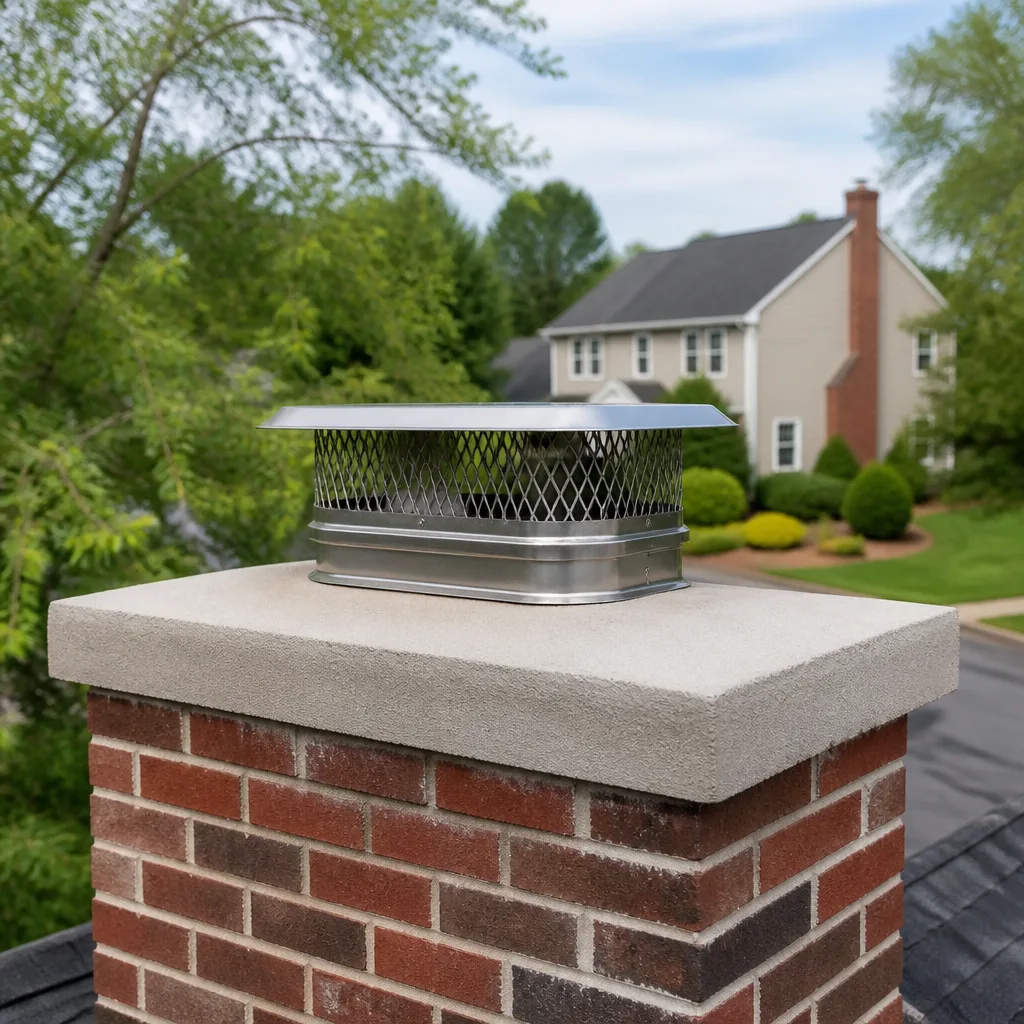 Sweep & inspection
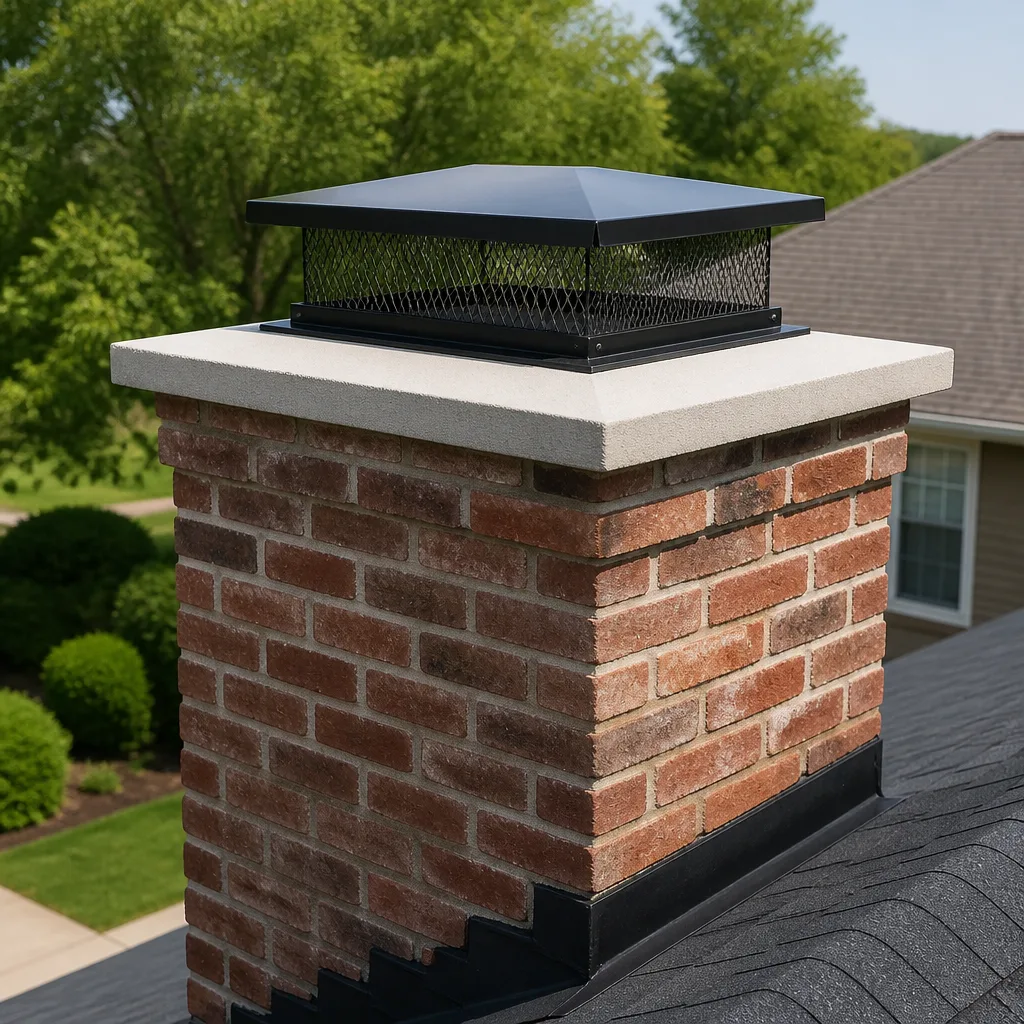 Caps & crowns
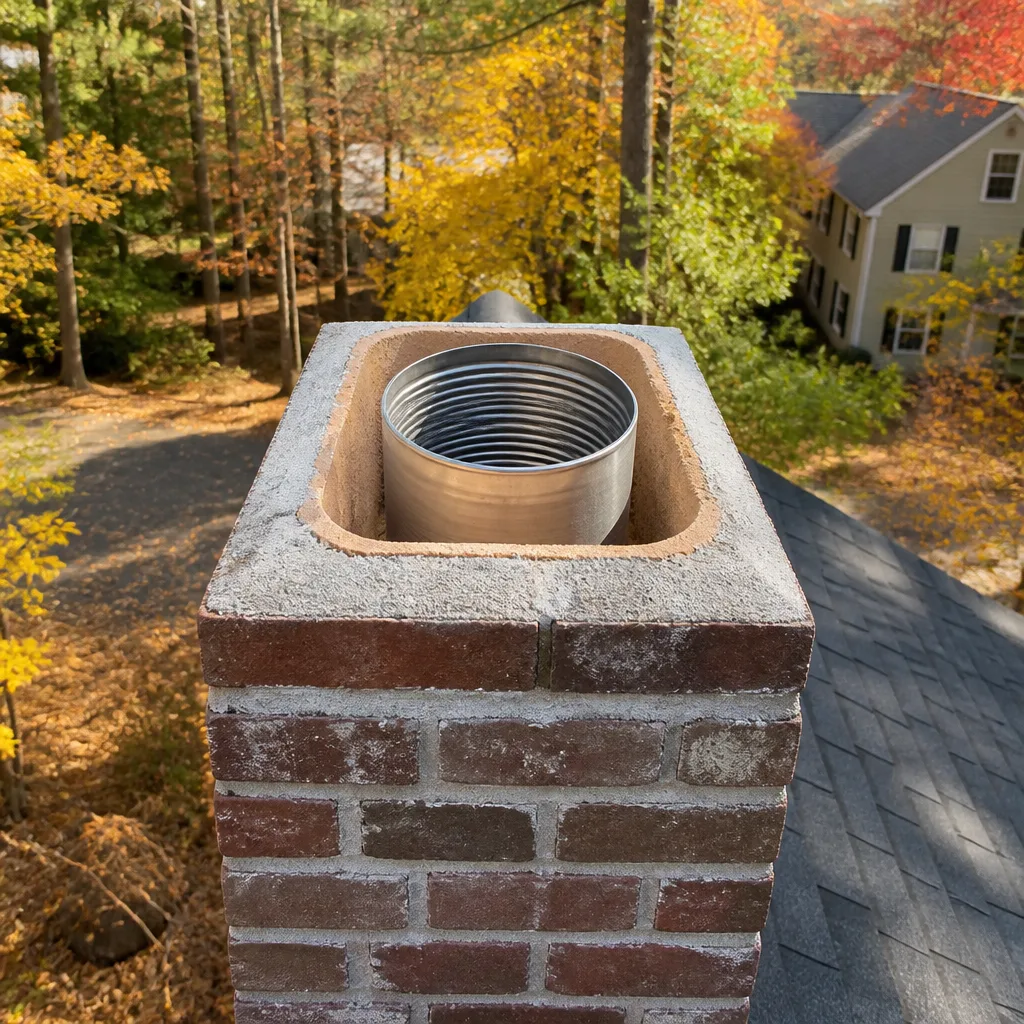 Flue relining
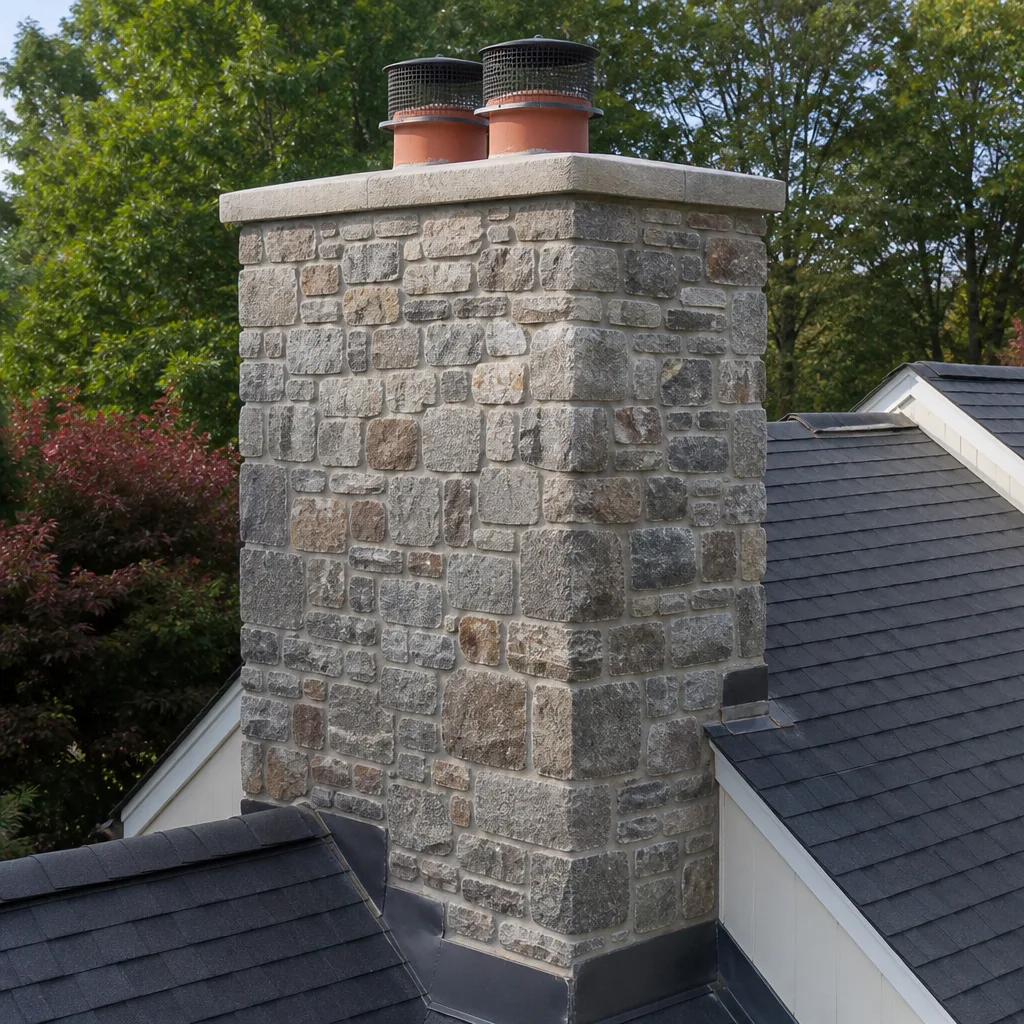 Masonry repair
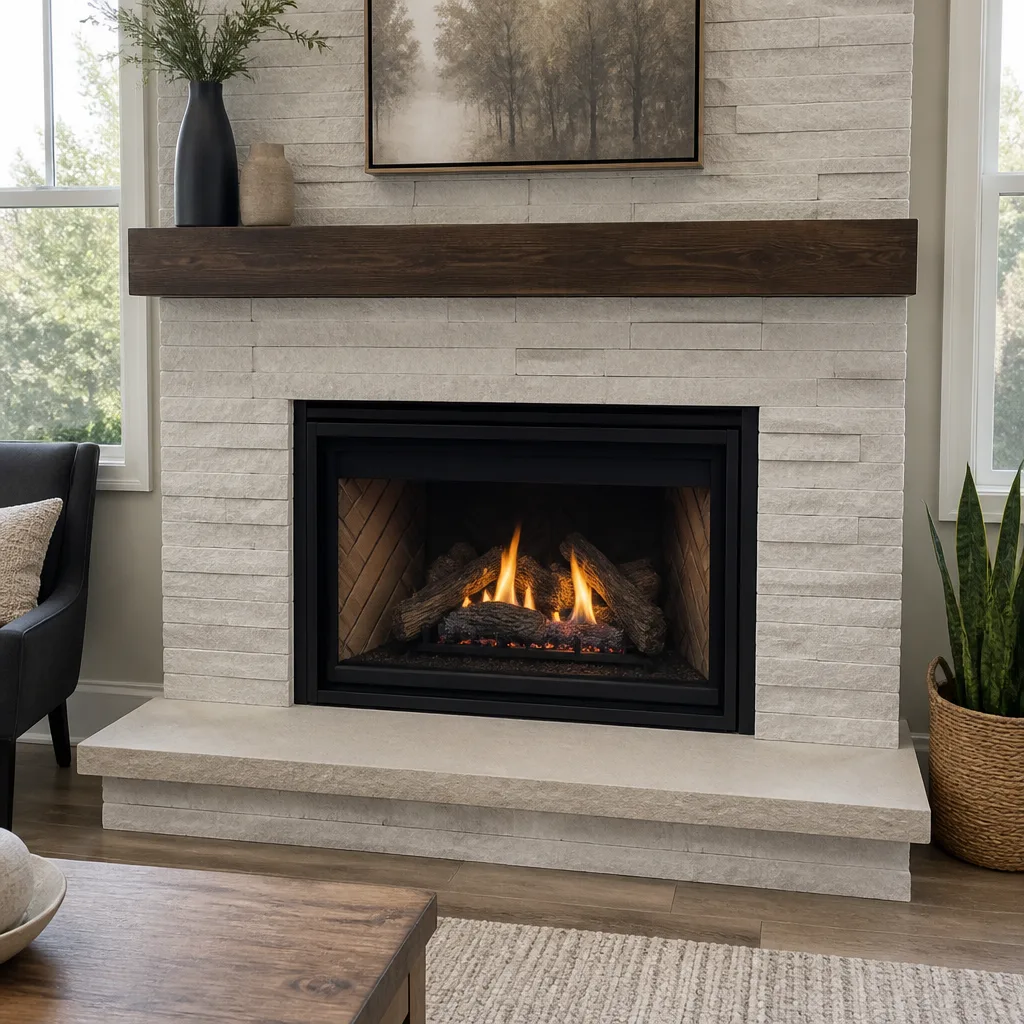 Gas fireplace service
Level 1 sweep and inspection to the NFPA 211 annual standard - flue, crown, cap, and flashing checked and photographed
Chimney sweep logs do not sweep chimneys. They loosen some creosote - which then falls where a brush and vacuum still have to collect it.
How to Hire a Chimney Cleaning Contractor in Del Paso Park: A Step-by-Step Guide
A homeowner who asks only “are you licensed and insured?” before hiring a chimney sweep is skipping the three questions that actually predict whether the job will be done correctly. In Del Paso Park, where fireplaces get steady use through the cooler Sacramento months, the difference between a thorough sweep and a superficial one is measured in fire risk. This guide walks you through a concrete screening process: which credentials mean something, which are marketing noise, what a legitimate quote looks like, and the red flags that predict shoddy work before it happens. By the time you finish, you’ll know exactly how to separate a fire-safety specialist from someone who just runs a brush up and down.
Quick Answer
To hire a chimney cleaning contractor in Del Paso Park, verify both CSIA certification and a current California contractor’s license, request a written estimate that line-items labor and materials separately, require a camera inspection as part of the cleaning, and choose a company with repair capability so flagged issues don’t force a second contractor. Avoid flat-rate quotes that don’t account for flue height, any company that won’t provide written findings before recommending repair work, and sweeps who can’t tell you what brush diameter they’ll use for your flue size.
Styles & brands we work with
- Sweep & inspection
- Caps & crowns
- Flue relining
- Masonry repair
- Gas fireplace service
Table of Contents
- Credentials That Matter vs. Credentials That Don’t
- Interview Questions That Reveal Skill Before You Hire
- What a Legitimate Written Estimate Includes
- Red Flags in Quotes and Behavior
- Why Full-Cycle Capability Prevents the Contractor Handoff
- What a Proper Chimney Cleaning Actually Involves
- Del Paso Park-Specific Considerations
- Common Mistakes to Avoid
Credentials That Matter vs. Credentials That Don’t
Chimney sweeping sounds simple, and that simplicity is exactly why unqualified operators can survive in the market. But the inside of a chimney is a hidden system: flue liner condition, creosote stage, clearance to combustibles, crown integrity, cap function. None of it is visible from outside, and most of it can’t be evaluated correctly without training. In Del Paso Park, where homes range from mid-century ranchers to newer construction, flue configurations vary significantly and assumptions get dangerous fast.
Here’s what actually matters on a credential check:
- CSIA certification – The Chimney Safety Institute of America is the industry’s recognized training body. Certification requires passing a written exam covering fire codes, clearance standards, creosote chemistry, and inspection procedures. It also requires continuing education. A CSIA-certified sweep knows what stage 3 creosote looks like, how to measure it, and what the protocol is when they find it.
- California contractor’s license – In California, chimney work above a certain dollar threshold requires a specialty contractor’s license (C-61/D-31 for fireplaces, or a general building license for larger repairs). This is about legal compliance, insurance validity, and recourse if something goes wrong. It doesn’t prove chimney skill, but it proves the business is operating within state law.
- Insurance and bonding – Liability insurance protects your home if the work causes damage. Bonding protects you if the contractor fails to complete contracted work. Ask to see a certificate of insurance, not just a claim of it. Don’t ask for policy numbers; just confirm coverage exists and is current.
And here’s what doesn’t mean much, despite showing up in advertising all the time:
- “Fully insured” in a Facebook ad without documentation shown when you ask.
- Years in business as a standalone claim. Longevity is not evidence of skill. A company can do mediocre work for decades.
- “Certified” without naming the certifying body. Certified by whom? Certified in what? If they can’t name it, it doesn’t exist.
- Membership badges that are paid directories rather than skill-based assessments.
The important distinction: CSIA certification evaluates an individual’s chimney knowledge. A contractor’s license evaluates business compliance. You want both. In our experience serving Del Paso Park, the problems we’re called to fix after another sweep has been through almost always trace back to a missing one of these two. A licensed-but-untrained operator misses the liner crack. A CSIA-certified but unlicensed operator can’t legally perform the repair once it’s found.
Interview Questions That Reveal Skill Before You Hire
The phone call or estimate visit is where you separate trained specialists from brush-pushers. The questions below are not trick questions. A competent professional answers them without hesitation. Someone who doesn’t understand the fundamentals will deflect, stall, or hand you generic reassurances.
Here are the five questions to ask, in order:
- “What brush diameter will you use for my flue size?” – This is the single most revealing question. Chimney flues come in specific sizes (8×8, 8×13, 13×13, etc.). A brush that’s too small doesn’t scrub the walls adequately. One that’s too large can get stuck or damage the liner. A knowledgeable sweep asks you what size flue you have or determines it on site, then selects the correct brush. A sweep who can’t answer this question is using whatever brush is in the truck and hoping for the best.
- “How do you protect the firebox opening during cleaning?” – Proper containment matters. A professional seals the firebox opening with plastic sheeting or a specialized door cover, and runs an industrial vacuum with a HEPA filter to keep dust from entering your living space. If the answer is vague (“we’re really careful” or “we vacuum after”), that’s a sign of sloppy protocol. In Del Paso Park homes where open floor plans are common, dust containment is not a nicety; it’s the difference between cleaning your chimney and cleaning your entire living room afterward.
- “What’s your process if you find stage 3 creosote?” – Stage 3 creosote is a hardened, glazed, tar-like layer that represents a serious fire risk and cannot be removed by standard brushing. The correct answer involves camera documentation, a written report of findings, and a discussion of chemical or mechanical removal options or flue resurfacing. The wrong answer is “we’ll just brush harder.” Any sweep who pretends stage 3 creosote responds to brushing is either ignorant or dishonest. Both are disqualifying.
- “Do you include a camera inspection as part of the cleaning?” – A standard Level 1 inspection is visual-only and doesn’t require a camera. But a competent chimney company in 2025 should offer camera scoping as a standard or available upgrade. The camera finds liner cracks, hidden blockages, improper terminations, and internal damage that the naked eye cannot see from either the roof or the firebox. If a company doesn’t offer camera inspection at all, they’re leaving you blind to the most serious risks.
- “If you find damage during cleaning, what happens next?” – The right answer: you receive written findings, photos or video evidence, a scoped repair estimate, and no pressure. You decide on your own timeline. The wrong answer: “we can probably fix that today.” High-pressure same-visit repair sales without written documentation are a classic sign of the chimney repair upsell scam. More on that below.
We recommend asking these questions by phone before booking. It takes five minutes and saves you from a bad appointment entirely. Our team at Chimney Sweep Del Paso Park answers all of them routinely, because that’s what a trained chimney professional does.
What a Legitimate Written Estimate Includes
A vague quote is a warning sign in any trade, but in chimney work it’s especially telling. If a contractor gives you a number with no breakdown, you have no way to compare it to another bid, and no documentation if the work scope changes midway.
A legitimate written estimate for chimney sweeping or repair includes at minimum:
- Labor and material as separate line items – A sweep is labor-heavy; a liner replacement is material-heavy. The split tells you where your money is going and invites meaningful comparison between estimates.
- Scope of inspection level – Is this a Level 1 (visual inspection of accessible areas during routine cleaning), Level 2 (camera inspection, required for real estate transactions or after a chimney fire), or Level 3 (invasive access to concealed areas)? The estimate should state which level is included.
- The specific work being performed – “Chimney sweep” should be detailed: flue brushing, smoke chamber cleaning, damper inspection, firebox cleaning, cap checking, crown inspection. A one-line estimate is a one-line job.
- Exclusions – What’s not included? Roof repairs? Masonry work beyond the chimney? Dryer vents? A good estimate tells you the boundaries.
- Pricing that accounts for flue height and complexity – A two-story chimney on a steep Del Paso Park roof is not the same job as a single-story firebox. Flat-rate pricing that ignores access difficulty is either subsidizing difficult jobs by overcharging easy ones, or planning to under-deliver on the hard ones.
For chimney repair work, the estimate should also specify the products being used. If a liner is being replaced, the estimate should name the liner system: DuraFlex, Olympia Chimney, Gelco, or similar professional-grade stainless steel or aluminum products. If a flue is being resurfaced, an estimate from a repair-capable company might specify HeatShield, a manufacturer-backed ceramic-based resurfacing system. Generic language like “new liner” with no product specification tells you nothing about whether the material is appropriate for your appliance and fuel type. In our experience, contractors who are vague about materials are buying whatever is cheapest at the supply house that week.
Red Flags in Quotes and Behavior
Once you know what a good estimate looks like, red flags jump out. Here are the patterns we’ve seen in Del Paso Park and throughout the Sacramento Metro, and what they mean:
- Unusually low flat-rate pricing that doesn’t account for flue height – A $59 chimney sweep special exists for one reason: to get a body in your house and find expensive repair recommendations. The sweep is delivered at a loss, and the operator’s entire profit depends on creating a repair sale. That doesn’t mean every inexpensive sweep is a scam; it means the incentive structure is wrong, and your guard should be up.
- No camera inspection offered, period – If a company doesn’t own a camera for chimney scoping in 2025, their inspection is limited to what the eye can see from above and below. That’s not enough for a doctor, and it’s not enough for your chimney. Refusal to offer camera inspection is either ignorance or economy, and both are your problem.
- Pressure to book repair work on the same visit without written findings first – This is the core scam pattern. The sweep announces serious damage, sometimes shows you a photo of a chimney that isn’t yours, and pressures you to sign a repair contract “while the crew is here” at an inflated price. The instant the hard sell begins, end the visit. A legitimate company hands you a written report with photo or video evidence and lets you decide on your own timeline. We say this to every homeowner in Del Paso Park who calls us after a bad experience: real findings come with documentation, not urgency.
- Refusal to provide a written estimate before work begins – If it’s not in writing, the number didn’t happen. Verbal quotes are unenforceable and change shape when the invoice arrives. Walk away.
- Unfamiliarity with their own products – If a company recommends a “new liner” but can’t tell you what material it is, what warranty it carries, or why it’s suited to your appliance, they’re a salesperson, not a technician. Professional chimney companies work with specific product lines, like Famco caps or Gelco liners, and can explain exactly why they use what they use.
These red flags share a theme: lack of documentation, lack of specificity, and pressure in place of evidence. A professional chimney contractor in Del Paso Park operates the way any trusted trade professional does: written scope, verified findings, no rush.
Why Full-Cycle Capability Prevents the Contractor Handoff
The contractor handoff problem is one of the most frustrating experiences in home maintenance, and chimney work is especially prone to it. Here’s how it plays out: you hire a chimney sweep. The sweep does the cleaning, finds a crack in your flue liner or a failed crown, and writes it up. Then you call a second contractor to handle the repair. The second contractor wants to do their own assessment, which means another visit, another fee, and another delay. And they didn’t see the original findings, so they’re starting from scratch. Meanwhile, your chimney is out of service while you live with the documentation and wait.
There’s a better way, and it’s not complicated: hire a company that handles the full sweep-to-repair cycle. When the same team that cleans the flue is also qualified to assess and fix what they find, the handoff disappears. Here’s what that means in practice:
- One set of eyes – The team that saw the flue on camera during cleaning is the same team that specifies the repair. Nothing is lost in translation between contractors.
- One responsibility chain – If something goes wrong with the repair, there’s no dispute about whether the sweep caused it or the repair contractor caused it. The same company did both, and the same company answers for both.
- Repair capability that’s real, not claimed – A sweep-only company has no incentive to develop repair skills, and no repair experience to draw on. A full-cycle company stocks and installs repair products routinely. At Chimney Sweep Del Paso Park, that means authorized work with professional-grade product lines including HeatShield resurfacing material, DuraFlex stainless steel liners, and Olympia Chimney caps and components. These aren’t overstock from a hardware store; they’re industry-standard systems that certified professionals across the country install.
- Faster resolution – When the repair can be scoped by the same team that found the problem, estimates are produced in days, not weeks, and scheduling isn’t dependent on another company’s calendar.
Not every chimney company is repair-capable, and that’s fine as long as you know it going in. But if you’d rather not run the two-contractor relay, ask the question directly: “If you find damage, can you repair it?” If the answer is no, you’re hiring a diagnostician only. That’s a legitimate service, but understand what you’re buying. From sweep to repair, handled by the same crew, is a different service model entirely – and in our experience, it’s the model that serves Del Paso Park homeowners best.
What a Proper Chimney Cleaning Actually Involves
If you’ve never watched a proper chimney cleaning happen, it’s easy to assume the process is just running a brush up and down. It’s not. Here’s the sequence a trained chimney technician follows, and what each step is actually checking:
- Pre-inspection – Before any cleaning starts, the technician examines the firebox, damper, smoke chamber, and accessible flue from below. They look for animal nesting material, visible creosote buildup, water staining, and damper function.
- Containment setup – The firebox opening is sealed with plastic or a specialized door cover. An industrial HEPA vacuum is positioned to capture dust and debris before it enters the living space. If the technician skips this step, the entire house fills with soot-based dust.
- Roof access and crown inspection – The technician goes to the roof (when accessible and safe), inspects the crown for cracks, the cap for damage, and the flue tile for condition at the top. In Del Paso Park, this is where we commonly see weather-related crown deterioration from seasonal temperature swings and rain.
- Brushing the flue – Using a brush matched to the flue size, the technician scrubs the flue walls from top to bottom. The goal is to remove creosote deposits. Stage 1 creosote, a fine sooty powder, brushes away readily. Stage 2, a flaky, crunchy buildup, requires more aggressive brushing. Stage 3, the hardened glaze, will not brush away and requires a different approach.
- Smoke chamber and damper cleaning – The smoke chamber, the area above the damper where the flue transitions from firebox to chimney, is a common creosote collection point that amateurs skip. A proper cleaning includes this area. The damper is also checked for full range of motion and proper seating.
- Firebox cleaning – The firebox itself is cleaned of ash and debris. This is also the moment to check for firebrick damage or cracks in the firebox floor (the hearth).
- Post-clean camera inspection – After the brushing, a camera is run up the flue to verify cleaning effectiveness and inspect the liner condition. This is not redundant with visual inspection; it’s the only way to see internal liner damage, cracked flue tiles, or improper terminations.
- Report and recommendations – The technician provides a written summary of findings, including any damage found, any recommendations for repair, and whether the chimney is safe to use as-is.
That’s eight steps. A one-man operation with a brush and a shop vac is doing maybe four of them. The difference is exactly what you’d expect: the corners cut from the process are the steps that find the problems that kill the process. Paying for a full cleaning and inspection is an investment in knowing exactly what’s inside your flue before the next fire season.
Del Paso Park-Specific Considerations
Del Paso Park sits in Sacramento County, where winter temperatures dip at night but rarely stay below freezing for long stretches. The result is a fairly typical wood-burning season from late fall through early spring, with gas fireplaces used occasionally year-round. That pattern has consequences for chimney maintenance, which is why we put together a Seasonal Chimney Cleaning Care for Del Paso Park: Year-Round Homeowner’s Guide:
- Creosote accumulation is real but uneven – Sacramento-area burn seasons are shorter than in true cold climates, but homeowners burning softwoods (common in Northern California) or unseasoned wood will still accumulate creosote aggressively. The “one sweep per year” guideline isn’t a formality; it matches the pace at which creosote buildup becomes risky.
- Rain and crown erosion – Sacramento’s rainy season overlaps with the burn season’s end. Crown cracks that go unrepaired through winter invite water intrusion that damages flue tiles and mortar joints. A spring inspection after the rain stops catches this early. In Del Paso Park specifically, older mid-century homes often have original masonry chimneys that are now 60-plus years old, and the crowns and mortar on those structures are reaching the end of their original service life.
- Wood-burning rules – Sacramento County is subject to air quality regulations under the Sacramento Metropolitan Air Quality Management District. On no-burn days during winter inversions, wood-burning fireplaces and wood stoves have restrictions. A clean, efficient-burning chimney isn’t just safer; it burns more completely when burning is permitted. Knowing the local burn rules matters, and your chimney contractor should be familiar with them.
- Masonry vs. prefabricated chimneys – Del Paso Park’s housing stock spans eras of construction. Older homes have traditional masonry chimneys with brick and mortar construction requiring tuckpointing and crown repair over time. Newer homes often have factory-built, prefabricated chimney systems with different clearance requirements, liner materials, and inspection standards. A competent contractor knows both, because the repair approach is completely different between the two. Asking “Do you work on prefabricated chimneys as well as masonry?” is a good additional screening question for any Del Paso Park homeowner.
None of this affects the core guidance of this guide; it sharpens it. The right chimney contractor in Del Paso Park knows the local housing stock, knows the burn calendar, knows the moisture patterns, and does the job with that context loaded.
Common Mistakes to Avoid
- Hiring based on price alone – The cheapest sweep in Del Paso Park is competing on price for a reason: corners are being cut somewhere. When the scope of a proper cleaning is eight steps and a cheap operator performs four, you’re not saving money, you’re paying for an incomplete service.
- Checking credentials but not asking the five interview questions – Certification tells you the sweep passed a test. Interview questions tell you whether they apply what they learned. Both matter.
- Accepting a verbal quote as a contract – If a sweep quotes $250 over the phone and the invoice says $475 after “unexpected complications,” a written estimate with scope line-items is your only protection. Get the number in writing before the brush goes up.
- Letting a same-visit repair sale happen without written findings – High-pressure repair closures are the entire business model for some chimney operators. Insist on camera evidence and written documentation. If the “damage” is real, it’ll be there tomorrow. If it isn’t, they won’t be.
- Choosing a company with no local presence in Del Paso Park – A sweep working out of a van with no permanent service area has little incentive to protect a local reputation. Hiring a service with roots in the Sacramento area means the company’s name is attached to its work in the community. It’s not a guarantee, but it’s a signal.
- Skipping the post-repair inspection – If you do end up hiring for significant repairs (liner replacement, crown rebuild, flue resurfacing), the work should end with a camera verification, not the contractor’s word. A repair that can’t be shown on camera might as well not have happened.
- Treating dryer vents and chimneys as unrelated service decisions – The same company that inspects your chimney can typically handle dryer vent cleaning. Since dryer vents carry lint, a highly combustible material, through walls and floors, a clogged vent is a genuine fire hazard. We recommend adding it to the same appointment when contracts are being written anyway. It’s an hour of work and it addresses one of the most common household fire causes.
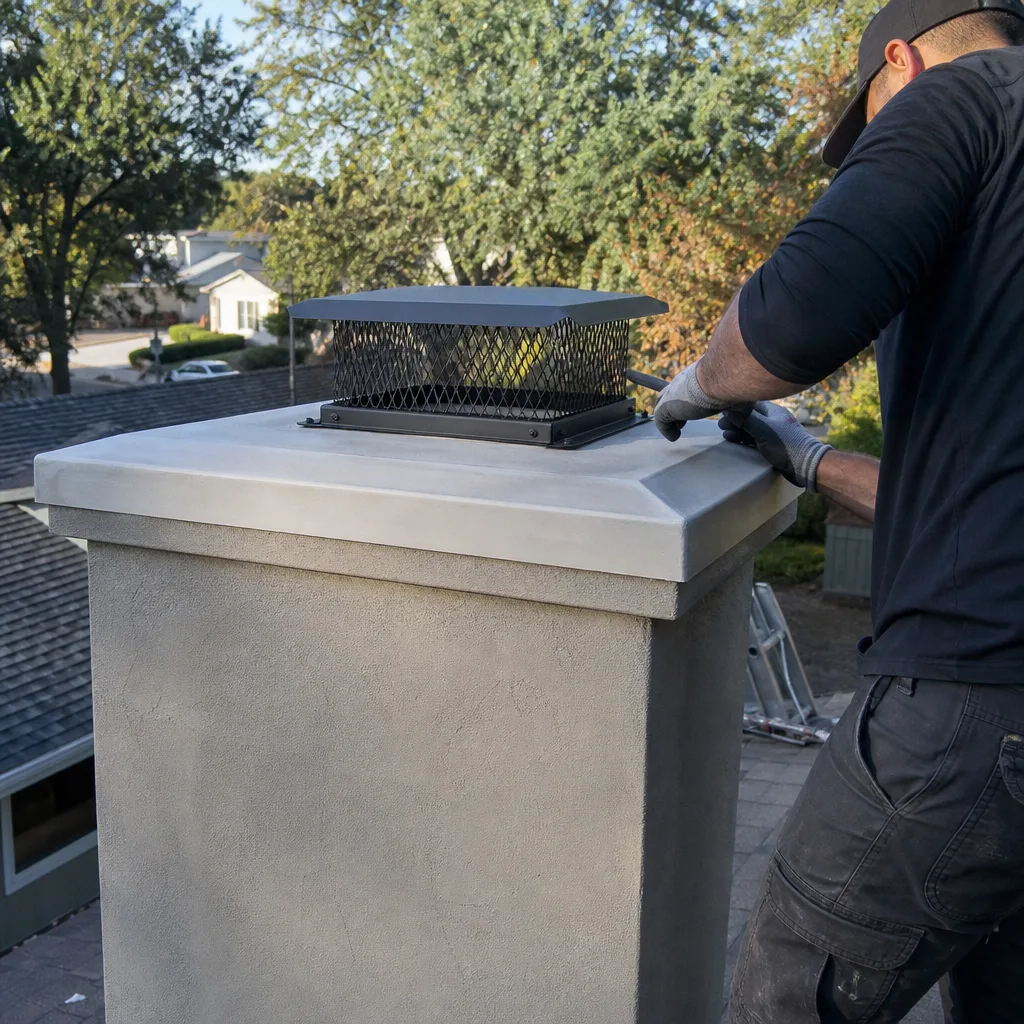
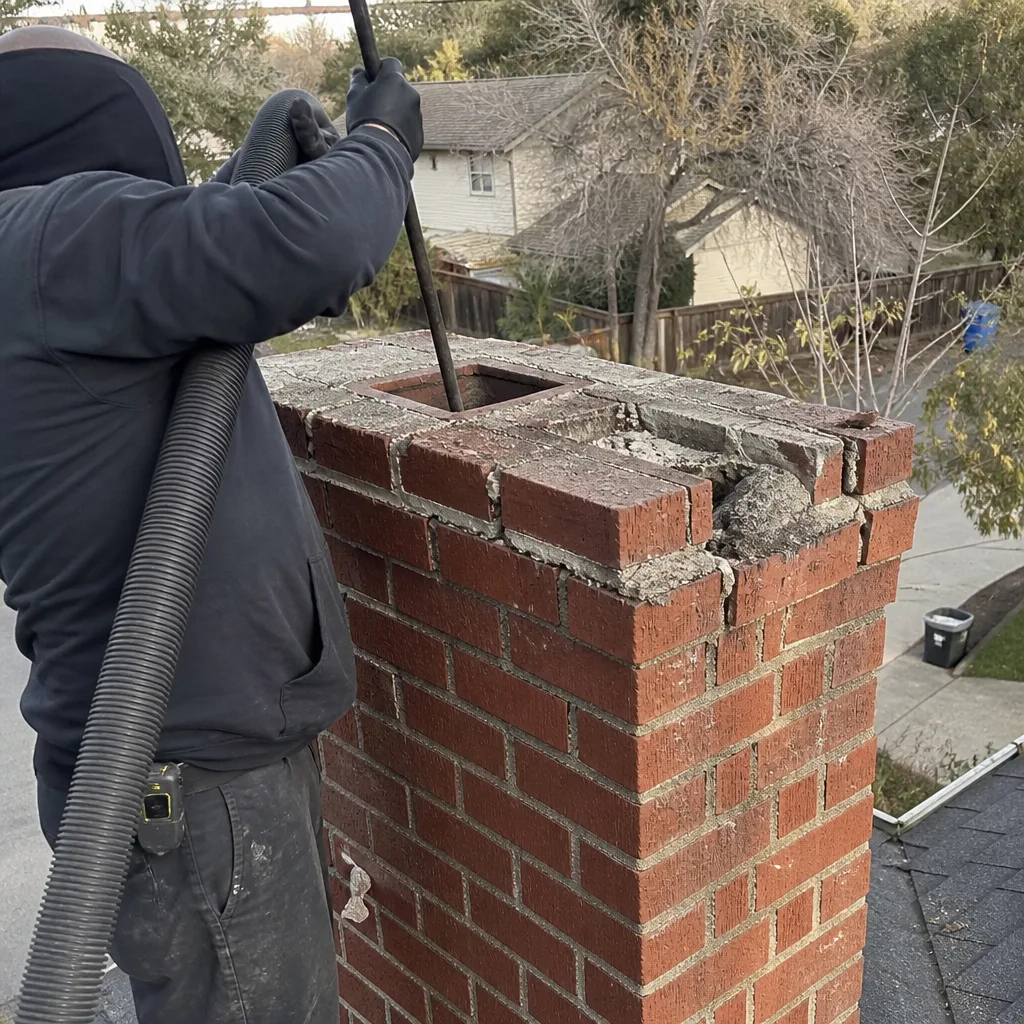
See the difference
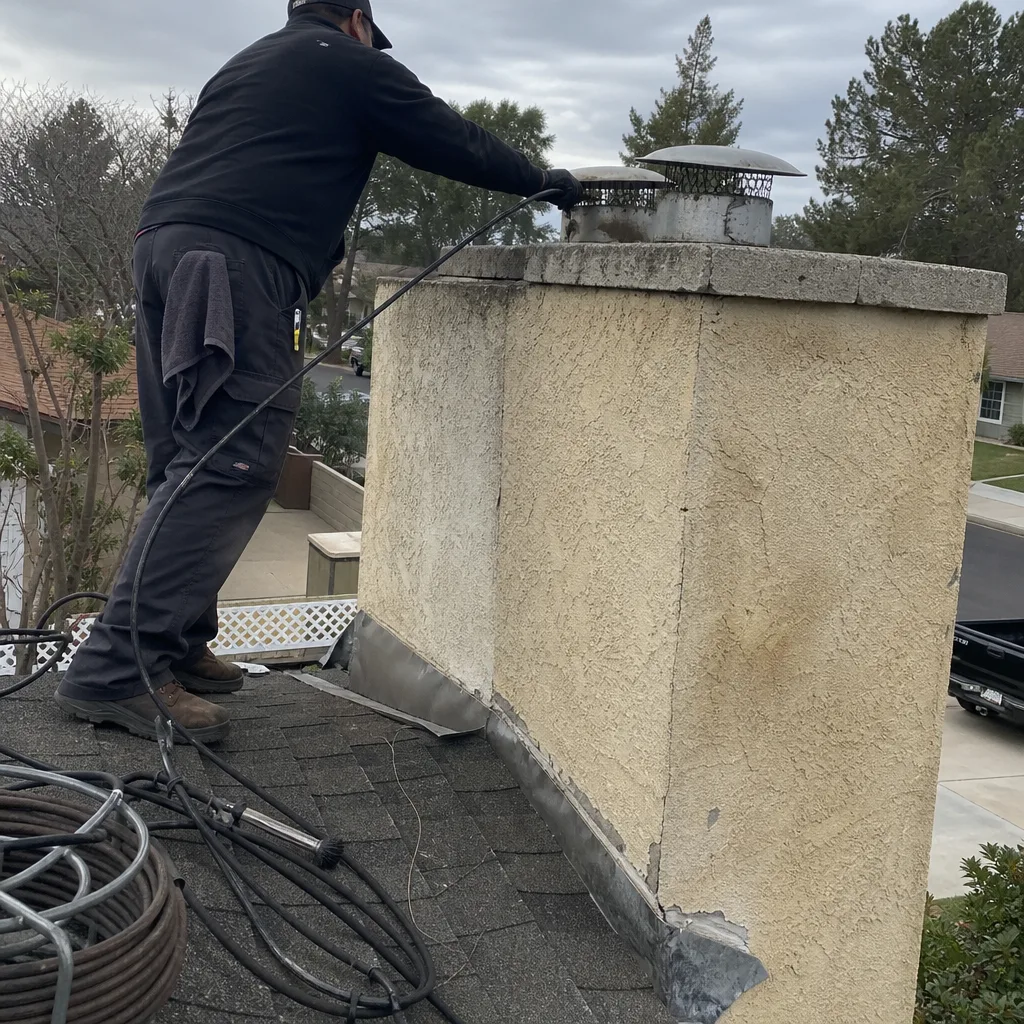 Before
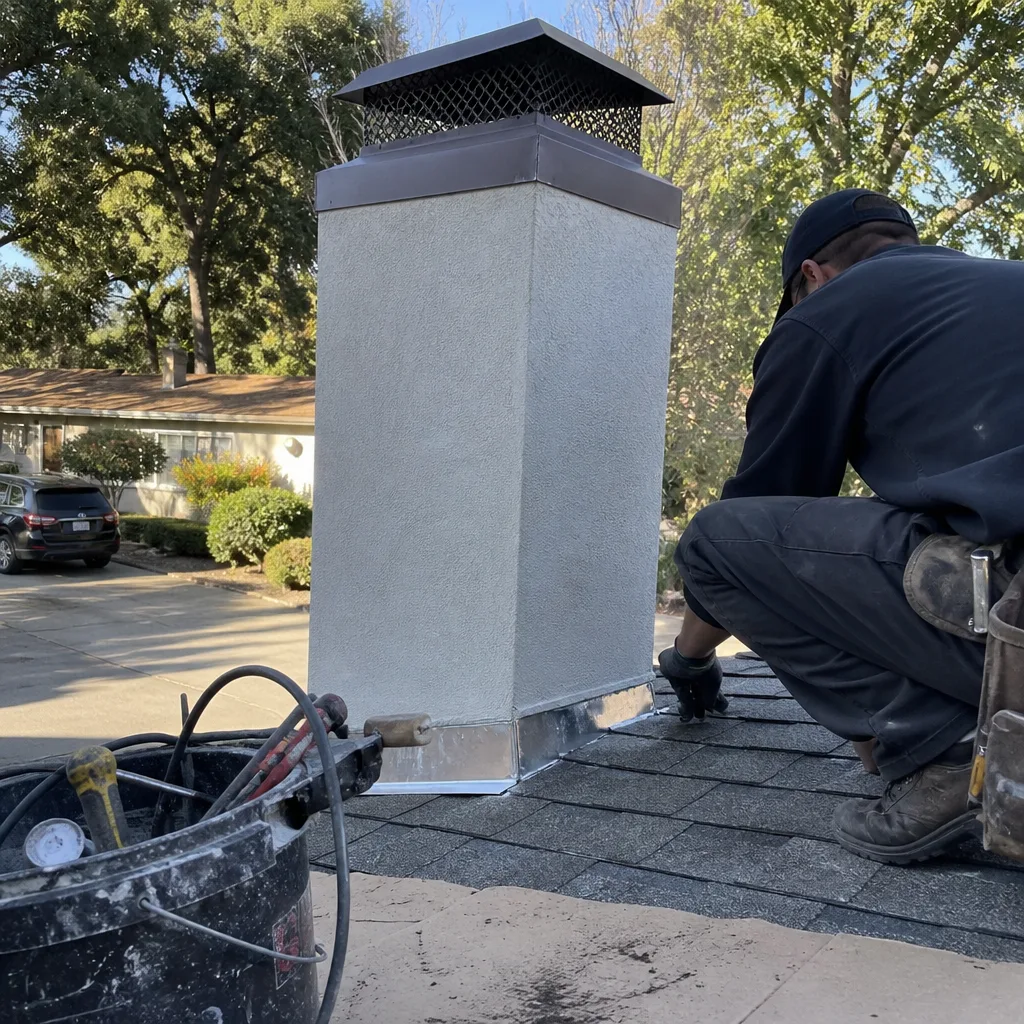 After
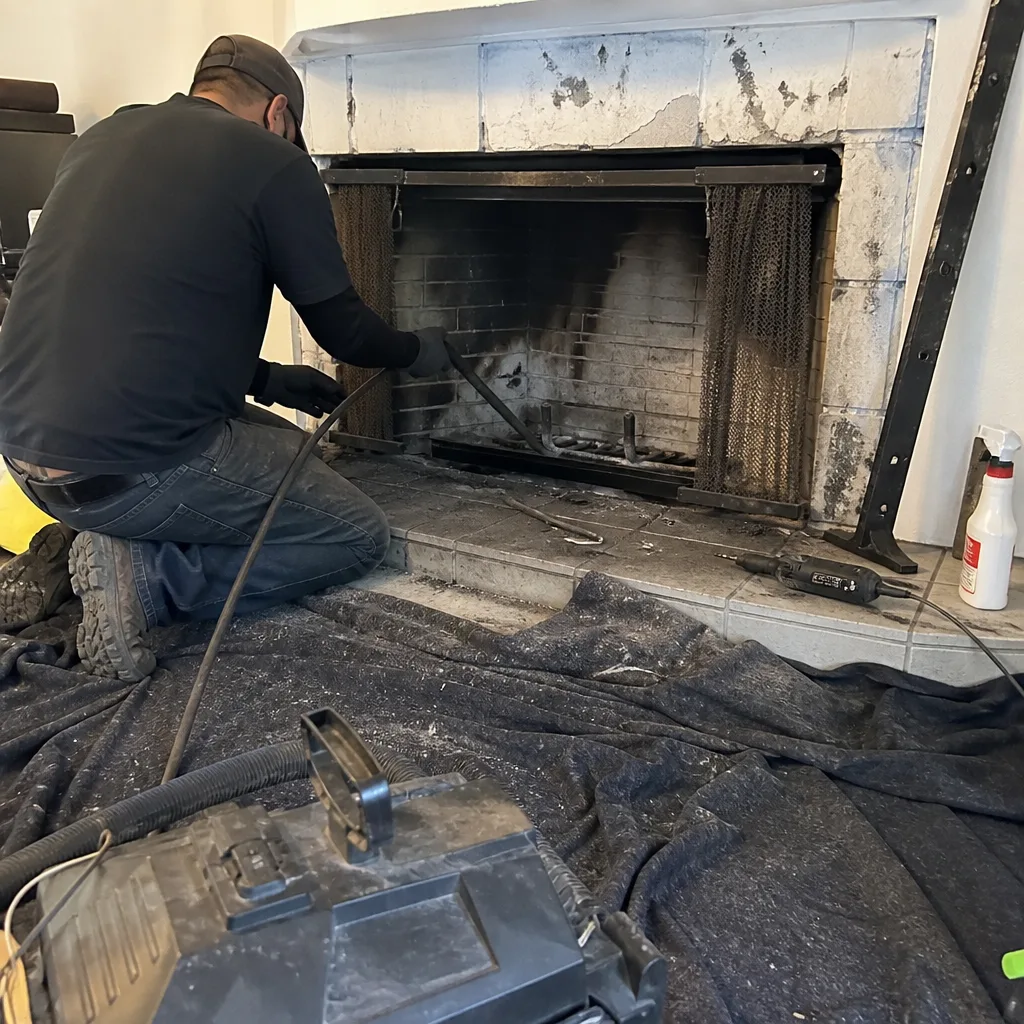 Before
 After
 Before
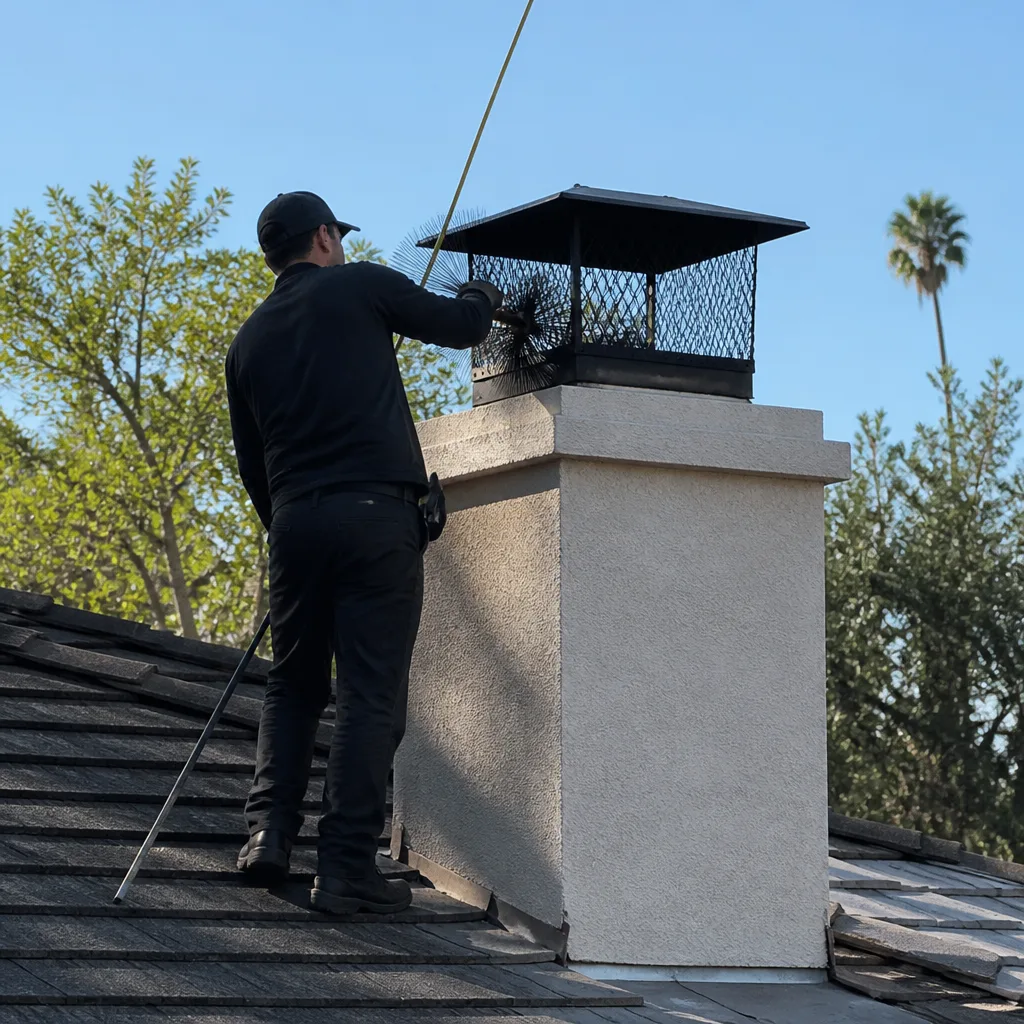 After
When to Call a Professional
You don’t need to hit every checkmark to justify a call. Here are the scenarios that warrant professional attention in Del Paso Park:
- You’ve burned wood through a season and haven’t had the chimney cleaned in 12 months or more.
- You notice a strong campfire-like odor coming from the fireplace even when it’s not in use (this is creosote off-gassing, and it’s a warning sign).
- You see black, shiny, glazed deposits inside the flue when you shine a flashlight up from the firebox.
- You’ve had a small chimney fire (loud roaring sound, flame shooting from the top of the chimney) and haven’t had a professional inspection since.
- Your dryer takes longer than normal to dry clothing, or the dryer itself feels unusually hot while running.
- You’ve bought a home in Del Paso Park with an existing fireplace and don’t know its maintenance history.
- You’re preparing for burn season and want a clean, documented starting point before the first fire.
If any of these apply, don’t wait. Chimney Sweep Del Paso Park offers free estimates in Del Paso Park, and our crew handles the full sweep-to-repair cycle, including chimney sweeping, dryer vent cleaning, and structural chimney repair. Call (855) 341-8804 to schedule. We operate throughout the Sacramento area, and we serve Del Paso Park directly. You can also visit our Chimney Sweep Del Paso Park home page to learn more about what we do.
Frequently Asked Questions
A chimney sweep in Del Paso Park typically ranges from $180 to $340 depending on flue height, roof accessibility, and the level of inspection included. Camera inspection, when added, adds roughly $80 to $150 to the base sweep. The right way to get an accurate number is a written estimate with labor and inspection level line-items. Call (855) 341-8804 for an exact quote for your chimney, free of charge.
CSIA certification proves an individual has passed a national exam on chimney systems, fire safety, and inspection standards. A California contractor’s license proves a business is legally authorized to perform contracting work in the state. One evaluates skill, the other evaluates compliance, and you want both. Our Chimney Sweep in Del Paso Park page covers our approach to inspections and cleanings.
The National Fire Protection Association recommends a chimney sweep and Level 1 inspection at least once per year for wood-burning fireplaces. If you burn softwood, burn frequently, or use unseasoned wood, you may need more frequent cleaning. Gas fireplaces need less frequent sweeping but still benefit from an annual inspection to verify venting and clearance. The right frequency for your home depends on burn volume and fuel type, which is something a qualified sweep can assess after seeing your flue.
Not always, but commonly. Cracked flue tiles create gaps through which heat and combustion gases can reach flammable materials in the chimney chase or home structure. The repair options range from a stainless steel liner (installed inside the existing flue) to HeatShield resurfacing (a ceramic-based material applied to the damaged flue surface). A proper camera inspection and Level 2 assessment will tell you which option applies, if any. In our experience, not every crack requires a liner replacement; some require resurfacing, and some are stable enough to monitor. The camera evidence should be shown to you before you decide anything.
If you skip cleaning, creosote accumulates in stages. Stage 1 creosote is sooty and brushes away easily. Stage 2 is flaky and harder to remove. Stage 3 is a glazed, tar-like coating that requires chemical or mechanical removal and represents a serious chimney fire risk. The longer cleaning is deferred, the more expensive the eventual job becomes, because the buildup hardens and the sweep takes longer. More importantly, a chimney that hasn’t been inspected is a chimney with unknown internal condition. We’d rather work on a chimney that’s been ignored for years than one that’s been improperly cleaned once.
Usually not. Significant repairs like liner replacement, flue resurfacing, or crown rebuild require product ordering, weather coordination, and sometimes permitting. What should happen is this: the technician documents the finding on camera, writes a scoped repair estimate, and schedules the work on a timeline that makes sense. If a company tries to sell you a major repair on the spot during a cleaning, that’s a pressure tactic, not a professional workflow. Our Chimney Repair in Del Paso Park page explains how our repair process works, and it starts with documentation, not urgency.
Yes. Chimney Sweep Del Paso Park offers dryer vent cleaning as one of our three core services, alongside chimney sweeping and chimney repair. Clogged dryer vents are a leading cause of household fires according to NFPA data, and the service is a natural fit for our fire-safety focus. A dryer vent cleaning typically takes under an hour and can be added to a chimney appointment. Visit our Dryer Vent Cleaning in Del Paso Park page for more information.
The Bottom Line
Hiring a chimney cleaning contractor in Del Paso Park doesn’t have to feel like rolling dice. The process is concrete: verify CSIA certification and California licensing, ask the five interview questions that reveal skill, insist on a written estimate with line-item scope, require camera inspection, and choose a company with full repair capability so findings don’t dead-end in a contractor handoff. The red flags are just as concrete: flat-rate pricing that ignores flue height, no camera offered, same-visit repair pressure without written findings, and product vagueness. Do the screening, ask the questions, and get the documentation. For more guides & resources, visit our blog. The right contractor makes the process feel obvious. From sweep to repair, the same crew should handle it, and the evidence should be in front of you the entire time.
Chimney Sweep Del Paso Park provides chimney sweeping, dryer vent cleaning, and chimney repair throughout Del Paso Park and the surrounding Sacramento area. Call (855) 341-8804 for a free estimate.
Written by the team at Chimney Sweep Del Paso Park, serving Del Paso Park since 2014.