
Last updated November 2, 2026
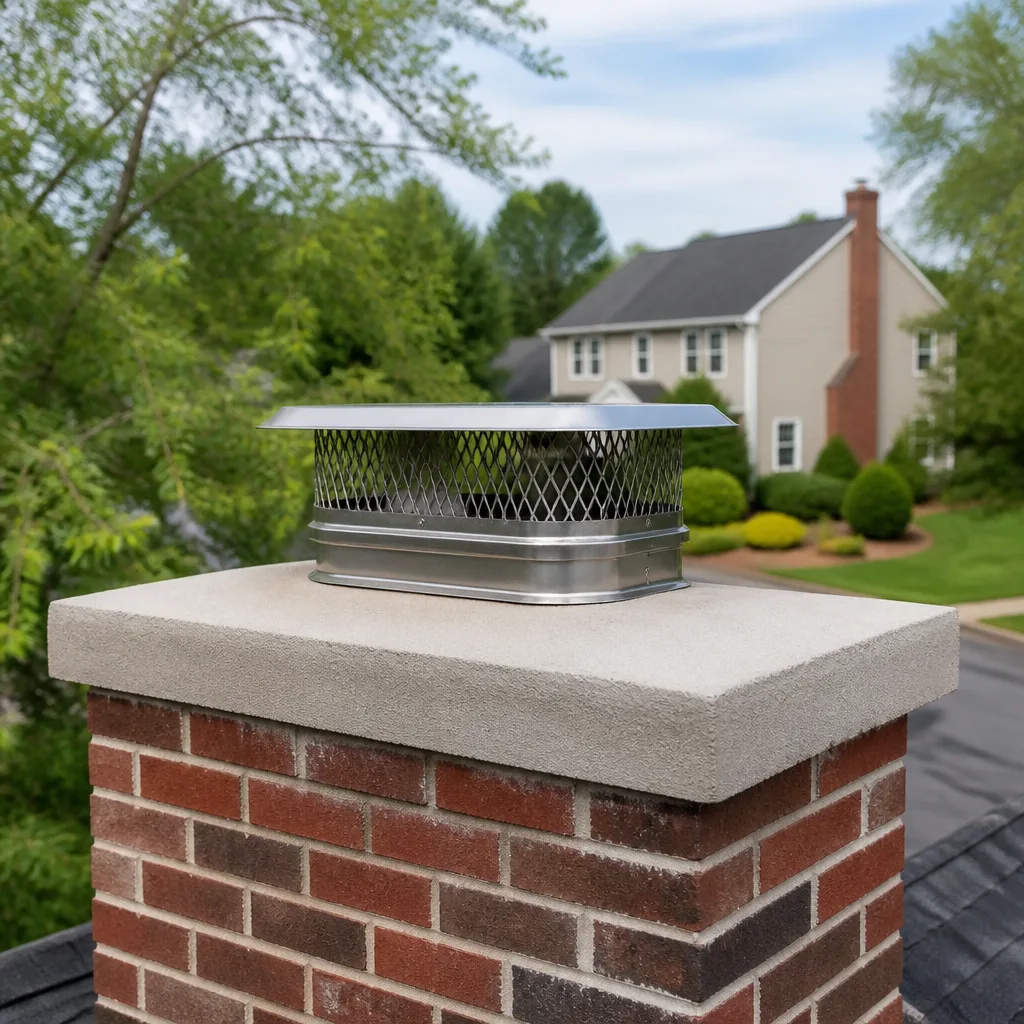 Sweep & inspection
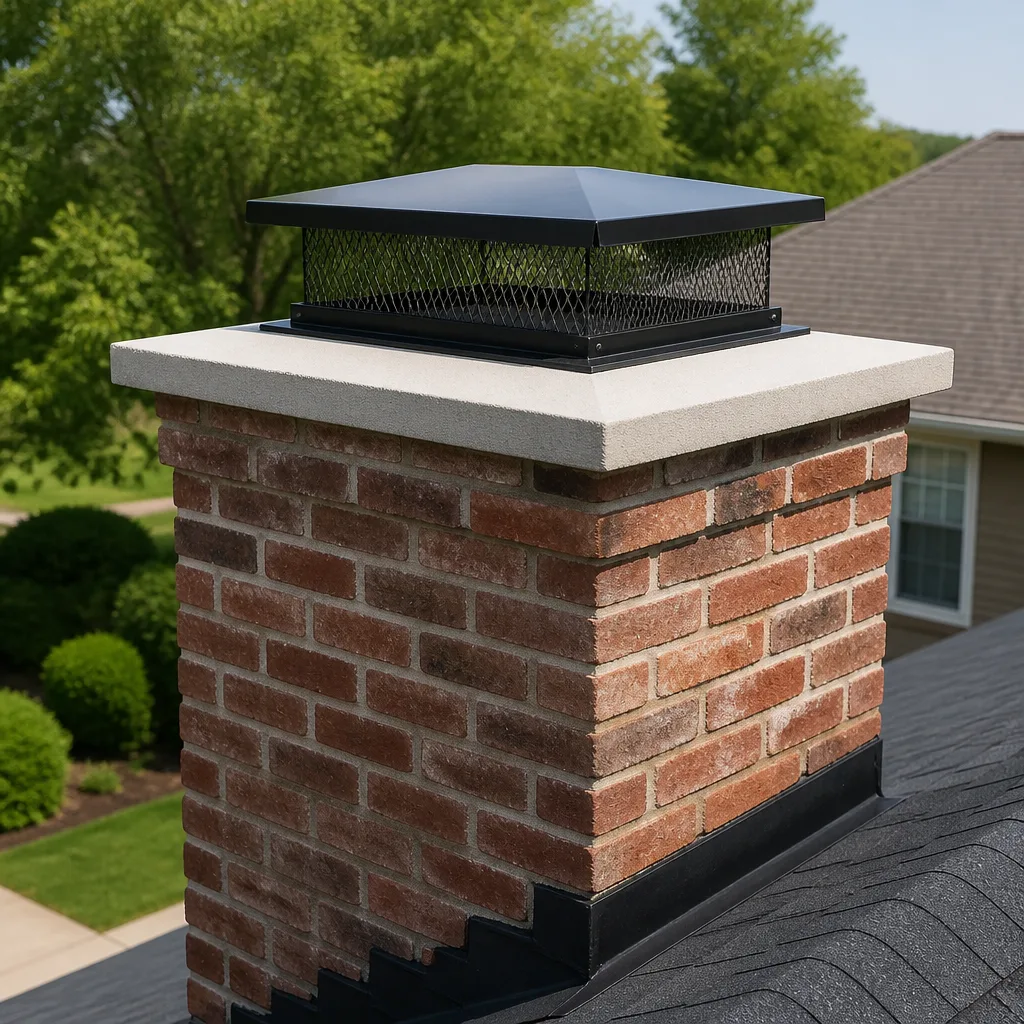 Caps & crowns
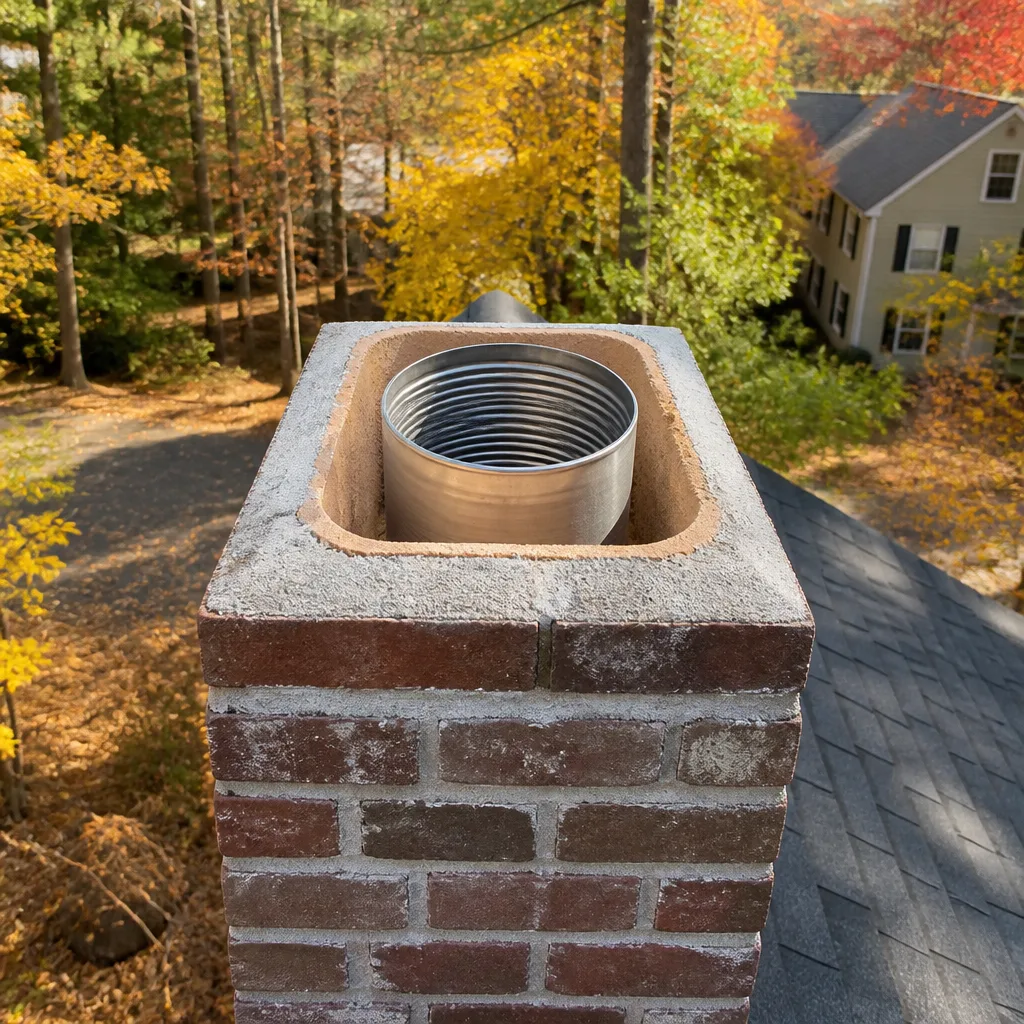 Flue relining
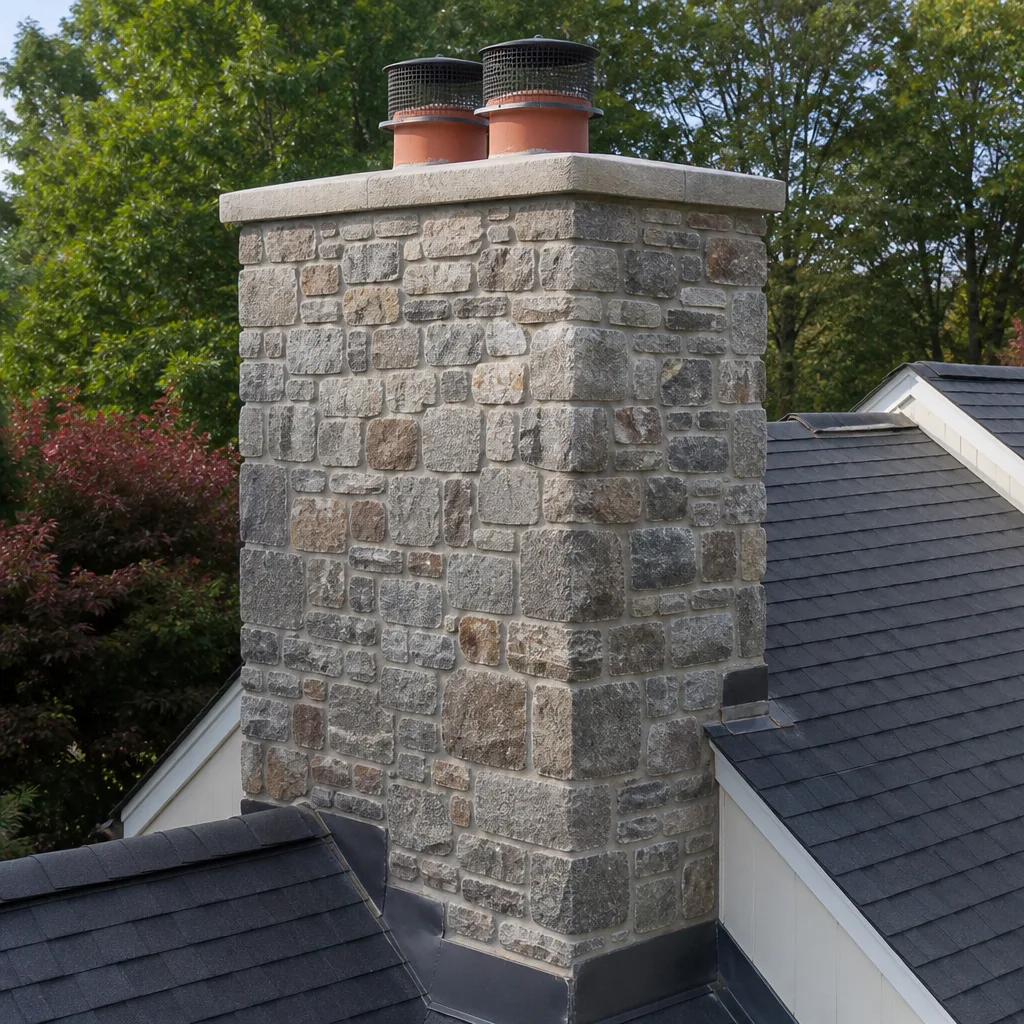 Masonry repair
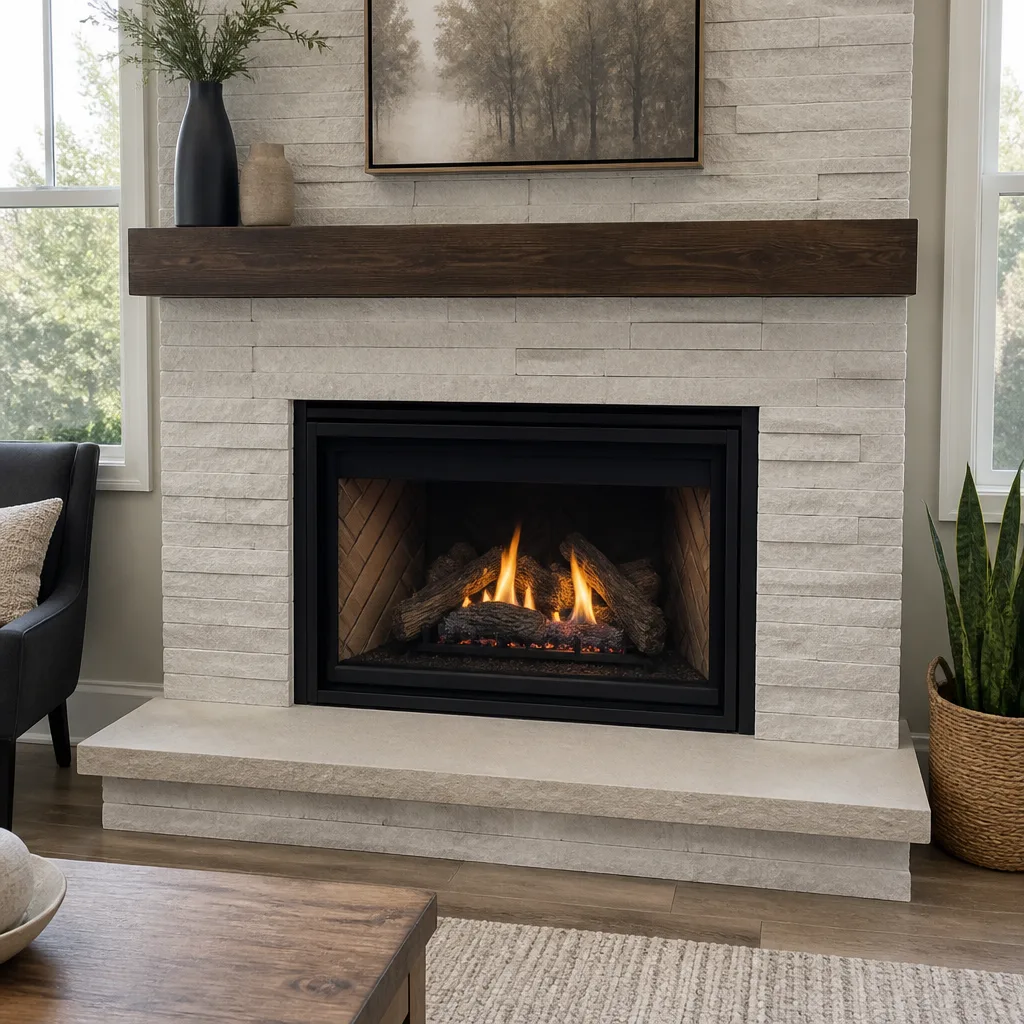 Gas fireplace service
Level 1 sweep and inspection to the NFPA 211 annual standard - flue, crown, cap, and flashing checked and photographed
Chimney sweep logs do not sweep chimneys. They loosen some creosote - which then falls where a brush and vacuum still have to collect it.
Seasonal Chimney Cleaning Care for Del Paso Park: Year-Round Homeowner’s Guide
The standard advice to “clean your chimney in September” was written for climates with hard winters. In Del Paso Park, the highest creosote accumulation risk and the highest animal entry risk don’t peak at the same time, and treating them as one problem means missed windows. This guide breaks down what’s actually happening inside your flue month by month, how the Sacramento Valley heat cycle affects masonry, and why valley oak debris creates a cleaning schedule that looks different here than it does in Tahoe or the Midwest. You’ll learn which tasks you can handle yourself, which ones need a technician, and when each check matters most.
Quick Answer
In Del Paso Park, chimney maintenance works best as a three-point annual cycle: a post-winter inspection in March or April to assess creosote buildup and animal activity from the burning season, a summer visual check for heat-related flue damage and oak debris accumulation on the cap, and a pre-season sweep and inspection in October or early November before the first fire. Homeowners who follow this cycle catch spalled clay tiles, cracked caps, and dryer vent blockages before they become chimney fires or carbon monoxide hazards.
Styles & brands we work with
- Sweep & inspection
- Caps & crowns
- Flue relining
- Masonry repair
- Gas fireplace service
Table of Contents
- Why Del Paso Park’s Climate Demands a Different Schedule
- The Burning Season: November Through February
- The 9-Month Off-Season: What Happens Inside an Unused Flue
- Valley Oak Debris: The Del Paso Park Wildcard
- Animal Entry: Which Species Nest Here and When
- Sacramento Valley Heat Cycles and Flue Liner Damage
- Month-by-Month Action Plan
- Dryer Vents: The Same Seasonal Logic Applies
Why Del Paso Park’s Climate Demands a Different Schedule
Del Paso Park sits in a climate that most national chimney guides simply don’t account for. We get maybe 18 to 20 inches of rain annually, almost all of it between November and March. Summers run hot and bone-dry, with weeks of triple-digit temperatures that bake masonry and dry out mortar joints. Winters are mild enough that fireplaces get used intermittently rather than continuously, which actually creates a more dangerous creosote pattern than steady daily burning would.
Here’s the difference. In a hard-winter climate, a fireplace burns hot every evening for months. That continuous heat keeps creosote from accumulating in thick layers because the flue temperature stays high enough to push most combustion byproducts up and out. In Del Paso Park, fires happen on cool nights a few times a week, often with long gaps between uses. Each fire starts from a cold flue, which means more condensation on the flue walls during the first 20 minutes of burning. That condensation traps creosote particles. Then the next fire, days later, starts cold again and adds another layer.
The local tree canopy adds a second variable most national guides ignore. Mature valley oaks and sycamores throughout Del Paso Park drop leaves, acorns, and small branches across multiple seasons rather than one big fall. That debris lands on chimney caps, accumulates in the cap’s mesh screen, and gets pulled into exterior dryer vent hoods. A cap clogged with oak leaves changes the draft of your fireplace, even if the flue itself is clean.
What this means in practice: the September sweep advice isn’t wrong here, but it’s incomplete. You need a post-winter assessment to understand what the burning season left behind, and you need a pre-season check to deal with what accumulated during the dry months. Two data points, not one.
The Burning Season: November Through February
Fireplace use in Del Paso Park starts in earnest around late October, when evening temperatures start dipping into the 40s, and runs through late February. During these four months, most wood-burning households fire their fireplace two to five times per week. Gas fireplace users often log more hours because gas fires are easier to start and stop, but gas use creates a different set of byproducts: acidic condensation that eats at mortar joints in unlined flues, and fine particulate that coats flue walls even when there’s no visible soot.
What’s accumulating in your flue during this window:
- Creosote, in stages. Stage one is flaky and dry, the easiest to remove. Stage two is tar-like and tenacious. Stage three is a hardened glaze that requires chemical treatment or specialized removal. In Del Paso Park, intermittent burning patterns favor stage one and two buildup, but stage three develops when a homeowner burns unseasoned wood or closes the damper too soon after a fire. Wet wood smokes more, and smoke means creosote.
- Soot and fly ash. These coat the flue walls and, in older Del Paso Park homes with clay tile liners, work into the mortar joints between tiles.
- Animal nesting material. Rodents and birds that got into an unprotected flue during summer or fall may have built nests that now sit between your firebox and the cap. A nest blocking 40% of the flue cross-section changes your draft and can push smoke back into the living room.
During the burning season itself, the number one homeowner task is simple: pay attention to what the fire is doing and know your emergency preparedness steps. If a fireplace that drafted fine last year now sends smoke curling into the room, or you hear scratching sounds from the chimney after a fire, stop burning and call for an inspection. These aren’t quirks. They’re signals.
The 9-Month Off-Season: What Happens Inside an Unused Flue
From March through October, your fireplace is dormant. But dormant doesn’t mean stable. The off-season is when some of the most consequential damage in Del Paso Park flues actually develops, because no one is looking.
Five things happen inside an unused flue during a Sacramento Valley off-season:
- Creosote cures and hardens. The creosote deposited during winter doesn’t stay soft. Heat from summer days bakes it, and without new deposits to soften it, it can transition from flaky to tar-like. Hardened creosote bonds to flue walls more aggressively and resists standard brushing. The longer it sits, the harder it is to remove.
- Moisture does slow work on mortar. Even in a dry climate, the residual moisture in creosote and soot, plus winter rain that found its way through a cracked cap or crown, keeps the mortar joints in a clay tile liner damp for weeks. Damp mortar goes through freeze-thaw cycles only rarely in Del Paso Park, but the real enemy here is chemical: creosote is acidic. It eats at mortar joints over time regardless of temperature.
- Birds and animals find the gap. A chimney cap that was intact in February may be damaged by a storm or thermal expansion by June. The moment there’s a gap wider than a half inch, it’s an open door for nesting species. We detail this in the animal entry section below.
- Debris accumulates on the cap. Valley oak leaves, acorns, sycamore seed balls, and small twigs fill the cap’s mesh screen during spring and summer. A 50% blocked cap reduces draft and can push carbon monoxide from a gas fireplace back into the home.
- Thermal cycling stresses clay tiles. Each hot day expands the tile slightly, each cool night contracts it. Over dozens of cycles in a single summer, hairline cracks can grow. The first fire of fall then hits those micro-fractured tiles with a sudden temperature spike, and that’s when spalling happens: pieces of the tile face pop off and fall into the flue.
This is why the chimney sweep in Del Paso Park we perform includes a full visual inspection of the cap, crown, and accessible flue surfaces, not just a brush through the middle. What happens during the off-season is invisible to a homeowner who never looks up.
Valley Oak Debris: The Del Paso Park Wildcard
Any chimney company that serves Del Paso Park has to account for the valley oak canopy. It’s the defining landscape feature of the neighborhood, and it creates a debris load that most national guides simply don’t anticipate.
Valley oaks drop in waves. The first major leaf fall happens in late autumn, but oaks are messy trees year-round. Here’s the practical timeline:
- November through January: Peak leaf and acorn drop. Acorns are heavy enough to crack a clay tile cap if they fall from a high branch directly onto it, though most land on the cap’s screen and sit there.
- February through March: A smaller second leaf drop as the tree pushes new growth. These leaves are drier and lighter, more likely to get pulled into dryer vent intake hoods by the vent’s own airflow.
- April through June: Pollen, catkins, and seed pods. These are small enough to pass through a damaged cap screen but sticky enough to clump inside the flue.
- July through October: The driest material. Branches, twig fragments, and desiccated leaves that snap off in the heat. These are the most flammable items sitting on your cap when burning season starts.
The optimal clearing window, based on what we see in Del Paso Park, is a cap and crown check in June or early July, after the main spring debris cycle finishes, and then a final clearing during the pre-season sweep in October. If you only clear once a year in September, you’re still dealing with August’s twig fall but missing May’s pollen clumping. Two clearings, spaced apart, is what the canopy actually requires.
The same debris logic applies to dryer vent cleaning in Del Paso Park. Exterior vent hoods on homes with large oaks nearby pull in leaf fragments, and the combination of lint and organic material inside the vent creates a blockable mass faster than lint alone. If your dryer takes longer than one cycle to dry a normal load, or the exterior hood has visible debris in the louver, the vent needs attention.
Animal Entry: Which Species Nest Here and When
Animal entry is a year-round consideration in Del Paso Park, but the risk peaks at specific times for specific species. Understanding who’s trying to get in and when helps you time your cap checks.
What we encounter most often in Del Paso Park flues:
- House sparrows and starlings. Nest-building starts in March and runs through July. Both species squeeze through gaps as narrow as 1 inch. A missing or damaged cap in spring means a flue full of grass, twigs, and feathers within weeks.
- Tree squirrels. Active year-round, but most likely to investigate a chimney in fall, when they’re caching food and seeking warm shelter. A squirrel can chew through a thin aluminum cap and will destroy a copper cap’s mesh screen if it’s determined. We’ve seen squirrel nests block 60% of a flue cross-section in a single season.
- Raccoons. Less common in the residential core but present near the American River Parkway greenbelt that borders parts of Del Paso Park. Raccoons use chimneys as denning sites in late winter and early spring, February through April. They don’t build nests; they occupy the smoke shelf itself.
- Bats. Present April through September. Bats prefer gaps as small as 3/8 of an inch and often roost in the gap between the cap and the flue tile rather than inside the flue. Bats are protected; removal requires a wildlife professional, not a chimney sweep.
The prevention is a properly sized cap with mesh screen. The mesh aperture matters: a screen with openings of 3/4 inch keeps out birds and squirrels but allows bats and large insects. A screen with 3/8-inch openings keeps out bats too, but it clogs faster with oak debris and needs more frequent clearing. For most Del Paso Park homes, we recommend the 3/4-inch mesh with a solid fabricated cap, then seasonal clearing to keep it breathing. The brands we work with, typically Olympia Chimney and Copperfield, manufacture caps with 3/4-inch stainless steel mesh as standard, a material choice you can verify yourself when you look at the cap from the ground. Cheap caps use galvanized wire that rusts within two winters. Stainless holds.
If you hear scratching, chirping, or fluttering from your chimney, do not light a fire to smoke the animal out. You’ll either kill it or force it deeper into the house. Call a chimney professional to inspect and remove, then cap while the animal is out.
Sacramento Valley Heat Cycles and Flue Liner Damage
Del Paso Park’s hot dry summers do a specific thing to masonry chimneys that humid climates don’t: they accelerate thermal fatigue. Thermal fatigue is the repeated expansion and contraction of materials at different rates, and in a chimney, different materials expand at different rates by design. Clay tile expands less than the mortar around it. The brick shell expands differently than the clay liner inside. The crown expands differently than the cap.
After 25 or 30 Sacramento Valley summers, the cumulative effect shows up in predictable ways:
- Spalled clay tiles. The tile face flakes off in thin sheets, which then fall and collect at the bottom of the flue or on the smoke shelf. Spalling is a progressive failure: once it starts, it accelerates each burning season as heat reaches deeper into the damaged tile.
- Cracked mortar joints between tiles. These cracks allow heat and gases to escape the flue and reach the surrounding masonry, which becomes a fire risk in a wood-burning chimney.
- Deteriorated crowns. The concrete crown at the top of the chimney cracks from repeated heat expansion, letting water into the masonry. In Del Paso Park’s dry climate, homeowners sometimes assume water intrusion isn’t a concern. It is. The little rain we get is delivered hard and fast, and a cracked crown funnels it exactly where it does the most damage.
- Separated cap seams. Even a stainless cap can develop gaps at the seams after enough expansion cycles.
This is why a post-summer visual check has real value in Del Paso Park, even if you don’t use your fireplace until November. Spalling that starts in August is caught before the first fire of the season, when the damage is still repairable with a product like HeatShield, a resurfacing system we install that restores the interior face of a damaged flue liner without a full rebuild. If that same spalling waits until the first fire, the thermal shock can take a hairline crack to a visible missing tile face in a single evening, and the repair gets more involved.
The full scope of chimney repair in Del Paso Park includes crown rebuilding, cap replacement, liner resurfacing, and masonry repointing. Most of it is preventable with a summer check and early intervention.
Month-by-Month Action Plan
Here’s the Del Paso Park-specific maintenance calendar, built around local codes and inspection requirements. It separates homeowner tasks from technician tasks so you know what you can do from the ground and what needs a pro on the roof.
January
- Homeowner task: Watch for smoke spillage into the room. If you see it, stop using the fireplace and schedule an inspection.
- Homeowner task: Check the damper after use. It should open and close smoothly. A sticky damper that won’t fully close lets heated air escape all winter.
- Technician task: For active burners, a mid-season sweep is appropriate if you’re burning more than three times weekly. Creosote in a heavily used Del Paso Park flue can reach stage two in six weeks.
February
- Homeowner task: Inspect the firebox for spalled brick or tile fragments after the season’s heavy use.
- Homeowner task: Look for animal activity. Squirrel and raccoon denning peaks now.
- Technician task: End-of-season sweep for heavy burners. This is the best time to remove the season’s creosote before it cures in the summer heat.
March
- Homeowner task: Schedule your post-winter inspection and sweep. The burning season is winding down, and the flue is at its dirtiest.
- Technician task: Full sweep plus Level 1 inspection. We document the flue condition, note hairline cracks, and photograph anything worth tracking.
April
- Homeowner task: Watch for bird nesting activity. Sparrows and starlings start building now, and a missing cap means trouble within two weeks.
- Homeowner task: Clean the dryer vent hood area of oak leaves and debris.
- Technician task: Cap and screen inspection. If your cap was damaged by winter storms, this is the month to replace it before nesting season peaks.
May
- Homeowner task: Check the exterior chimney for visible cracks using binoculars. You’re looking for crack lines in the brick, missing mortar, or a cap that’s no longer sitting level.
- Homeowner task: Clear pollen and catkins from the top of the dryer vent hood and any accessible chimney cap areas from the ground. Use a leaf blower or a long-handled brush; do not climb onto the roof.
- Technician task: For homes near large oaks, a dryer vent cleaning in late spring clears the organic material that’s been pulled in during the first half of the year.
June
- Homeowner task: First cap and crown visual check of the summer. Look for the first wave of oak debris accumulation on the cap screen.
- Technician task: This is the optimal first clearing window we described in the valley oak section. A technician can clear the cap screen and verify the screen is intact after spring animal activity.
July
- Homeowner task: Check the firebox for spalled tiles that may have fallen from thermal expansion in the first heat wave.
- Homeowner task: Inspect dryer vent flow: the exterior louver should open fully during a dry cycle, and the exterior should feel warm but not hot.
- Technician task: For gas fireplaces, a summer inspection catches acidic condensation damage from the previous winter’s use before it worsens in the heat.
August
- Homeowner task: Schedule your pre-season sweep and inspection now. October slots fill fast, and you’ll be on a list with everyone else in Del Paso Park if you wait.
- Homeowner task: Check the damper again after a hot summer. Metal dampers warp, and a warped damper won’t close fully or won’t open enough for a proper draft.
- Technician task: Peak season for spalling detection. A post-summer inspection catches tile damage before the first fire hits it with thermal shock.
September
- Homeowner task: Order firewood now. Seasoned oak takes six to twelve months to dry properly, and buying “seasoned” wood in September from a local supplier means less moisture content than buying it in November.
- Homeowner task: Final cap and crown check with binoculars. You’re looking for accumulated twigs and debris from the driest summer months.
- Technician task: Dryer vent cleaning for households that run more laundry in fall and winter. Lint from heavier fabrics clogs faster.
October
- Homeowner task: Test the fireplace before the first real fire. Open the damper fully, and light a small piece of newspaper in the firebox. The smoke should draw up the flue immediately. If it doesn’t, call before burning.
- Technician task: Pre-season sweep and inspection. This is the one most Del Paso Park homeowners schedule, and it’s the correct final step before the burning season begins.
November
- Homeowner task: First fire of the season after your sweep. Use dry wood, keep the fire moderate for the first hour, and watch the first few minutes for smoke spillage.
- Technician task: Only for repair follow-ups from the fall inspection. If we flagged a liner issue in October, the fix happens now, before the season gets cold.
December
- Homeowner task: Same as January: watch for smoke behavior changes, and listen for animal sounds after a fire. A warm flue is attractive to rodents in December.
- Technician task: Emergency-only service window. Mid-season sweeps and cap repairs for active burners.
Dryer Vents: The Same Seasonal Logic Applies
Dryer vents and chimneys share the same risk: blocked airflow and heat buildup. The seasonal pattern in Del Paso Park tracks what we’ve already covered with chimneys, because the same oak canopy that fills a cap screen also fills an exterior dryer vent hood.
The dryer cycle that matters here:
- Winter: Heavier clothing means longer dry cycles, more lint production, and more airflow through the vent. If the vent is partially blocked, winter is when the blockage compounds fastest.
- Spring: Oak leaves and seed pods from the spring drop get pulled into the vent hood by the airflow. This is the start of organic material mixing with lint inside the duct, which creates a denser, harder-to-dislodge mass.
- Summer: The dry Sacramento heat bakes the lint-leaves mixture inside the duct, hardening it against the duct walls. By late summer, it may take a professional cleaning to remove what would have been a simple blow-out in March.
- Fall: The second leaf drop adds more material, and the cycle repeats.
The NFPA identifies clogged lint buildup as the leading cause of dryer fires. It’s a leading cause, not a minor contributor. In Del Paso Park, the oak canopy multiplies the risk because leaf fragments add the organic material that lint alone doesn’t provide. The practical takeaway: if you have a vent run longer than 10 feet, or one that exits through a roof, schedule a dryer vent cleaning annually. Two full cleanings per year is appropriate for households with large oak trees directly against the house, or households with long vent runs that make multiple 90-degree turns.
Common Mistakes to Avoid
- Sweeping once every three years because the firebox looks fine. The firebox reflects what burned, not what’s deposited in the flue. A flue can be 30% obstructed while the firebox looks clean.
- Cleaning in September only. In Del Paso Park, September is the right time for a pre-season check but the wrong time to assess what the winter left behind. Do both or do the post-winter check and a pre-season visual; the two windows catch different problems.
- Skipping the cap because it’s “just a screen.” The cap is your animal exclusion device and your debris filter. A missing or damaged cap is the single fastest way to turn a clean flue into a blocked one.
- Burning unseasoned wood from a local source that “says” it’s dry. Wood sold as seasoned in Del Paso Park often hasn’t actually dried a full year. Wet wood doubles your creosote production in the same burning hours.
- Ignoring gas fireplace flues because there’s no creosote. Gas burns clean, but the condensation from gas combustion is acidic and eats at mortar joints in unlined or clay-lined flues. Gas fireplaces need inspection too, just for different reasons.
- Waiting until October to schedule anything. Every chimney company in Sacramento books October solid by late September. Schedule your pre-season sweep in August and your dryer vent cleaning for a time that’s actually convenient rather than emergency-timed.
- Assuming a roof climb is safe. Roof work on a steep pitch or a two-story home without proper fall protection is not a DIY task. The technician carries harnesses and the training to use them. Your binocular check from the ground is the right amount of DIY.
See the difference
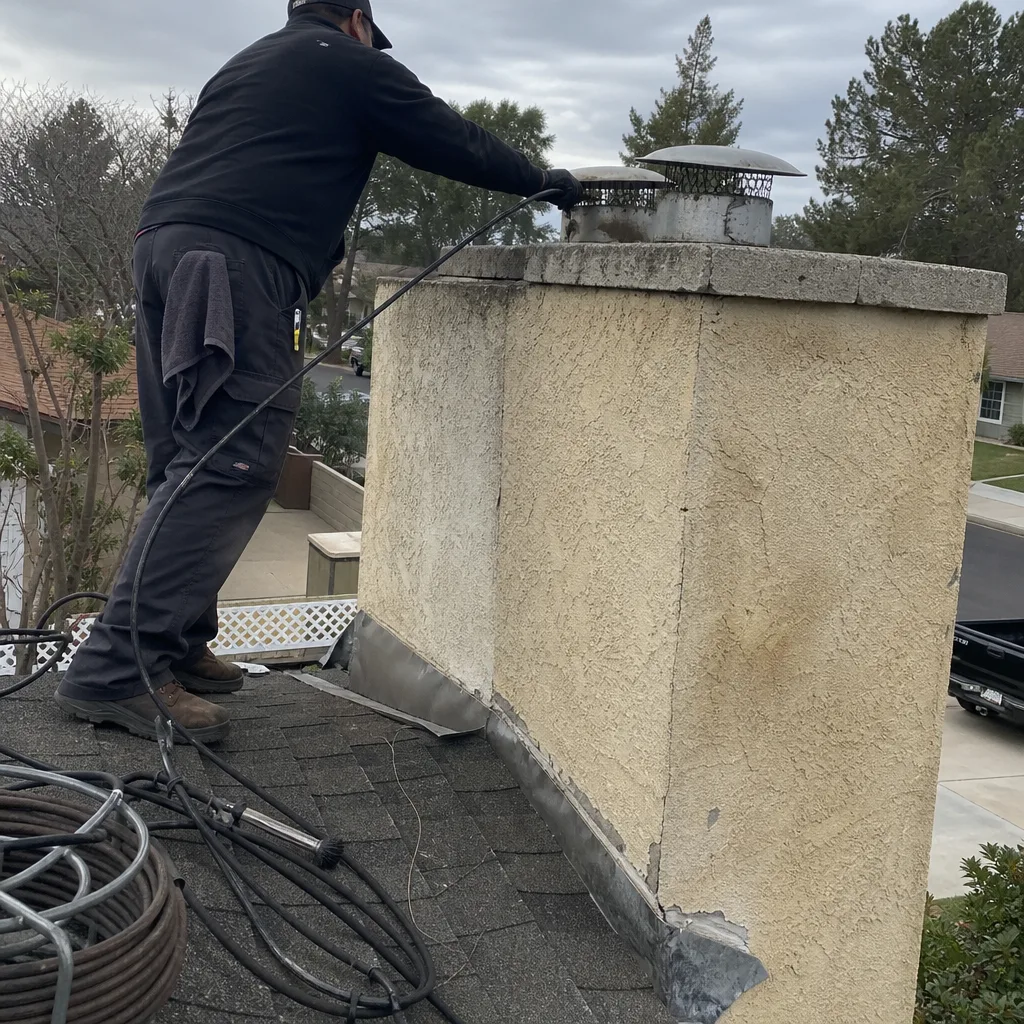 Before
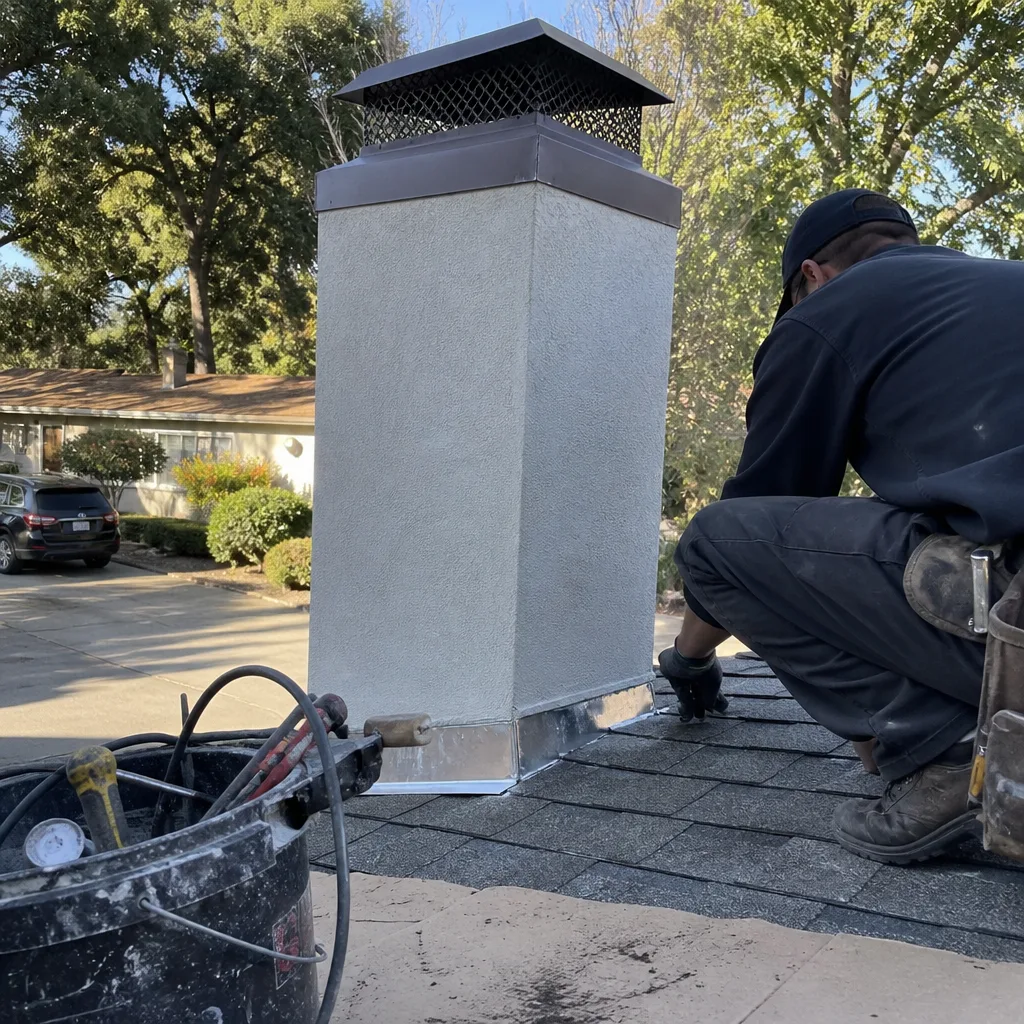 After
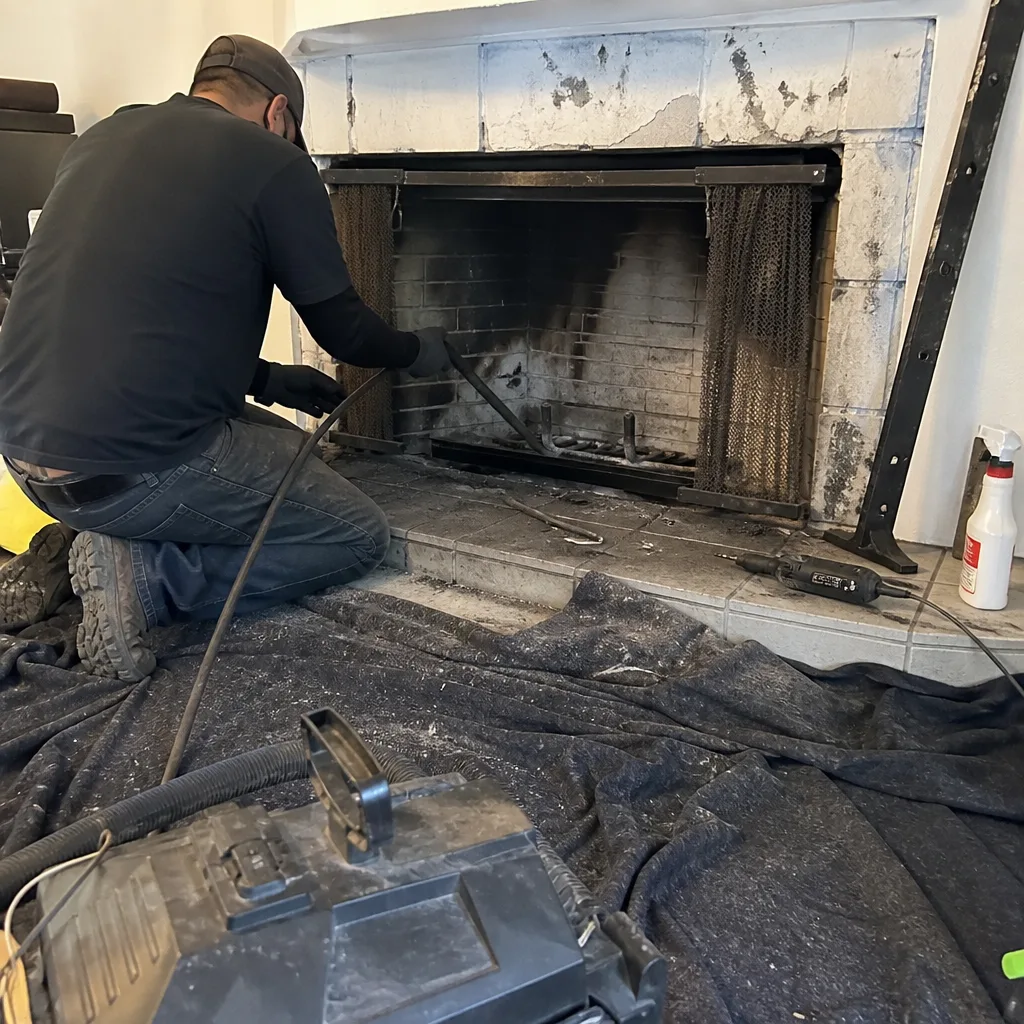 Before
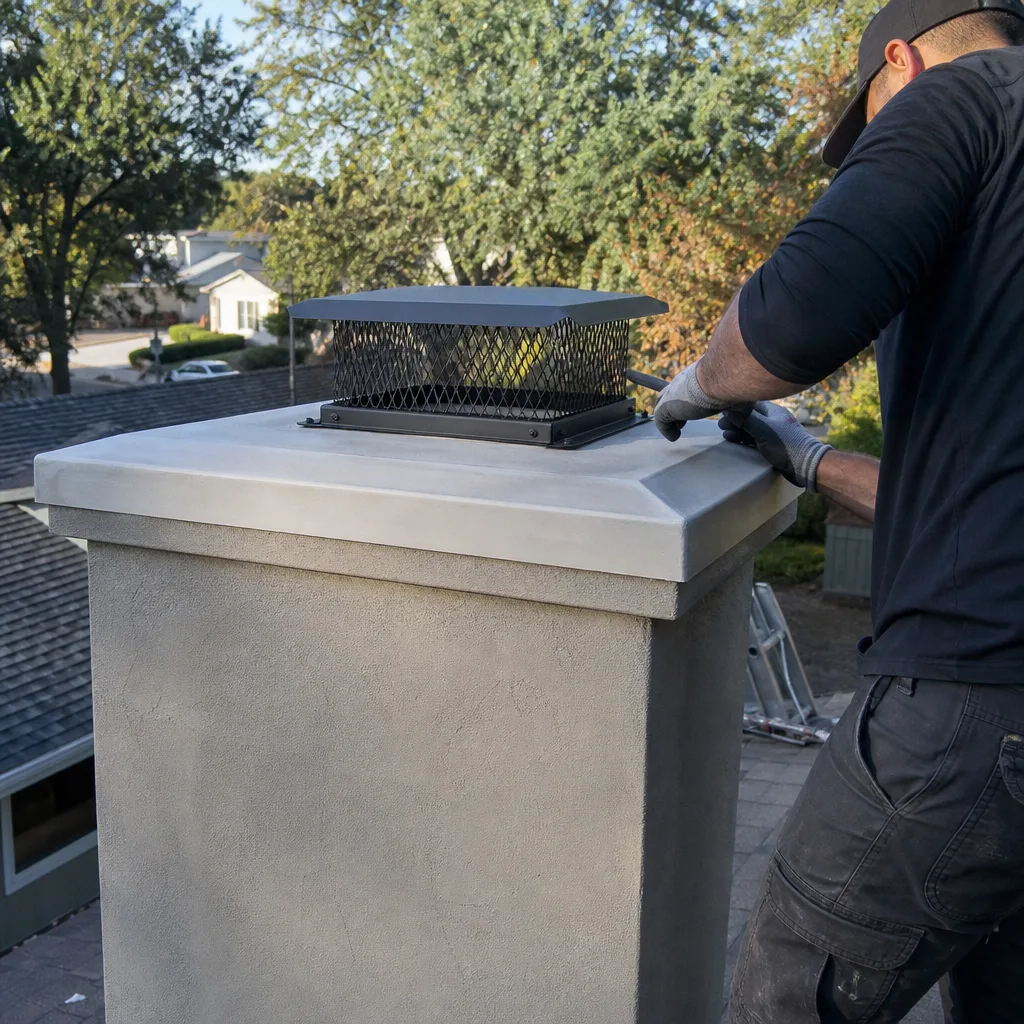 After
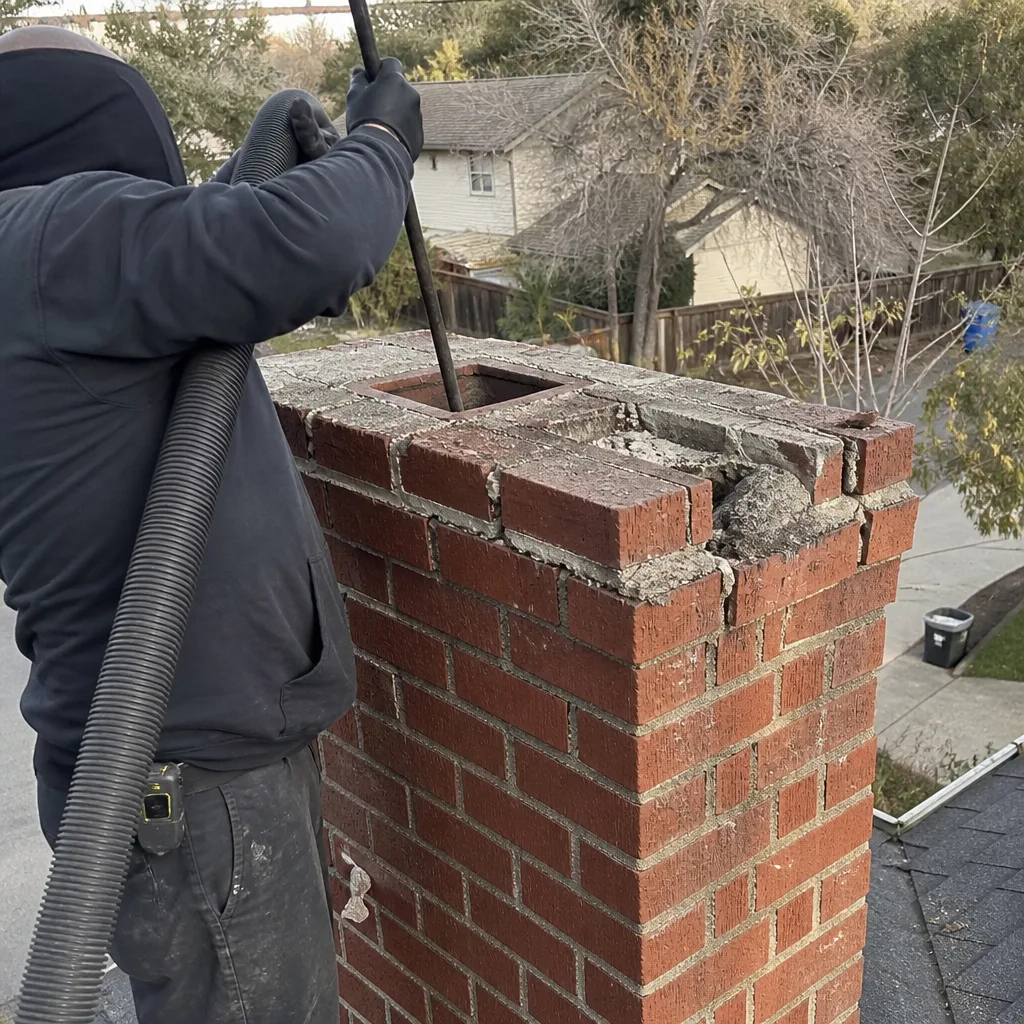 Before
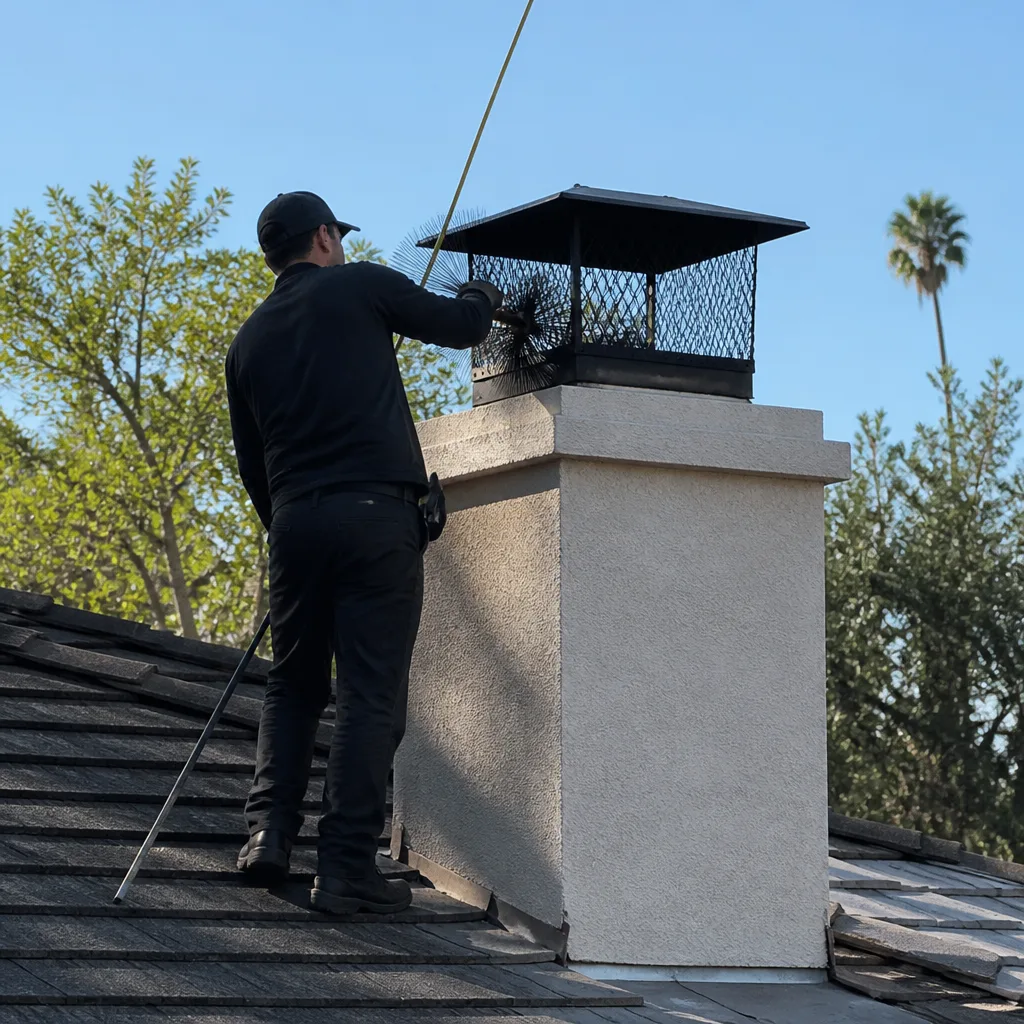 After
When to Call a Professional
Call a chimney professional when you see smoke spilling into the room, hear animal sounds from the flue, spot visible cracks in the exterior masonry, or find tile fragments in the firebox. Call when your dryer takes more than one cycle to dry a load, or the exterior vent hood shows stubborn debris that won’t clear with a blower. Call when you haven’t had an inspection in over 12 months and you’re about to start burning again. The sweep isn’t the expensive part. The fire or the carbon monoxide event is. Chimney Sweep Del Paso Park offers free estimates in Del Paso Park, call (855) 341-8804.
Frequently Asked Questions
Once a year at minimum, scheduled after the burning season ends in March or April. Heavy burners who use the fireplace more than three times weekly from November through February should add a second sweep in October before the season starts. The Del Paso Park pattern of intermittent burning creates stage one and two creosote that’s removable with a standard sweep, but only if you don’t let it sit through a full Sacramento summer first.
A standard sweep and Level 1 inspection in Del Paso Park typically runs $180 to $340 depending on flue height, accessibility, and whether the cap needs clearing. Repairs found during the sweep are quoted separately with photos. Dryer vent cleaning runs $90 to $180 depending on run length and access. Call (855) 341-8804 for an exact quote, estimates are free.
Yes. An unprotected flue in this neighborhood is an open invitation to sparrows, starlings, squirrels, and in some parts of Del Paso Park near the greenbelt, raccoons, any of which can block a flue or die inside it. A proper cap with 3/4-inch stainless mesh keeps animals and most debris out while allowing proper draft. Cap replacement after winter or wind damage is one of the most common repairs we handle.
The best month for the primary annual sweep is March. The burning season has just ended, the creosote is fresh and easy to remove, and the flue gets cleaned before summer heat bakes the deposits into a hardened glaze. The second-best window, if you only do one, is early October, before the first fire. The worst time is December, when every local company is booked and you’re burning with a dirty flue.
Yes, though for different reasons than a wood-burning flue. Gas combustion produces acidic condensation that settles on flue walls and erodes clay tile mortar joints over time. Gas fireplaces also clog with dust, pet hair, and fine particulate that reduces the burner’s efficiency and can produce a sooty film on glass doors. A gas fireplace inspection and cleaning takes less time than a wood sweep, but it’s not a step to skip.
The most common consequence in Del Paso Park is a chimney fire fueled by accumulated creosote, followed closely by carbon monoxide backup from a blocked or obstructed flue. A chimney fire burns hot enough to crack clay tiles and mortar joints, and the damage often isn’t visible until months later, when spalling begins. The less dramatic consequence is a dryer vent fire from lint and oak leaf blockage. Both are preventable with a recurring maintenance schedule, and both are far more expensive to repair than to prevent.
The Bottom Line
Del Paso Park’s chimney calendar is a two-window system. The post-winter window in March and April clears what the burning season left behind and catches animal entry from the spring nesting period. The pre-season window in August through October clears what the summer deposited, catches heat-related flue damage before the first fire, and sets the season up clean. Between those windows, a few minutes of monthly homeowner observation, no roof climbing required, is all the maintenance a chimney needs. Skip neither window, and a fireplace in Del Paso Park functions safely for decades. Skip both, and the repair bill eventually finds you anyway.
For a full seasonal inspection or a sweep, contact Chimney Sweep Del Paso Park home services today. We sweep, inspect, and repair, and we install the cap, crown, and liner products the job actually needs. In Del Paso Park, the brands we work with, Famco, Copperfield, DuraFlex, and HeatShield, are the same lines used by certified chimney professionals nationwide, not hardware-store substitutes. Call (855) 341-8804 to schedule or ask a question. We’re glad to walk you through what you’re seeing from the ground before we ever climb onto a roof.
Written by the team at Chimney Sweep Del Paso Park, serving Del Paso Park since 2014. Browse more guides & resources.