
Last updated November 2, 2026
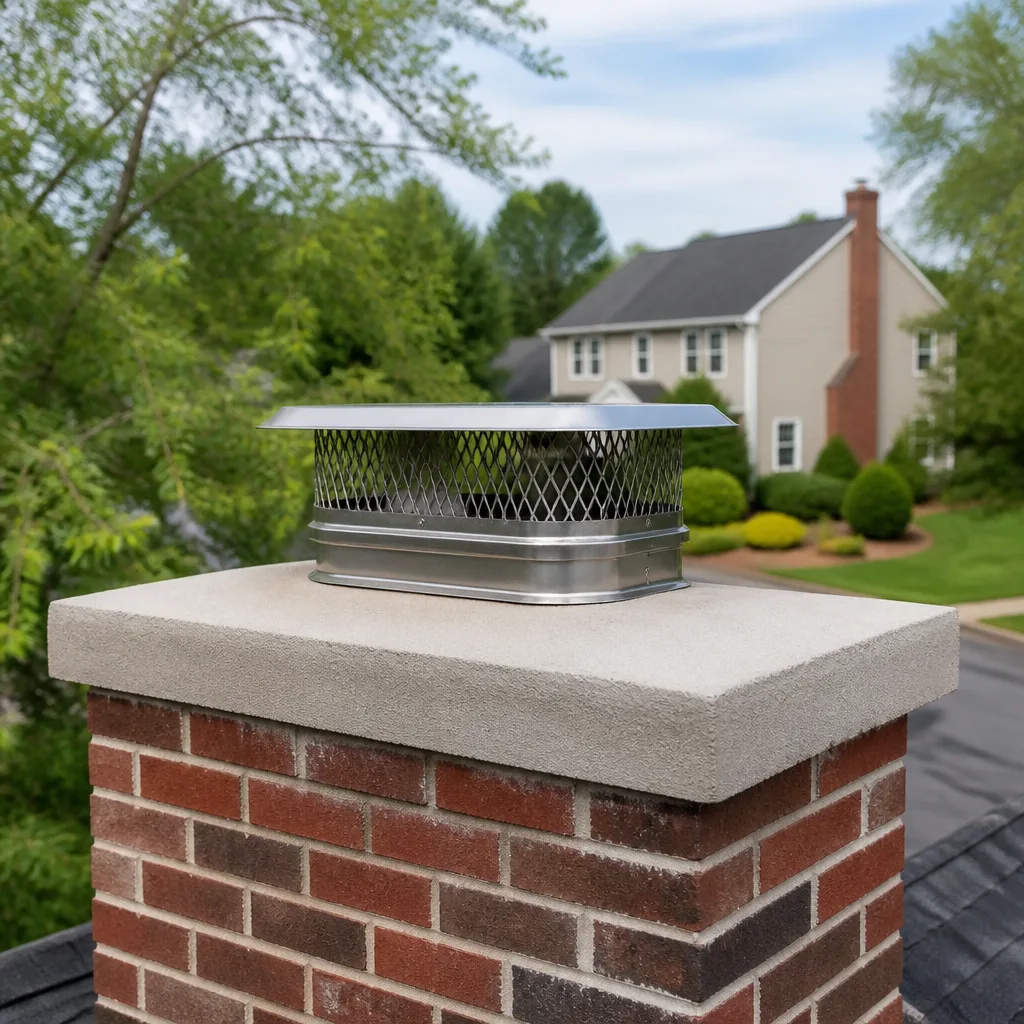 Sweep & inspection
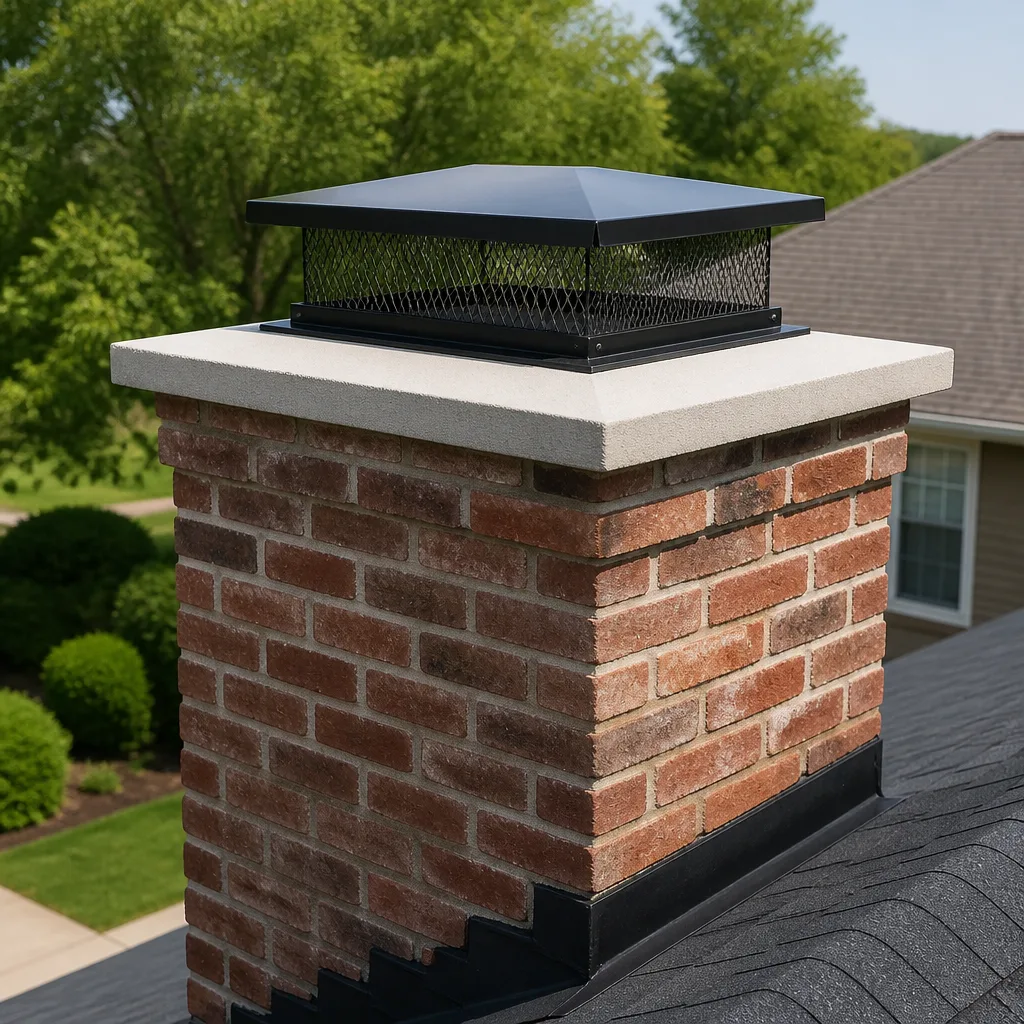 Caps & crowns
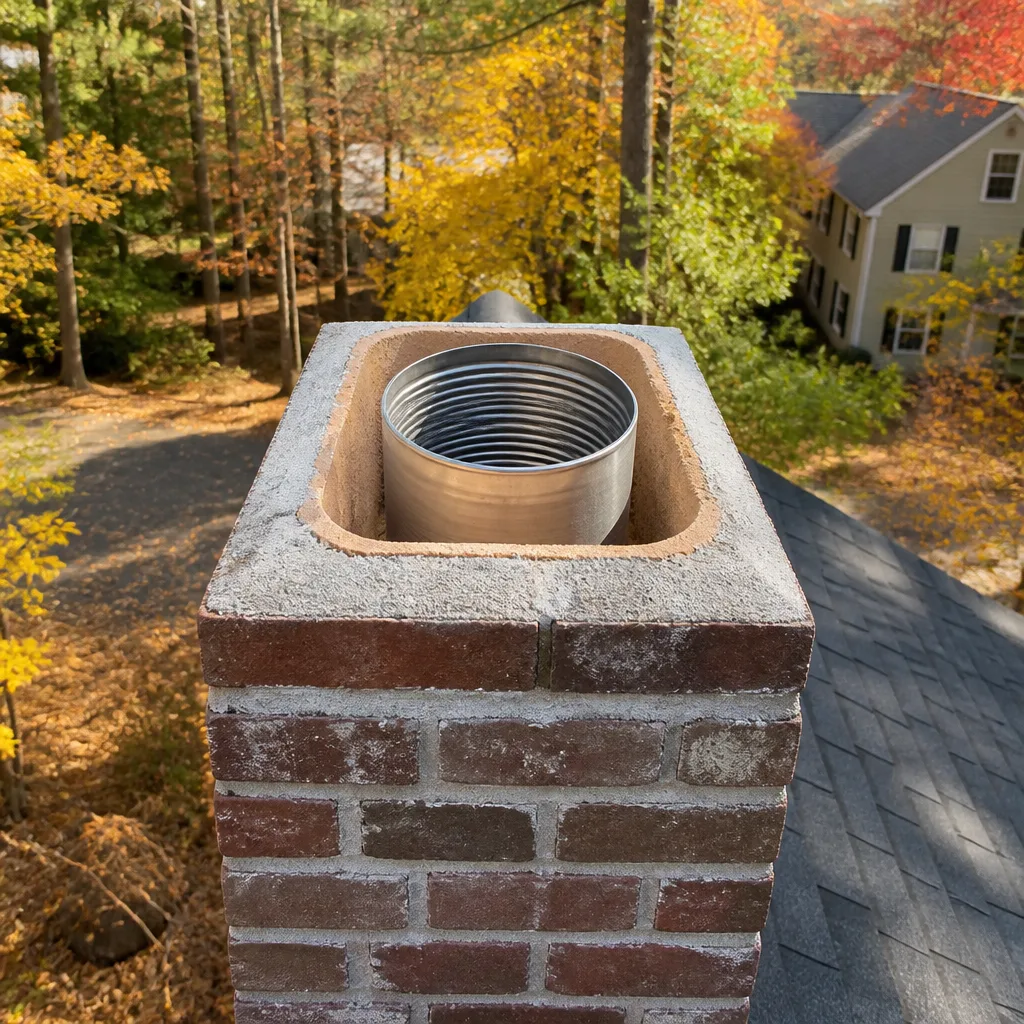 Flue relining
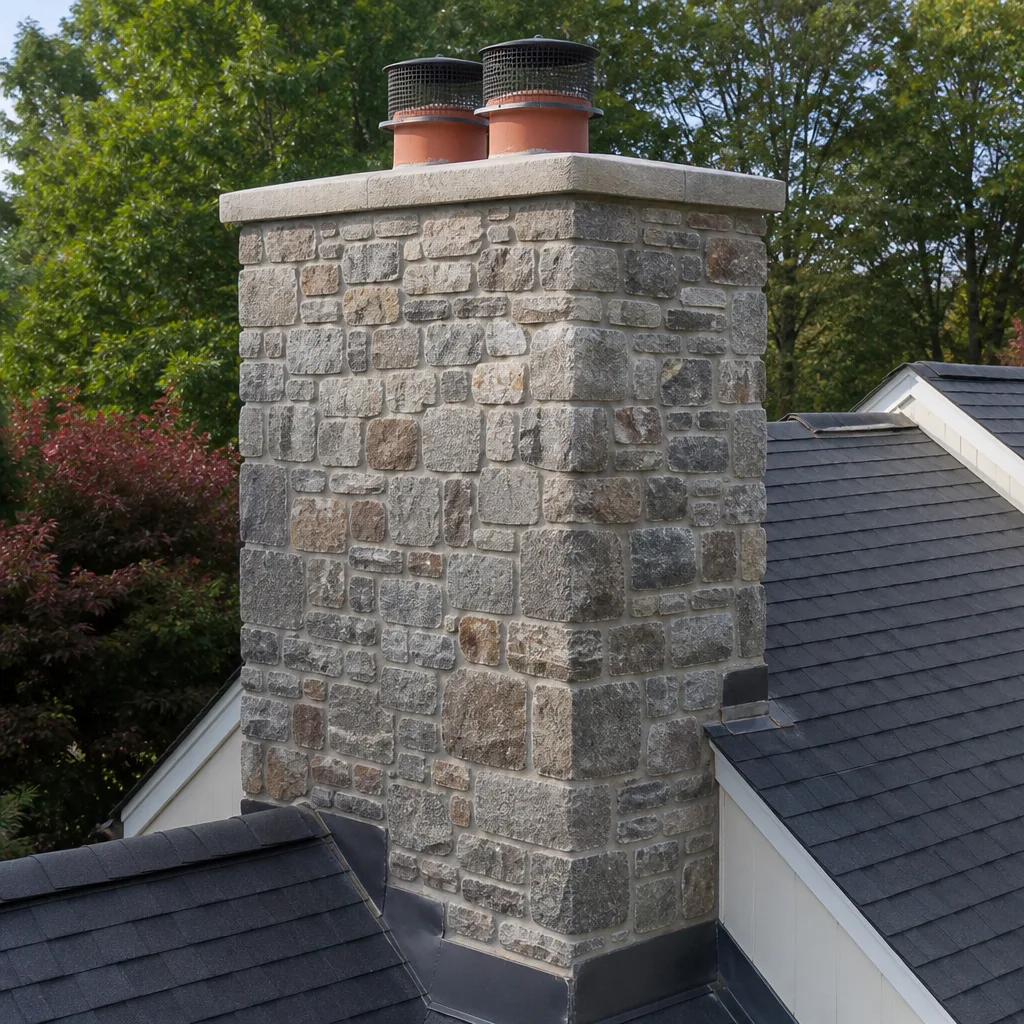 Masonry repair
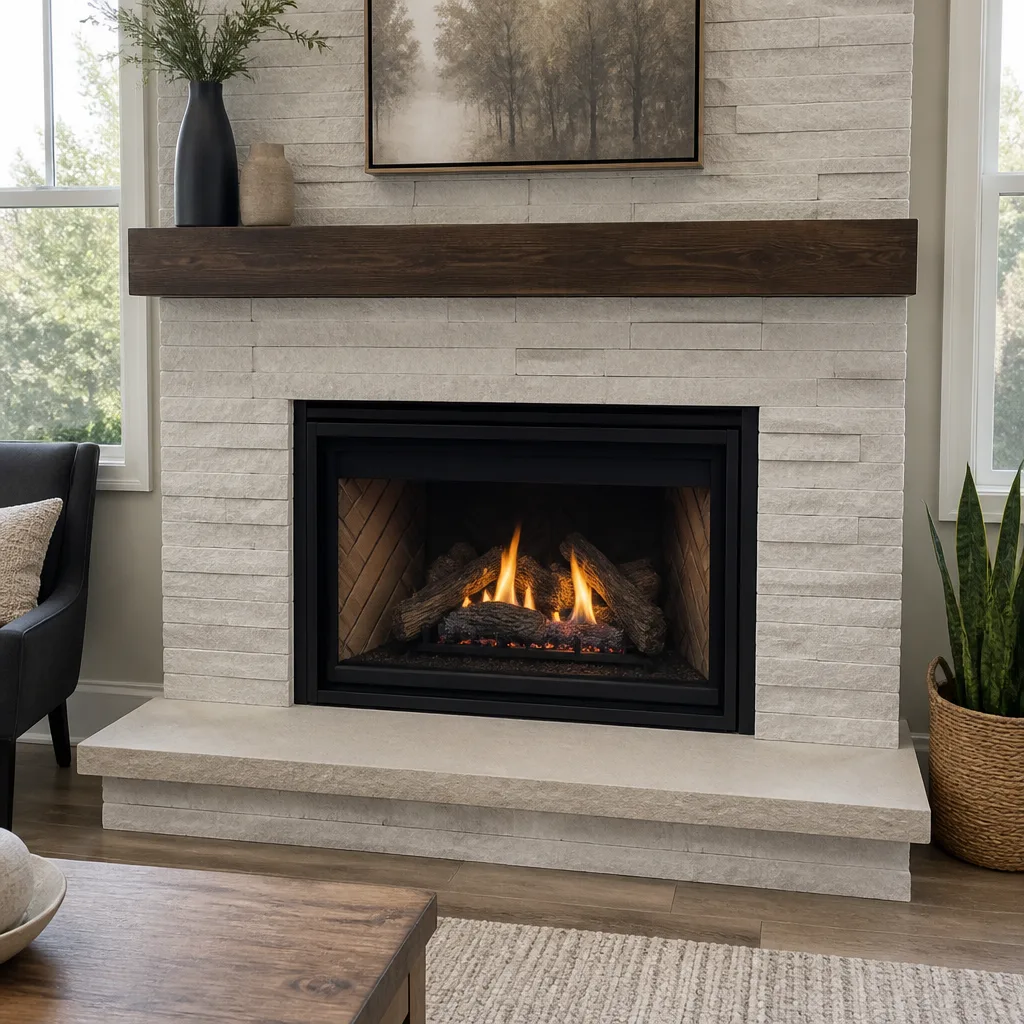 Gas fireplace service
Level 1 sweep and inspection to the NFPA 211 annual standard - flue, crown, cap, and flashing checked and photographed
Chimney sweep logs do not sweep chimneys. They loosen some creosote - which then falls where a brush and vacuum still have to collect it.
Chimney Cleaning Permits, Codes & Inspections in CA: What You Need to Know
A chimney relining job completed without a permit in California can void your homeowner’s insurance coverage for fire damage, and the contractor who told you permits weren’t needed for “repair work” was wrong. Homeowners in Del Paso Park hear this kind of thing after the fact, sitting across from an insurance adjuster or a buyer’s attorney, holding a work invoice that has no corresponding permit record. This guide unpacks exactly which chimney services trigger permit requirements in Sacramento County, what the inspection process actually looks like, and how to build the documentation trail that protects you when you sell, file a claim, or simply want to know the job was done legally.
Quick Answer
Chimney sweeping and visual inspections in California do not require a permit. But structural repairs, flue relining, chimney rebuilding, and cap replacement on masonry chimneys do trigger permit requirements under California Building Code Section 2113 and local Sacramento County amendments. If your chimney only needs cleaning, no permit is needed. If it needs repair work beyond a simple cleaning, assume a permit is required until the Authority Having Jurisdiction tells you otherwise.
Styles & brands we work with
- Sweep & inspection
- Caps & crowns
- Flue relining
- Masonry repair
- Gas fireplace service
Table of Contents
- Cleaning vs. Repair: Where the Permit Line Sits
- California Building Code Section 2113: What It Actually Governs
- NFPA 211: The Standard Insurance Adjusters Cite
- Sacramento County’s Role: Who Issues What
- Understanding the AHJ: Authority Having Jurisdiction
- What Happens at Resale: Inspections, Disclosures, and Paper Trails
- What a Permitted Chimney Inspection Actually Entails
- Building a Paper Trail That Holds Up
Cleaning vs. Repair: Where the Permit Line Sits
Most homeowners assume any work on a chimney falls into the same bucket. It does not. The distinction that matters for permits is whether the work is maintenance or modification. Cleaning and inspection are maintenance. Repair, relining, rebuilds, and structural changes are modifications. In California, maintenance on an existing system does not require a building permit. Modification almost always does.
A standard chimney sweep in Del Paso Park involves removing creosote, soot, and debris from the flue, smoke chamber, and firebox using brushes and professional vacuum equipment. It might include a camera inspection to verify liner condition. None of this changes the structure of the chimney. No permit needed, and no responsible inspector would expect one.
But the moment a technician identifies a cracked flue liner and the recommended fix is relining with a product like DuraFlex or HeatShield, you are now in permit territory. The same applies to rebuilding a spalling brick crown, replacing a rusted-out chimney cap with a new fabricated unit, or repointing more than a small section of mortar joints. Here is the line in terms anyone can follow:
- No permit required: Chimney sweeping, flue brushing, camera inspection, minor cap cleaning, smoke test, Level 1 or Level 2 inspection.
- Permit required: Flue relining (stainless or resurfacing), crown rebuild, cap replacement with new fabrication, firebox rebuild, smoke chamber parging, partial or full chimney rebuild, modification of flue dimensions.
- Gray area, clarify with the AHJ: Major repointing of brickwork, adding a top-mount damper, changing flue height or termination type.
In our experience serving fireplace owners around Del Paso Park, the most common after-the-fact surprise is a stainless steel liner that was installed without a permit. The home sells four years later, a sharp home inspector cross-references county records, and suddenly the seller is scrambling. The work might be perfectly sound. But the missing permit becomes a negotiation issue and, in some cases, a reason for an insurer to deny a claim involving the chimney.
California Building Code Section 2113: What It Actually Governs
California Building Code (CBC) Chapter 21 covers masonry construction, and Section 2113 specifically addresses masonry chimneys and fireplaces. If your Del Paso Park home has a traditional brick or stone chimney, this is the section that applies to any structural work done on it. Understanding what this section actually says will save you from believing contractor folklore.
Section 2113 lays out the structural requirements for masonry chimneys: wall thickness minimums, flue liner requirements, clearance to combustibles, foundation depth, and termination height above the roofline. Critically for permit purposes, any modification to a masonry chimney that changes its structure triggers the permit requirement because the work must be verified against these standards. You cannot legally thin a chimney wall, change a flue size, or alter a firebox without demonstrating compliance with 2113.
What homeowners often miss is that Sacramento County has adopted the California Building Code with local amendments. These amendments do not overhaul the permit trigger, but they do affect how inspections are scheduled, what documentation is accepted, and which details inspectors focus on. A chimney repair done correctly under the state code can still fail a local inspection if the county amendment requires, for example, a specific anchoring detail for stainless liners or a particular termination cap type. Sacramento County is known among local contractors for being particular about cap termination height and spark arrestor requirements, especially in zones where wildfire risk is elevated (which includes much of the Sacramento Valley urban-wildland interface).
For homeowners in Del Paso Park, the practical takeaway is this: any contractor who tells you a relining job “doesn’t need a permit in California” is either misinformed or willing to skip a legal step. Relining changes the flue system’s performance characteristics and is explicitly treated as a modification. The CBC does not carve out an exception for repair work that the homeowner considers minor. A cracked tile flue that gets a HeatShield resurfacing treatment is still a liner modification and still requires the same permit as a full stainless reline with DuraFlex.
NFPA 211: The Standard Insurance Adjusters Cite
NFPA 211 is not a law. It is a standard, published by the National Fire Protection Association, titled “Standard for Chimneys, Fireplaces, Vents, and Solid Fuel-Burning Appliances.” Here is why it matters to California homeowners: insurance policies routinely reference NFPA 211 compliance as a condition of coverage for fireplace-related claims. When an adjuster reviews a chimney fire claim, one of the first things they check is whether the chimney was maintained to the standard.
NFPA 211 says a chimney should be inspected at least once a year and cleaned when creosote buildup reaches 1/8 inch. It also specifies clearance to combustibles, liner condition requirements, and installation standards for factory-built systems. A professional chimney sweep in Del Paso Park is, in effect, performing an NFPA 211-aligned service every time they clean and inspect a flue.
The insurance angle is where this gets concrete. If you file a claim after a chimney fire, the adjuster will ask for evidence of maintenance. A receipt for an annual sweep is evidence. A camera inspection report showing the liner was sound a year before the fire is stronger evidence. No records at all is a problem. An adjuster can reasonably argue that a fire started because creosote accumulated beyond the 1/8-inch threshold, which indicates the homeowner did not maintain the system to the referenced standard. That argument can reduce or deny a claim.
The documentation your sweep provides is therefore not just a courtesy. It is a paper trail that supports coverage. That is why we include a camera inspection and written condition report as part of our standard chimney sweeping service in Del Paso Park. It is also why you should keep every invoice, photograph, and inspection note in a file. If a claim ever happens, you are handing your adjuster a clean maintenance history instead of a gap.
Sacramento County’s Role: Who Issues What
In unincorporated Sacramento County, chimney-related permits are issued by the Sacramento County Building Permits and Inspection Division. In incorporated cities within the county, such as the city of Sacramento, permits come from the local municipal building department. Del Paso Park is an unincorporated community within Sacramento County, so county permitting applies.
The type of permit is generally a residential building permit, sometimes classified under “mechanical” or “chimney” depending on the specific work. A flue relining that does not require masonry demolition might be permitted as a mechanical alteration. A crown rebuild or firewall reconstruction would be a structural building permit. Your contractor should know which classification applies, but you can always verify by calling the county or visiting the permit counter.
The permitting process for a typical chimney repair in Sacramento County follows a predictable sequence:
- Determine scope: Decide exactly what work will be done. Relining only? Crown repair? Cap replacement? Multiple items in one permit is normal.
- Apply for the permit: The contractor or homeowner submits the application with a scope description and, for larger jobs, a simple drawing or product specs. For a DuraFlex liner, the UL listing and installation manual are typically submitted.
- Pay the fee: Fees are based on the valuation of the work. Expect a few hundred dollars for a typical relining permit in Sacramento County.
- Schedule inspections: Mid-work inspections are often required. For a reline, the county may want to see the liner before the cap or shroud goes on. For a crown rebuild, the formwork is typically inspected before the pour.
- Final inspection: An inspector verifies the completed work meets CBC 2113 and county amendments. The permit is then signed off and recorded.
One local nuance: Sacramento County’s inspection schedule can run one to two weeks out during peak season. If you are planning a repair before burn season, apply early. Contractors who routinely work in the county, including our crew serving Del Paso Park, typically build inspector lead times into the project schedule so the job does not stall.
Understanding the AHJ: Authority Having Jurisdiction
You will see the term AHJ in code documents, contractor contracts, and insurance paperwork. It stands for Authority Having Jurisdiction. In plain language, the AHJ is the government body or official who has legal authority over the building, permitting, and inspection in your area.
For a chimney repair on a home in Del Paso Park, the AHJ is the Sacramento County Building Permits and Inspection Division (for unincorporated county residents). In a city, the AHJ is the city’s building department. The AHJ is the entity that says whether a permit is required, issues the permit, inspects the work, and records the final approval.
Why does this matter to a homeowner? Because when someone tells you “permits aren’t required for that,” they are not the one who decides. The AHJ is. We have seen Del Paso Park homeowners told by a handyman that a firebox rebuild was “just masonry work, no permit needed.” That was a structural alteration to the fireplace opening, which any Sacramento County inspector would classify as a building permit item. The homeowner found out at resale.
The simplest way to answer any permit question is to call the AHJ directly. A five-minute phone call to Sacramento County Building Permits and Inspection, describing the planned work, resolves the ambiguity. No contractor’s word replaces that call. If you hire a contractor who says they will pull the permit, verify it before work starts. A real permit has a number, and it is trackable. If a contractor is vague about the permit or suggests the job will be faster without one, choose a different contractor.
What Happens at Resale: Inspections, Disclosures, and Paper Trails
When you sell a home in California, you sign a Transfer Disclosure Statement (TDS) in which you attest to the condition of major systems, including the fireplace and chimney. You also answer specific questions about whether you have done modifications and whether permits were obtained. Here is what actually happens in a Del Paso Park sale, step by step:
- The buyer hires a home inspector. A general home inspector will do a visual check of the fireplace and chimney exterior. They will note rusted caps, spalling crowns, visible creosote, damaged brick, and other red flags. If anything looks off, they recommend a Level 2 inspection by a chimney specialist.
- The Level 2 inspection happens. A camera inspection of the flue reveals liner condition, missing mortar joints, and hidden damage. If the liner is cracked or the firebox is not safe, the buyer comes back to the seller with a repair request or a credit demand.
- The buyer’s agent or attorney checks permit history. If prior chimney work is visible, such as a stainless liner cap or newer brickwork, they may pull county permit records. If no permit exists for that work, it becomes a negotiation point and can delay or derail the sale.
- The seller provides documentation. A seller with a file of annual sweep receipts, inspection reports, and (if applicable) permitted repair records has a much stronger position. A seller with nothing to show is negotiating from weakness.
This is the moment where a missing permit on a relining job becomes a real financial problem. The buyer’s attorney can demand a retroactive permit, which may not even be possible if the work cannot be inspected now. They can demand a price reduction. They can walk. Sellers in Del Paso Park who maintain proper documentation simply do not face this battle.
Documented maintenance also protects you in a way buyers find reassuring: it demonstrates the chimney has been cared for, not neglected. A home with a chimney that has been swept annually, with inspection reports showing a sound liner, sells faster and with fewer contingencies. That documentation is a selling feature, not a liability.
What a Permitted Chimney Inspection Actually Entails
If you are having permitted repair work done, such as a DuraFlex liner installation or a HeatShield resurfacing, the county will schedule at least one and often two inspections. Here is what to expect.
The mid-work inspection (often called a rough inspection) happens after the old liner is removed or the damaged firebox is prepared, but before the new materials are covered or capped. The inspector is looking at clearances, flue sizing, the condition of the surrounding masonry, and the installation details of the new product. They may check the UL listing of the liner material against the manufacturer’s installation spec. This is why a professional-grade product like HeatShield or DuraFlex matters: the inspector is more likely to be familiar with its installation requirements and the documentation is cleaner.
The final inspection happens once the job is complete. The inspector verifies the termination cap, spark arrestor presence (required in most Sacramento County applications), flue height above the roof, and any masonry restoration work. If everything checks out, the permit is signed off and recorded. That record is what future buyers and insurers will see.
Homeowners sometimes ask whether the county inspector will do the same thing as a professional chimney sweep’s camera inspection. The answer is no. A county inspector verifies code compliance. A professional camera inspection documents the actual condition of the flue and interior components. They serve different purposes, and you should get both. After any permitted repair, the final inspection closes out the permit. But an annual cleaning and inspection from a qualified chimney professional in Del Paso Park remains the right way to track system health over time.
Building a Paper Trail That Holds Up
The homeowner who documents chimney maintenance has an advantage in every scenario: resale, insurance claims, warranty disputes, and even simple peace of mind. Building that paper trail takes minimal effort if you know what to keep.
Start with a dedicated file, digital or paper. After every service, keep these records:
- The service invoice showing the date, service performed, and specific areas addressed.
- The camera inspection report with photographs or video stills of the flue interior.
- Any repair estimates or work recommendations, even if you chose not to act on them at the time.
- Permit documentation if repair work was done, including the permit number and final inspection sign-off.
- Warranty paperwork for any products installed, such as a HeatShield or DuraFlex liner.
For Del Paso Park homeowners, this file becomes especially valuable during fire season. Sacramento Valley residents face real wildfire risk, and insurers are increasingly asking questions about chimney and vent maintenance in the underwriting process. A clean documentation file can be the difference between a smooth renewal and a non-renewal notice.
We also recommend taking your own photos of any repair work while it is underway. If the chimney is opened up and the old liner is visible, photograph it. Those images are yours, independent of any contractor’s report, and they become part of your home’s maintenance history.
At Chimney Sweep Del Paso Park home, we hear from homeowners in the middle of a sale or an insurance negotiation who wish they had started documenting years earlier. Starting now costs nothing and pays off later.
Common Mistakes to Avoid
- Believing “repairs don’t need permits.” Cleaning does not need a permit. Structural repair, relining, and rebuilding do. Do not accept a contractor’s word over the AHJ’s.
- Treating a home inspection as enough. A general home inspector is not a chimney specialist and will not camera the full flue. In Del Paso Park, where many homes date from the 1950s through 1970s, older chimneys need specialized evaluation.
- Skipping the permit to save a few hundred dollars. The permit fee is trivial compared to the cost of a failed resale or denied insurance claim.
- Not verifying the permit actually got pulled. Some homeowners pay a contractor who says they will handle permits and never confirm. Ask for the permit number before work begins.
- Filing a claim with no maintenance records. An insurer referencing NFPA 211 will ask for evidence of annual inspection. No records weakens your position.
- Replacing a cap or crown without a permit. These are structural components, not cosmetic additions. Sacramento County treats them as permit items on masonry chimneys.
- Assuming a stainless liner never needs inspection. A DuraFlex liner lasts decades, but the surrounding masonry, cap, and crown still weather. Annual chimney sweeping and inspection remains the standard.
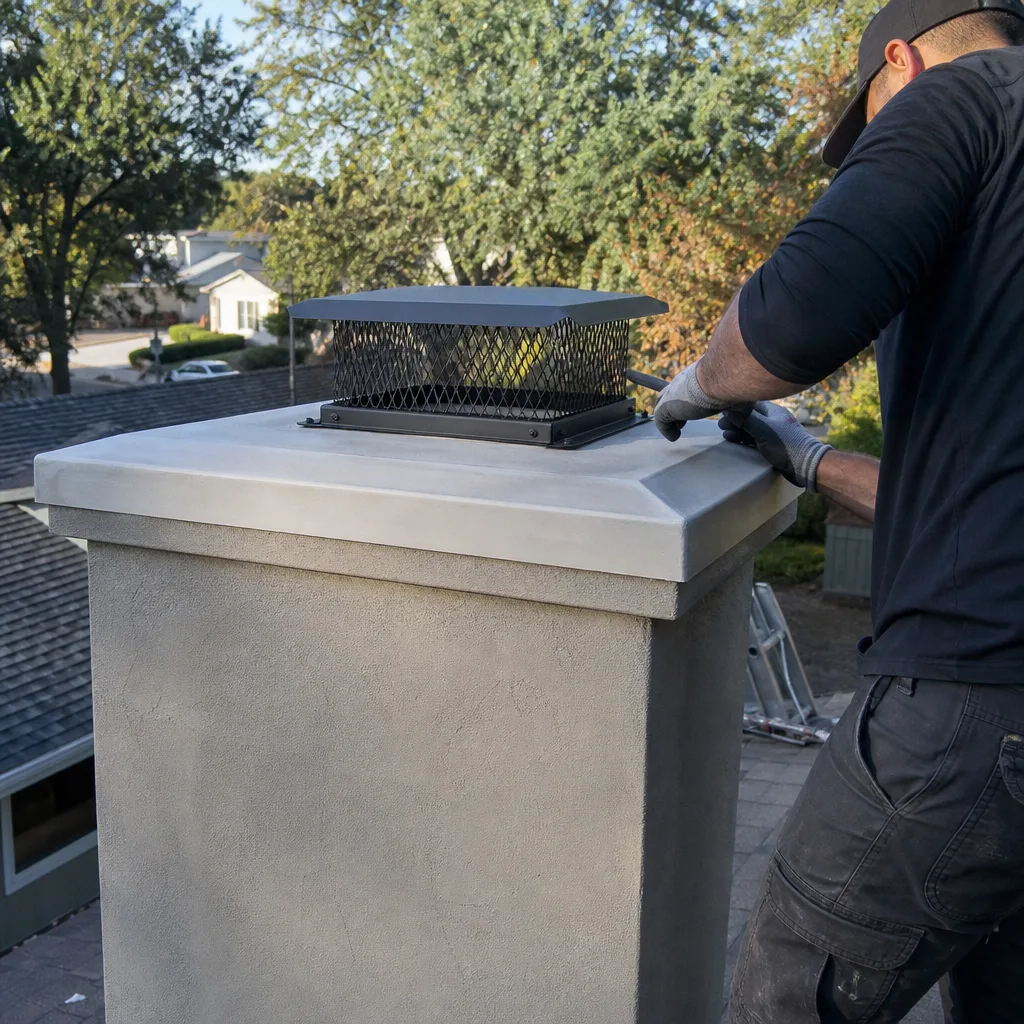
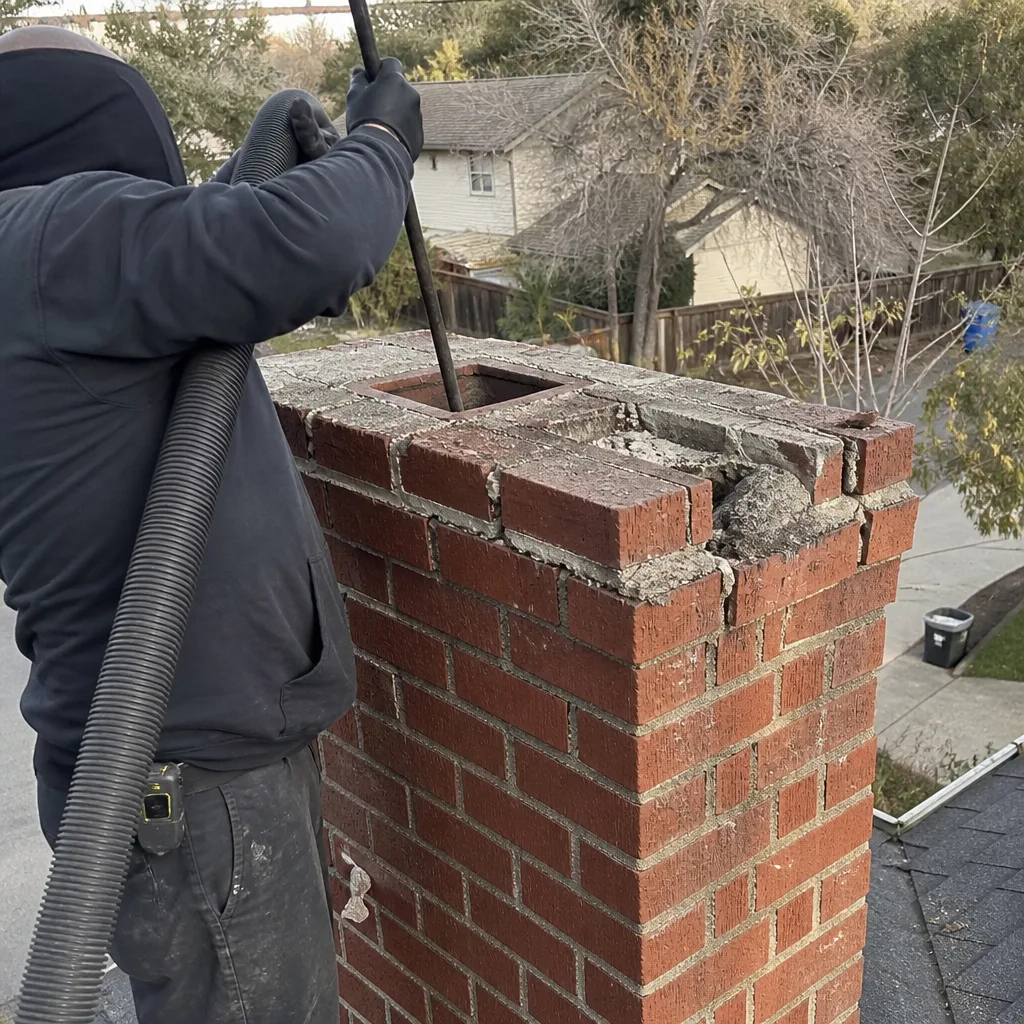
See the difference
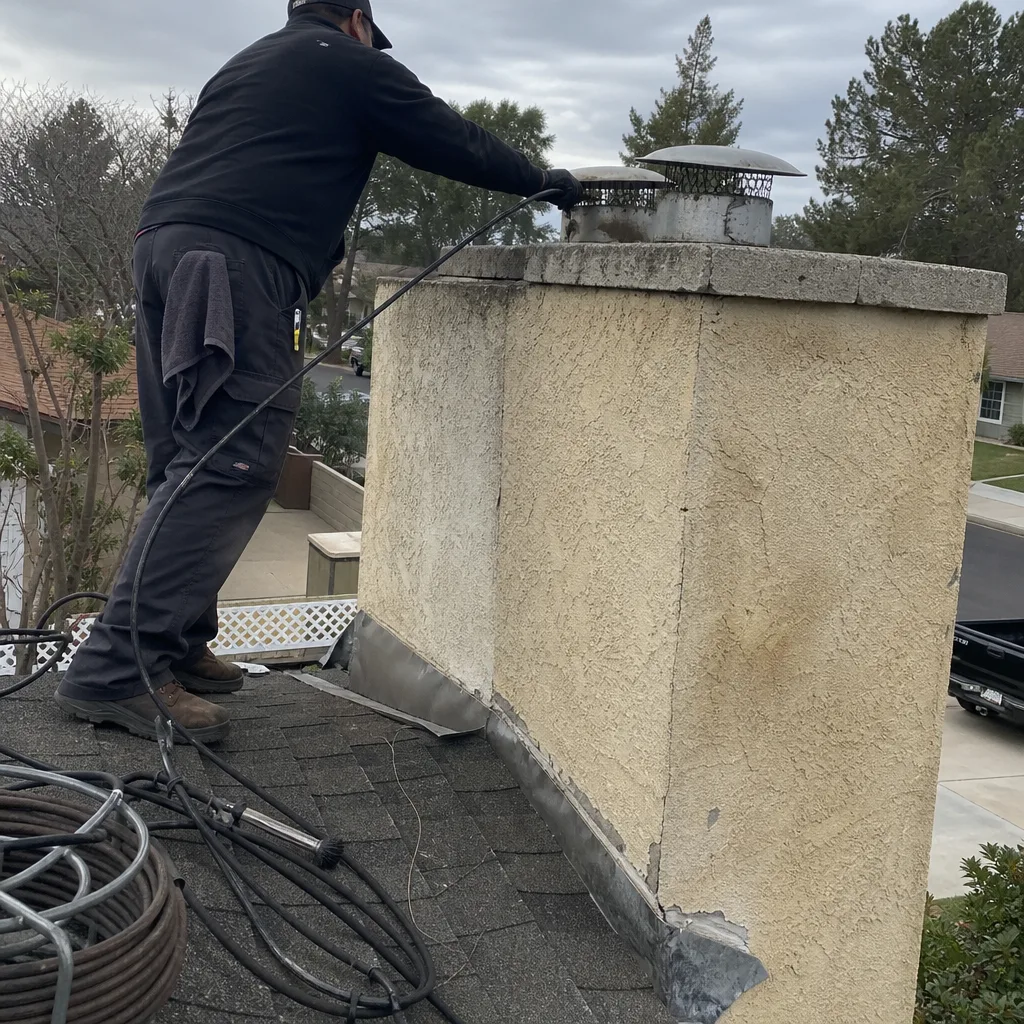 Before
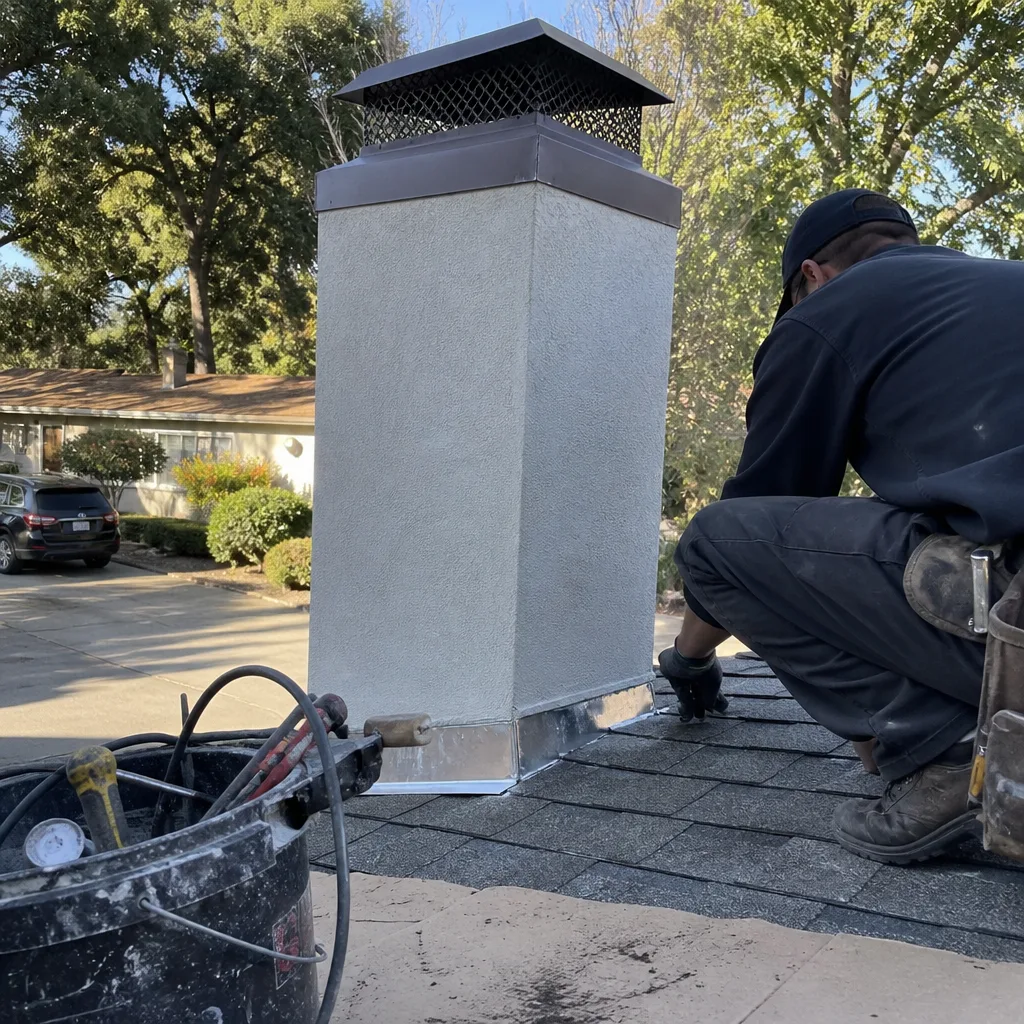 After
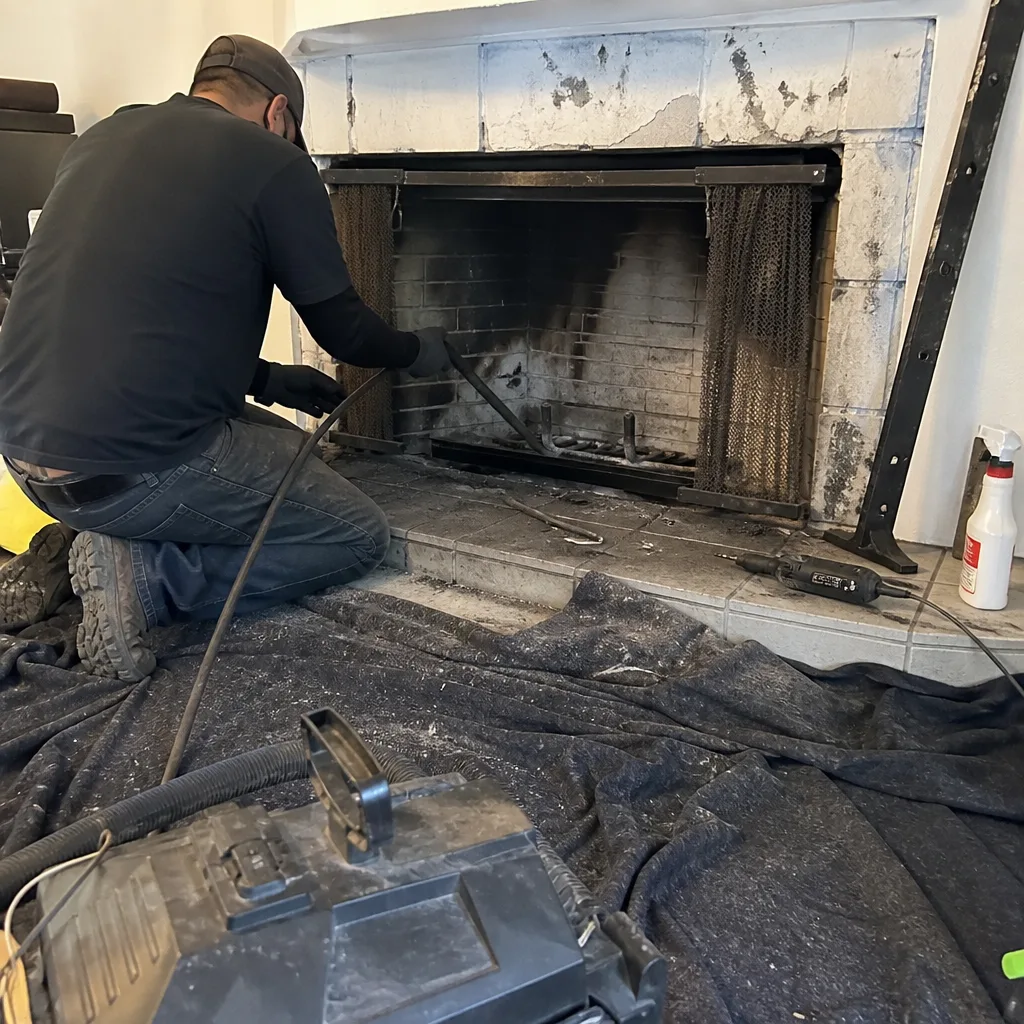 Before
 After
 Before
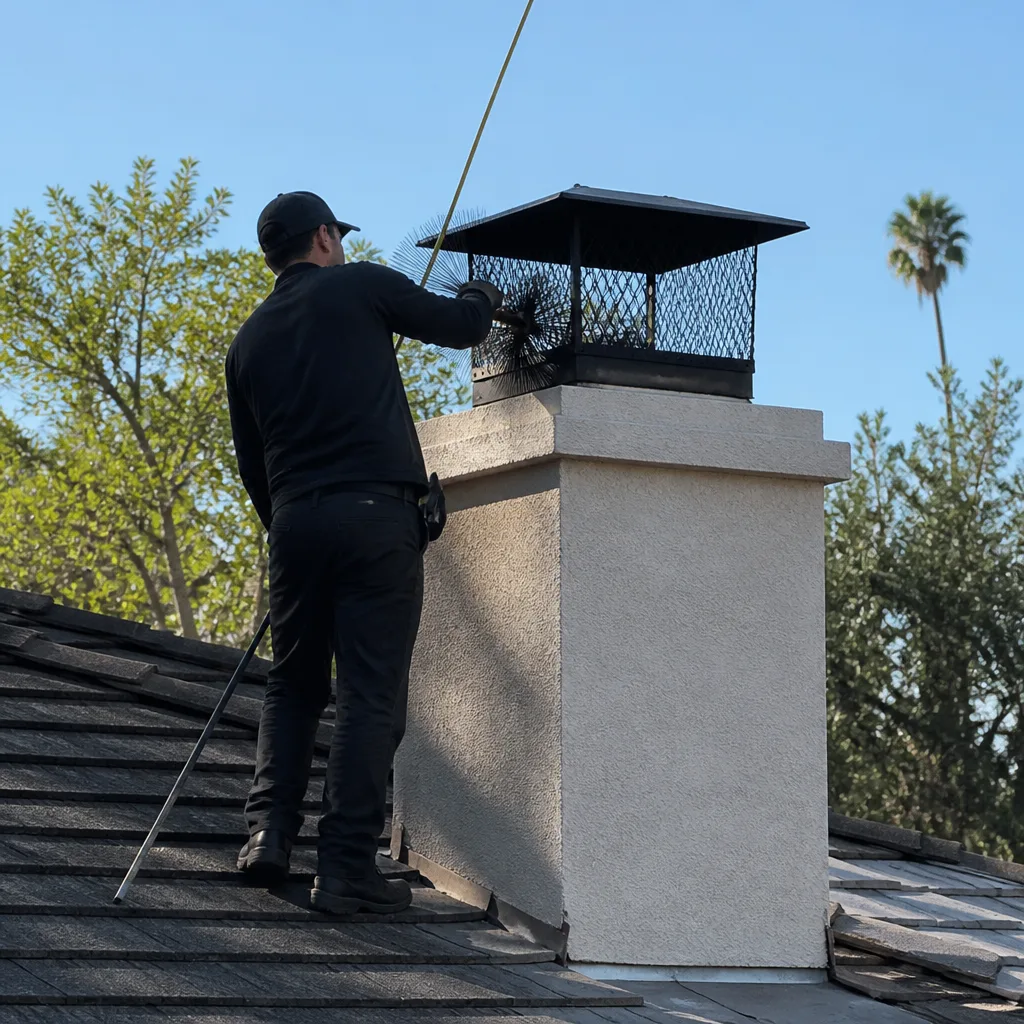 After
When to Call a Professional
If you know your chimney has not been inspected in more than two years, call a professional to schedule a cleaning and camera inspection before the next burn season. If you see spalling brick, a rusted cap, water staining on the ceiling near the chimney, or smell smoke in the house after a fire, those are signs of a system that needs professional evaluation, not a DIY look. If a home inspector flags your chimney during a sale, bring in a chimney specialist to do a Level 2 inspection and give you a real scope of work. And if you are told you need a liner replacement, get a second opinion from a contractor who installs professionally approved products and can pull the proper Sacramento County permit. Chimney Sweep in Del Paso Park offers free estimates for screening, inspection, and repair scoping. Call (855) 341-8804 to schedule.
Frequently Asked Questions
No. A chimney sweep that removes creosote, soot, and debris from a flue without altering the structure of the chimney does not require a permit in California. A standard cleaning and inspection in Del Paso Park is a maintenance service, not a modification.
A permit is required when the work modifies the chimney’s structure or performance, including flue relining, crown rebuilds, cap replacement with new fabrication, firebox rebuilds, and partial or full chimney rebuilds. When in doubt, call Sacramento County Building Permits and Inspection and describe the work.
A Level 1 inspection is a visual check of accessible chimney components, typically done during an annual sweep. A Level 2 inspection adds a camera scan of the flue interior and is recommended when the home is being sold, after a chimney fire, or before a major repair. Both are maintenance inspections, not permits.
In most cases, yes. Replacing a rusted or damaged chimney cap with a new fabricated cap is considered a structural modification to a masonry chimney under CBC 2113, and Sacramento County treats it as a permit item. Recleaning and reinstalling the same cap does not require a permit, but replacement does.
HeatShield is a manufacturer-supported chimney flue resurfacing product used to repair damaged or deteriorating flue liners. Installing it is a liner modification and requires a building permit in Sacramento County, just as a stainless DuraFlex liner installation would.
NFPA 211 recommends an annual inspection, with cleaning performed when creosote reaches 1/8 inch thickness. For a home used regularly during Sacramento Valley burn season, an annual sweep with camera inspection is the standard practice. Call (855) 341-8804 for a free estimate on Dryer Vent Cleaning in Del Paso Park as well as chimney screening.
The Bottom Line
Chimney cleaning in California is maintenance, and maintenance does not need a permit. Repair work is different. Flue relining, crown replacement, cap fabrication, and firebox rebuilds all trigger permit requirements under the California Building Code and Sacramento County’s local amendments. The homeowner who knows the line between cleaning and repair, documents every service, and verifies permits before work begins is protected at resale, during insurance claims, and in every season. The homeowner who takes a contractor’s word about permits is not. When you need the work done, call a contractor who does it right, pulls the permit, and gives you the paper trail to prove it. Chimney Repair in Del Paso Park is that kind of work. Call (855) 341-8804 and know exactly what’s inside your flue before the next fire season.
Written by the team at Chimney Sweep Del Paso Park, serving Del Paso Park since 2014. Explore more guides & resources.