
Last updated November 2, 2026
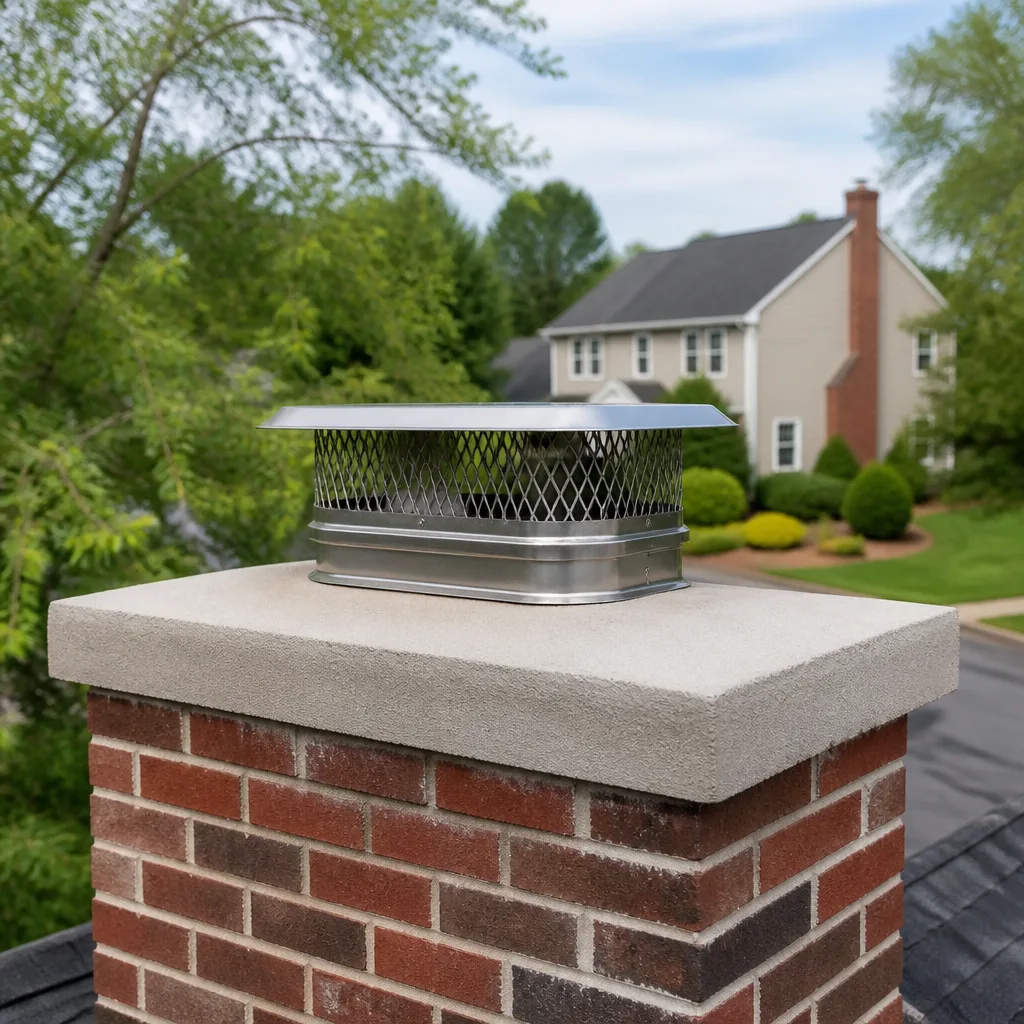 Sweep & inspection
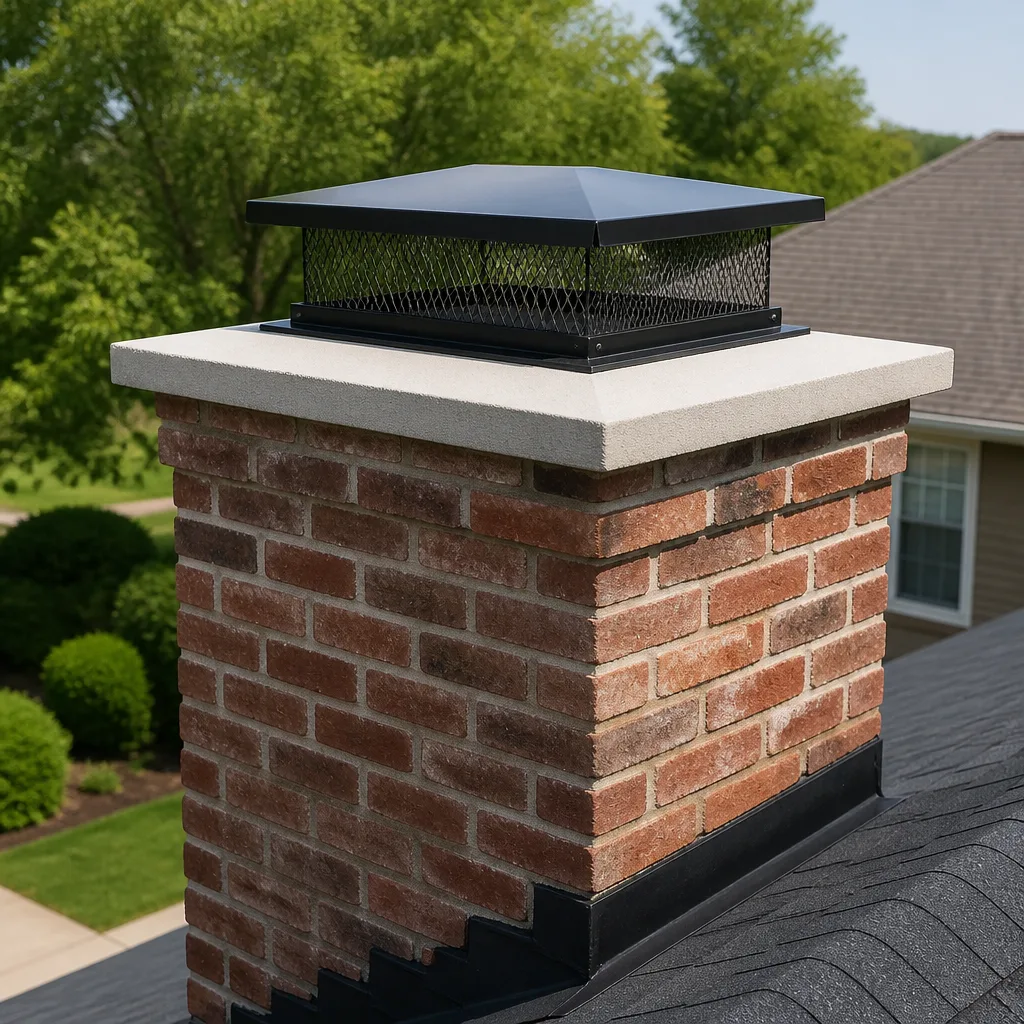 Caps & crowns
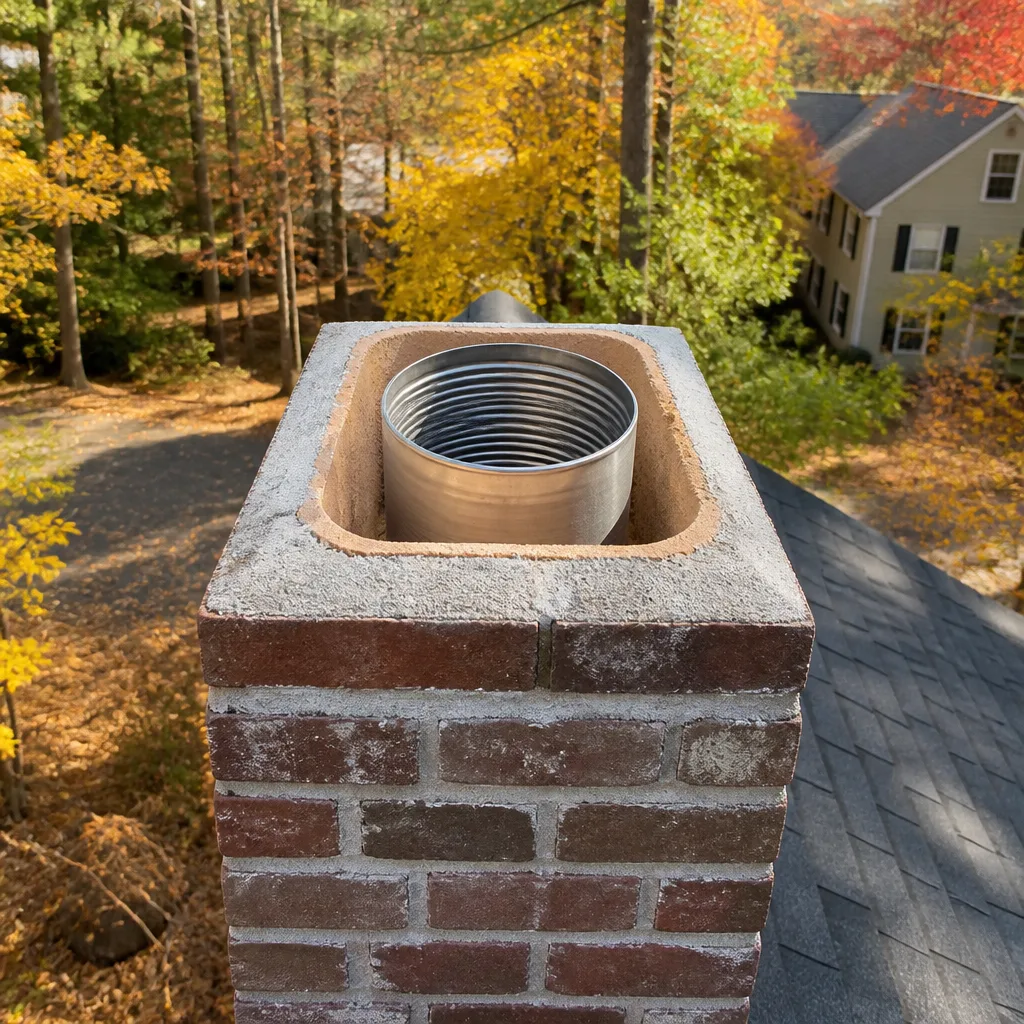 Flue relining
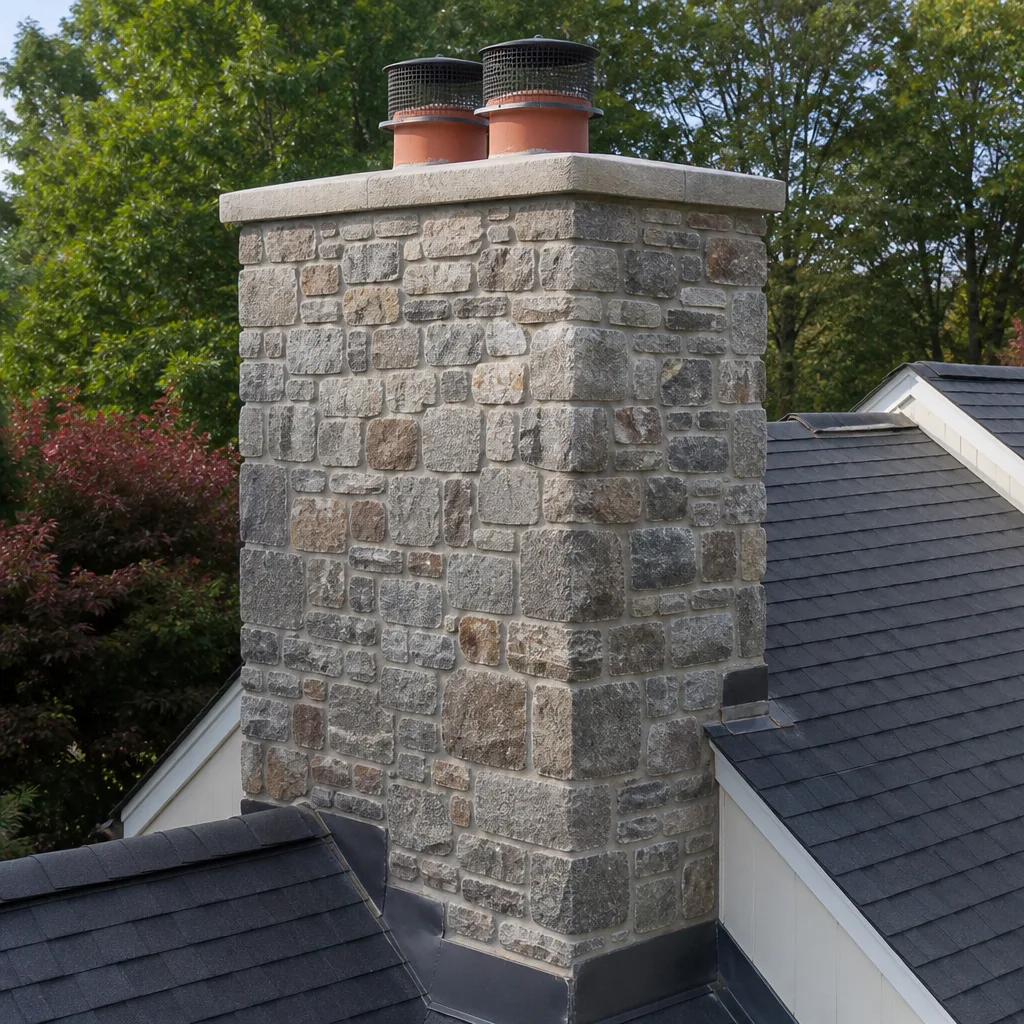 Masonry repair
 Gas fireplace service
Level 1 sweep and inspection to the NFPA 211 annual standard - flue, crown, cap, and flashing checked and photographed
Chimney sweep logs do not sweep chimneys. They loosen some creosote - which then falls where a brush and vacuum still have to collect it.
DIY vs Professional Chimney Cleaning: The Del Paso Park Homeowner’s Decision Guide
Here’s a fact most chimney cleaning guides won’t lead with: the brush itself is rarely the problem. A $40 wire brush from the hardware store will remove loose creosote. It works. The problem is that most homeowners in Del Paso Park can’t accurately assess what’s behind the creosote before they start scraping, and that assessment determines whether the job is routine maintenance or a fire hazard. This guide maps exactly where the DIY line sits. You’ll learn what stage 1 creosote actually looks like, what happens if you brush stage 2 without treating it, what equipment changes the risk equation, and how to make a decision you can defend to your insurance company.
Quick Answer
DIY chimney cleaning is safe and reasonable in Del Paso Park if you burned less than two cords of seasoned wood last season, your last professional inspection was within two years, and a visual check shows only light flaky stage 1 creosote. If you haven’t had a camera inspection ever, can’t reach the cap safely, or see shiny tar-like deposits, hire a professional. The difference isn’t effort. It’s whether you know what you’re looking at before you start.
Styles & brands we work with
- Sweep & inspection
- Caps & crowns
- Flue relining
- Masonry repair
- Gas fireplace service
Table of Contents
- What a Del Paso Park Homeowner Can Do Safely Without Specialized Tools
- Understanding Creosote Stages: The Real Deciding Factor
- What a Brush Can’t Do: How Professional Equipment Changes the Outcome
- Insurance and Documentation: Why Paper Trails Matter After a Fire
- The Three-Question Decision Rule for Del Paso Park Homeowners
- What DIY Actually Costs in Time, Tools, and Risk
- The Dryer Vent Parallel: A Fire Risk Most Chimney Companies Ignore
- Why Del Paso Park’s Climate and Housing Stock Matter
What a Del Paso Park Homeowner Can Do Safely Without Specialized Tools
Let’s be clear about what’s genuinely yours to handle. There’s a meaningful set of chimney maintenance tasks that don’t require a ladder, a brush, or any specialized knowledge. These are the things you can do this weekend in Del Paso Park without calling anyone.
First, the external cap check. Stand in your yard and look up. You’re checking for three things: is the cap still there, is it sitting straight, and is there obvious rust or damage visible from the ground. A missing or damaged cap means rain has been getting into your flue, which changes creosote chemistry and can accelerate liner deterioration. You don’t need to climb up to know something’s wrong. You need to know whether a cap is compromised before burning season starts.
Second, the firebox visual inspection. Open your dampers and shine a flashlight up from inside your firebox. You’re not making a diagnosis. You’re looking for anything abnormal: chunks of missing mortar, visible cracks in the firebrick, or a flue that’s obviously coated in something thick and shiny. If you see flaky gray or brown powder that brushes off easily, that’s normal. If you see what looks like dried molasses or black glass, stop there and call a professional.
Third, the damper operation test. Open and close your damper fully several times while the firebox is cold. It should move freely, seat properly when closed, and not require force. A stuck or corroded damper is a carbon monoxide risk and a draft efficiency problem, but it’s also a tell that your chimney has been taking on moisture. If the damper doesn’t operate smoothly, the next step is inspection, not adjustment.
Fourth, and this one gets overlooked constantly: the dryer vent lint trap. Every Del Paso Park home with a dryer has a fire hazard hiding behind the machine, and the part you can do safely without any tools takes about two minutes. Pull the lint screen, clean it thoroughly, and check the cavity behind it with a flashlight. If you see compacted lint in the cavity, that’s the tip of an iceberg. Regular lint screen cleaning is genuinely preventive. It’s also not enough on its own, which is why Dryer Vent Cleaning in Del Paso Park is a core part of what we do. More on that later.
These four tasks are legitimate maintenance. They’re not pretend work. They’re the difference between a homeowner who catches problems early and one who discovers them in November when the first fire gets lit and the living room fills with smoke.
Understanding Creosote Stages: The Real Deciding Factor
Creosote is not one substance. It’s a spectrum, and the physical differences between stages are dramatic enough that you can learn to distinguish them with a good flashlight. This matters more than any other factor in the DIY decision, because the stage determines whether brushing alone is safe or actively harmful.
Stage 1 creosote is what most people picture when they think of chimney soot. It’s a light, flaky, dusty coating. It brushes off with minimal pressure. In physical terms, it feels like flakes of dried coffee grounds or flaky pastry. If you run a chimney brush through a flue with stage 1 creosote, you’ll get most of it out. This is genuinely low-risk work for a capable homeowner in Del Paso Park who has the right safety setup and knows their flue is sound. If stage 1 is all you’re dealing with, and you meet the other conditions we’ll cover in the decision rule below, DIY cleaning is reasonable.
Stage 2 creosote is where things change. Stage 2 is shiny, crusty, and hard. In physical terms, it looks like black glass or hardened tar. It does not brush off. It has to be scraped or chemically treated. Here’s the counterintuitive risk point: if you run a brush through a flue with stage 2 creosote without treating it first, you’re not removing the hazard. You’re creating surface scratches and fractures in the hardened deposit, which increases the surface area of material that can ignite. You’ve made a bad situation slightly worse and given yourself false confidence. Stage 2 requires chemical treatment or mechanical removal with rotary systems, and doing it wrong creates a hidden fire risk that you can’t see from the firebox.
Stage 3 creosote is rare but not unheard of in Del Paso Park homes with older wood-burning setups and years of neglected maintenance. Stage 3 is a thick, tarry, candle-wax-like coating. It’s structural. It sometimes hangs in sheets. This is an active fire hazard and cannot be addressed with any DIY method, period. If you see stage 3, you’re calling someone.
Here’s the practical implication. If you can look up your flue with a good flashlight and identify dusty flaky deposits, you have information you can act on. If you can’t tell what you’re looking at, or if what you’re seeing is shiny and hard, the safest move is a professional evaluation. We see this pattern constantly in Del Paso Park homes: a homeowner who’s been burning well-seasoned oak for a year, brushes the flue themselves, and everything’s fine. And we see the opposite: a homeowner who burned half a cord of pine from a gas station bundle, built up stage 2 fast, brushed it, thought they were done, and then had a flue fire the next season. The variable wasn’t effort. It was knowing what was there.
What a Brush Can’t Do: How Professional Equipment Changes the Outcome
A wire brush on a fiberglass rod scrapes. That’s the entire mechanism. It’s effective on stage 1 creosote in a straight flue with no obstructions. It’s progressively less effective on anything hardened, anything curved, or anything behind a damper that won’t fully open. Professional equipment exists to solve exactly the problems that defeat a brush, and understanding the gap is useful even if you never hire a sweep.
The first difference is rotary power brushing. A rotary system spins a brush head at high speed, like a power drill compared to a hand screwdriver. The spinning action removes hardened creosote that a hand brush slides over. It works in angled or offset flues where a straight rod can’t apply pressure. We use rotary systems because most chimneys in Del Paso Park are not straight vertical tubes. They have offsets. They have ledge points. A hand brush skips those spots, and skipped spots are where creosote accumulates fastest.
The second difference is vacuum containment. A proper chimney cleaning isn’t just about loosening material. It’s about controlling where that material goes. A professional setup includes a high-powered HEPA vacuum sealed to the fireplace opening, creating negative pressure that pulls loosened soot into the vacuum instead of into your living room. If you brush your own chimney without this setup, plan on a dusty day. More importantly, plan on soot releasing into your home’s air, which matters for anyone in the household with asthma, allergies, or respiratory sensitivity. The dust from a DIY brush job isn’t just messy. It’s fine particulate matter that lingers.
The third difference is camera inspection capability. A chimney camera is a specialized tool that feeds a live view of the flue interior to a monitor. It shows exactly what’s there: cracked tiles, missing mortar, liner gaps, or blockages. This matters in the context of a cleaning because what you can’t see is what hurts you. A chimney can look acceptably clean from the firebox and hide a cracked flue liner six feet up. Brushing doesn’t reveal that. It just moves the soot around. Every professional sweep in Del Paso Park should offer this as part of the service, and in our experience, it’s the single biggest difference between a service you can trust and one you can’t.
We work with professional-grade product lines including DuraFlex, Olympia Chimney, and Copperfield precisely because the quality of the material matters when it’s going inside your flue. These are the same lines used by certified chimney professionals nationwide, not hardware store alternatives. The tool matters. The material matters. And the person who knows which applies matters most.
Insurance and Documentation: Why Paper Trails Matter After a Fire
Here’s a conversation most chimney DIY guides skip entirely. After a chimney fire, your insurance company has questions. Specifically, they ask about maintenance history. What did you do, when did you do it, and can you prove it? If your answer is “I brushed it myself last October,” you need to know what that answer sounds like to an adjuster.
A self-cleaned chimney has no documentation. There’s no invoice, no inspection report, no service record. There’s no third-party confirmation that the work was done correctly, or that it was done at all. In a disputed claim, that absence of paper trail becomes a problem. It doesn’t automatically void coverage, and we’re not saying it will, but it puts you in the position of defending your own work without evidence. That’s not where you want to be after a fire.
A professional sweep generates a service record. The record shows the date, the condition found, the work performed, and the recommendation for next service. That record matters in an insurance claim because it shifts the burden of proof. It says a qualified third party evaluated the system and performed maintenance according to industry standards. Same logic as a mechanic’s log. It’s evidence you acted responsibly.
There’s a second angle. If your chimney company performs a camera inspection and finds a cracked liner or a failing crown, and you choose to defer the repair, that decision is on record. It’s your chimney and your call, but informed deferral is different from willful ignorance. The documentation protects you either way. It shows due diligence.
For Del Paso Park homeowners, the practical takeaway is this: if you burn wood regularly, at minimum have a professional inspection with documentation every two years, as outlined in our seasonal chimney cleaning care guide. What you do between inspections is up to you. But the baseline should exist on paper. That’s the line between routine self-maintenance and undocumentable risk.
The Three-Question Decision Rule for Del Paso Park Homeowners
Here’s the decision framework distilled. Answer these three questions honestly, and the DIY question answers itself. No hedging, no institutional bias, no upselling. This is the rule we recommend to friends and family in Del Paso Park who ask whether they can skip a professional sweep and do it themselves.
- Have you had a professional camera inspection within the last two years? If no, start there. You cannot assess the interior of a flue without seeing it, and a camera inspection is the only reliable way to rule out liner cracks, tile gaps, mortar loss, or hidden blockages. Brushing a structurally compromised flue doesn’t just fail to fix the problem. It can loosen failing masonry and make things worse. If you’ve never had a camera inspection and you burn regularly, you’re deciding without information. Get the baseline first.
- What did you burn last season, and how much of it? If you burned more than two cords of any wood, or any amount of unseasoned wood, pine, or manufactured logs, you likely have creosote accumulation beyond stage 1. Stage 2 forms fast under those conditions. If you burned less than two cords of well-seasoned hardwood, and your previous inspection was clean, the DIY bar is lower. But know that “seasoned” means split, stacked, and dried for at least six months in a Del Paso Park summer. A gas station bundle is not seasoned.
- Can you accurately identify what you’re looking at inside your flue? If you shine a light and see dusty flaky deposits, you have a baseline. If you see shiny hard material, or you can’t tell, or you’re using words like “maybe” and “probably,” hire someone. Not because you’re not capable. Because you’re deciding based on uncertainty, and uncertainty about creosote stage is a fire variable.
If the answer to question one is no, or question two is more than two cords, or question three is anything other than confident stage 1 identification, start with a professional baseline before attempting any DIY maintenance. That’s the rule. It’s not about confidence or cost. It’s about whether you have the information the decision requires.
What DIY Actually Costs in Time, Tools, and Risk
Let’s talk honestly about what a DIY chimney cleaning costs you, because the price tag on a brush is not the number that matters – see our full chimney cleaning cost breakdown for Del Paso Park homeowners for the complete picture. A basic chimney brush kit runs $30 to $80. Add a drop cloth you already own, some painter’s tape, and a few hours of your weekend. If everything goes smoothly, that’s your cost: about $50 and an afternoon.
Here’s what the real cost equation looks like. If your chimney is straight, your creosote is stage 1, and you’ve already had a recent professional inspection, DIY is economical and low-risk. You’ll spend less than the cost of a professional sweep, and you’ll do an adequate job. We’re not going to pretend otherwise. There are cases where DIY is the right call.
If any variable is off, the cost changes. A chimney with an offset or a ledge you can’t reach with a straight brush means you’ve spent the money and the afternoon and left the most dangerous deposits untouched. A chimney with stage 2 creosote means you’ve spent the money and potentially increased fire risk by scoring the surface. A chimney with a cracked liner means you’ve spent the money and done nothing about the actual structural problem. In each case, you’ve paid the DIY cost and you still need professional service.
There’s also the time cost. The first time you do this, it’s a half-day job between setup, brushing, cleanup, and the inevitable problem-solving. A professional sweep in Del Paso Park is usually a two-hour appointment. The gap narrows over repeated DIY seasons as you learn your chimney, but the learning curve is real.
And there’s the risk cost, which doesn’t show up on any receipt. A chimney fire is a structure fire. The National Fire Protection Association consistently identifies chimney fires as a leading cause of residential heating fires. A cracked liner that goes undetected because no one looked is a carbon monoxide risk. These are not theoretical. They’re the entire reason the chimney maintenance industry exists.
For most Del Paso Park homeowners, the actual smart play is this: pay for a professional inspection and cleaning every year or two, get the camera record, and if you want to do a mid-season light brushing yourself, do it with the knowledge of what’s actually in your flue. That’s not a DIY versus professional debate. It’s a sequence. Professional baseline first, informed DIY in between.
The Dryer Vent Parallel: A Fire Risk Most Chimney Companies Ignore
Dryer vents and chimneys share the same risk: blocked airflow and heat buildup. A dryer pushes heated air through a vent. If lint accumulates and restricts that airflow, heat builds up. Lint is highly flammable. The NFPA identifies clogged dryer vents as the leading cause of dryer fires. Same physics. Same prevention. Different appliance.
Most chimney companies in the Sacramento area don’t touch dryer vents. It’s outside their scope, and there’s a clean logic to that. But it creates a gap for homeowners who understand both systems and want one contractor for the whole fire-safety picture. Our position is simple: dryer vent cleaning and chimney sweeping are the same discipline with different ductwork. Both require the same skills, the same understanding of airflow and clearances, and the same professional-grade equipment.
The DIY angle on dryer vents is similar to chimneys. You can clean your lint trap. You should clean your lint trap every load. But the vent run behind your dryer, through the wall, and out the side of your house is not reachable with a lint brush. It requires a rotary system with flexible rods and a vacuum. In Del Paso Park, where dryer vents often run long horizontal distances through garage walls or under floors before venting outside, that run is longer than average and accumulates lint faster. Homes with short direct vent runs can go longer between cleanings. Homes with long runs should be on a regular schedule.
This is the overlap that matters. If you’re going to the trouble of getting a chimney inspection before burning season, add the dryer vent on the same visit. Same crew, same appointment, same baseline understanding of how your home’s fire risks interconnect. That’s the logic behind keeping these services under one roof, and it’s why our chimney sweep service in Del Paso Park covers both. You don’t need two contractors for two versions of the same problem.
Why Del Paso Park’s Climate and Housing Stock Matter
Del Paso Park sits in Sacramento’s climate zone, which means hot dry summers and cool damp winters. That seasonal swing matters for chimneys in ways most generic guides don’t address. The wet winter cycle introduces moisture into flue systems through compromised caps and crowns. The hot dry summer then bakes that moisture out, which accelerates spalling in older masonry and can cause hairline cracks to widen. A chimney in a mild coastal climate ages differently than a chimney here. Our seasonal extremes stress the materials faster.
Housing stock matters too. Much of Del Paso Park’s residential construction dates from the 1940s through the 1970s, which means a lot of masonry fireplaces with original clay tile liners. Those liners are now 50 to 80 years old. Clay tile liners crack over time, especially when they’ve been through decades of Sacramento’s wet-dry cycle. A cracked liner in a Del Paso Park home is not a rare anomaly. It’s the expected condition for an original fireplace from that era that has not been inspected recently.
What that means for the DIY decision is this: the older your home, the more a camera inspection matters before any self-directed maintenance. A 60-year-old clay liner that’s never been looked at is a bigger unknown than a 15-year-old stainless liner. The age of the home changes the probability of hidden problems.
There’s also a practical local factor. Fireplace use in Del Paso Park is seasonal. Most burning happens between November and February. That creates a natural maintenance rhythm: service in late summer or early fall, before the first fire. If you’re thinking about DIY cleaning as an alternative to professional service, the same timing applies, and you’ll find more guides & resources on our blog to help plan your maintenance schedule. Plan it for September or October, when the weather is comfortable and you have time to deal with whatever you find. The worst time to discover a chimney problem is the first cold night in November when you want the fire going now.
For homeowners in Del Paso Park specifically, our recommendation is to think of chimney maintenance the way you think of other seasonal home systems. You get your HVAC checked before summer. You get your chimney checked before burning season. Same logic. The consequence of skipping either one is unpleasant, but the consequence of skipping chimney maintenance is substantially worse. Fire doesn’t compromise. It destroys. Chimney Sweep in Del Paso Park is prevention that costs less than the deductible on a fire claim.
When Professional Equipment Is the Only Realistic Option
There are specific situations where DIY is functionally off the table regardless of your confidence level or mechanical skill. These circumstances are common enough in Del Paso Park that homeowners should recognize them immediately.
First, roof access. If your chimney requires standing on a roof that’s steep, slippery, or more than a single story up, do not climb it with a brush. Falls from roofs are disproportionately represented in home maintenance injuries, and chimney cleaning involves both hands on a rod while maintaining balance. A professional comes with proper roof equipment, training, and insurance that covers the work.
Second, any situation where you can’t see the flue from the firebox. If your chimney has a significant offset, or if you have a prefab fireplace where the flue isn’t accessible from below, you can’t assess what you’re cleaning. You’d be brushing blind. That’s not maintenance. That’s hoping.
Third, chimneys with known structural problems. If you already know you have a cracked crown, spalling brick, or a cap that’s come loose, brushing the flue doesn’t address the problem and may disturb compromised masonry. The cleaning and the repair need to happen together, and that’s a professional sequence.
Fourth, any chimney that’s been dormant for more than three years. Long-dormant chimneys are unknown quantities. Animals build nests. Debris accumulates. Liners deteriorate without use. A chimney that hasn’t been burned in years needs an inspection before any cleaning or any new fire. The stakes are too high to guess.
We handle repairs alongside cleaning because the real value of a sweep isn’t the brush. It’s the information and the follow-through. When our Chimney Repair in Del Paso Park team finds a damaged flue liner during an inspection, we can quote the fix in the same conversation. No second contractor. No gap between diagnosis and treatment. And we stock and install HeatShield resurfacing product, a manufacturer-backed flue repair system, when the damage warrants it. That’s the difference between a sweep that ends with “here’s what we found and here’s who to call” and a sweep that ends with “here’s what we found and here’s what we can do about it.” From sweep to repair, handled by the same crew.
Common Mistakes to Avoid
- Brushing without knowing the creosote stage. Stage 1 brushes out. Stage 2 scores and fractures, increasing surface area and fire risk. If you can’t identify the stage, don’t start.
- Skipping the camera inspection and assuming “it looked fine from the firebox.” The firebox view shows about 18 inches of a flue that may run 15 feet. A cracked liner six feet up is invisible from below. In older Del Paso Park homes, this is the most expensive assumption a homeowner can make.
- Using a chimney cleaning log and calling it done. These logs chemically treat stage 2 creosote to make it more brushable. They do not clean anything by themselves. If you burn one and call it maintenance, you’ve added a chemical and left the creosote.
- Waiting until November to inspect your chimney. In Del Paso Park, the first cold snap arrives fast. If you find a problem in November, you either light a fire anyway or go without heat. Neither is good. Schedule maintenance in September.
- Ignoring the dryer vent because “it’s a different system.” It’s the same physics and the same consequences. A clogged vent is a fire waiting for a spark. If you’re doing fire safety maintenance, do the whole house.
- Doing masonry repairs with store-bought sealant. A cracked crown or spalled brick isn’t fixed with caulk. The materials are specialized, and improper repair traps moisture and accelerates deterioration. This is structural work.
- Burning unseasoned wood to save money. Wet wood produces less heat and dramatically more stage 2 creosote. The money you save on green wood, you’ll spend on professional cleaning or worse. Burn seasoned hardwood and your chimney stays cleaner for longer.
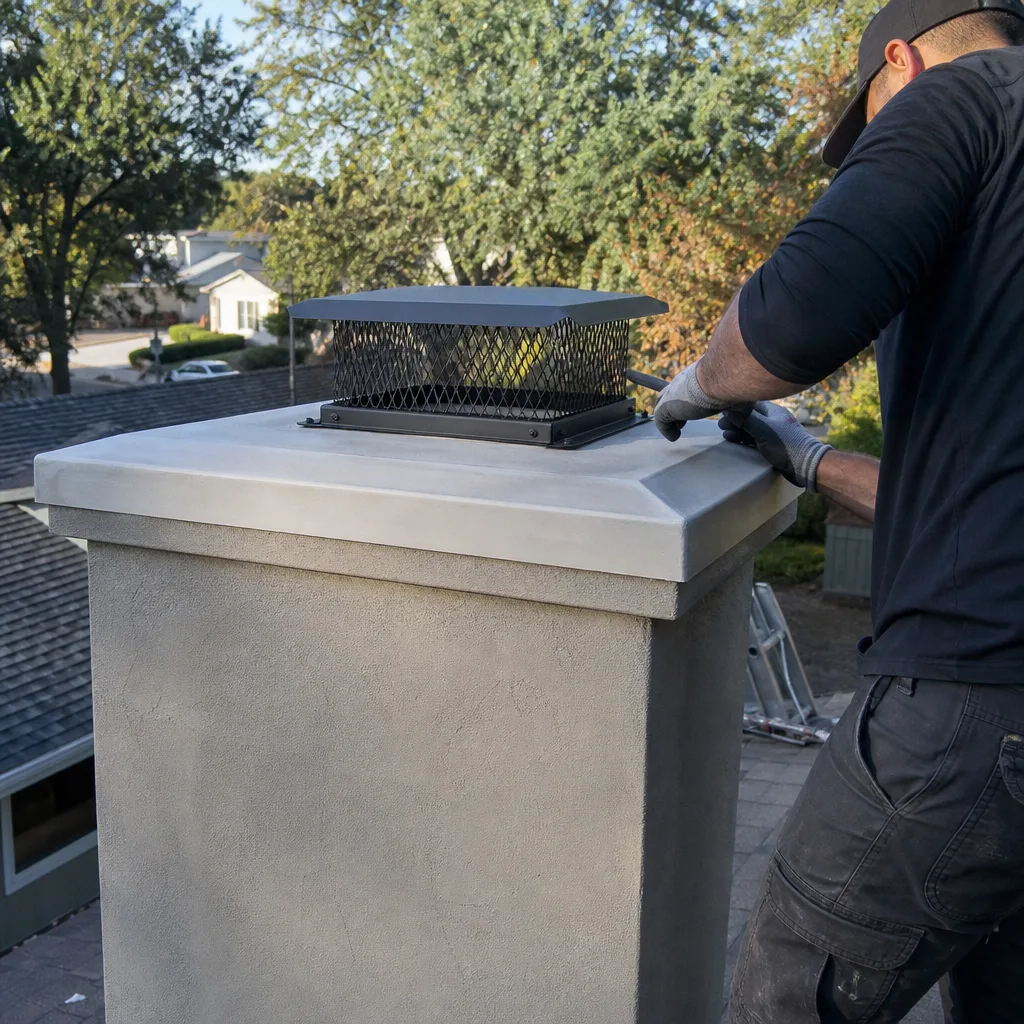
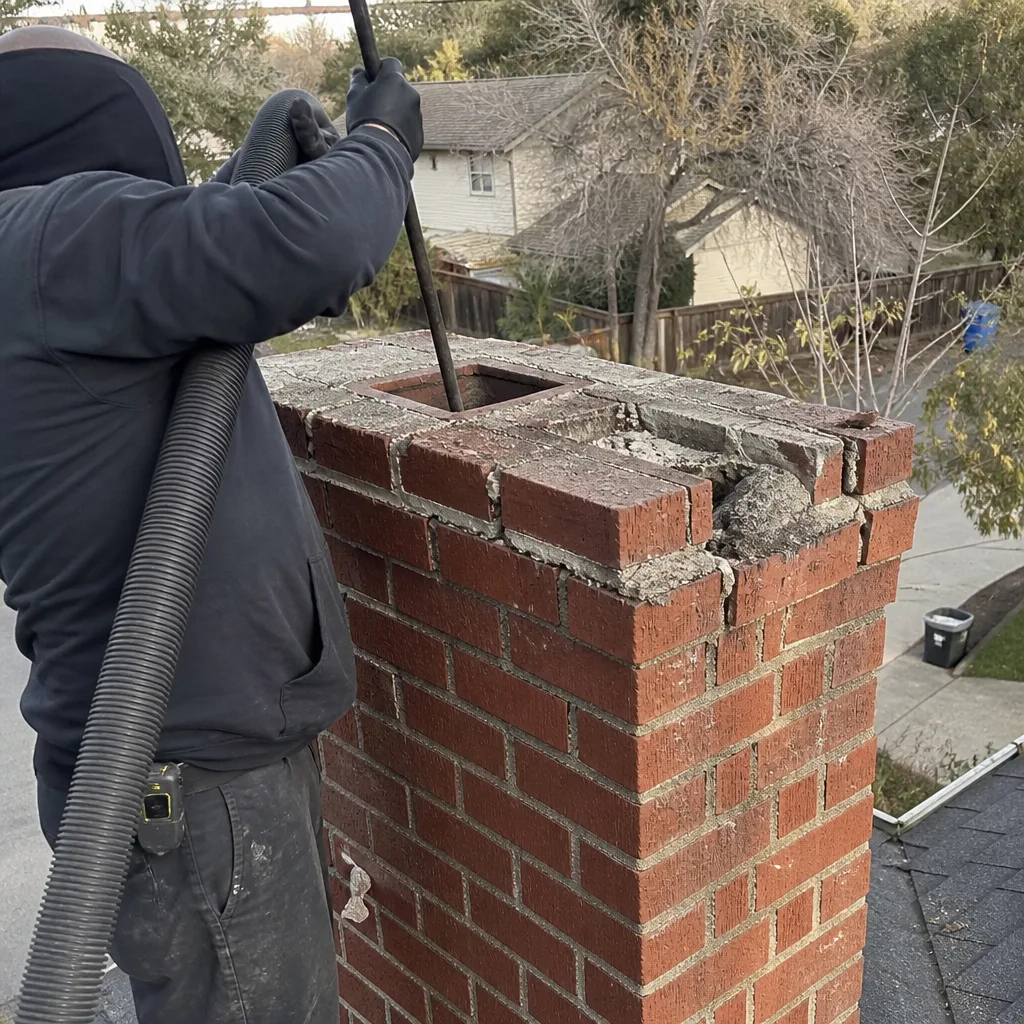
See the difference
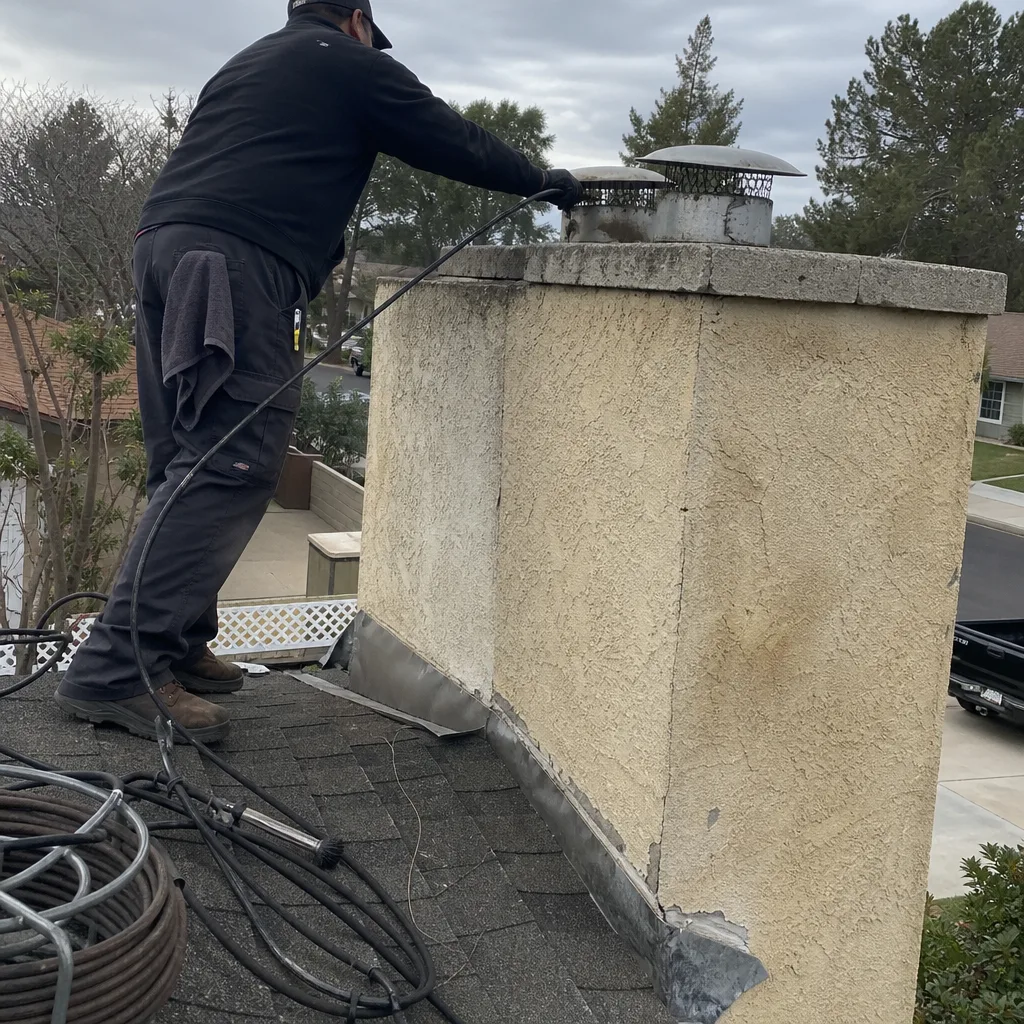 Before
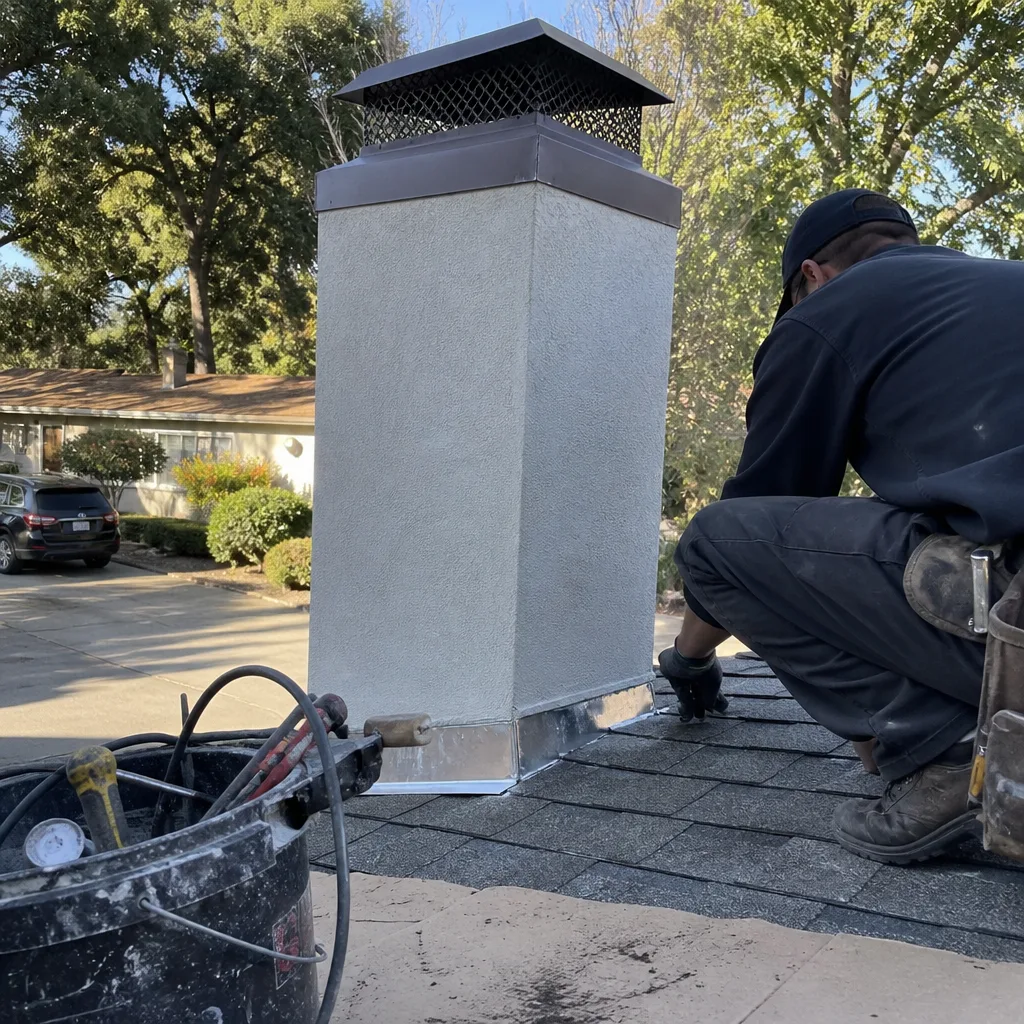 After
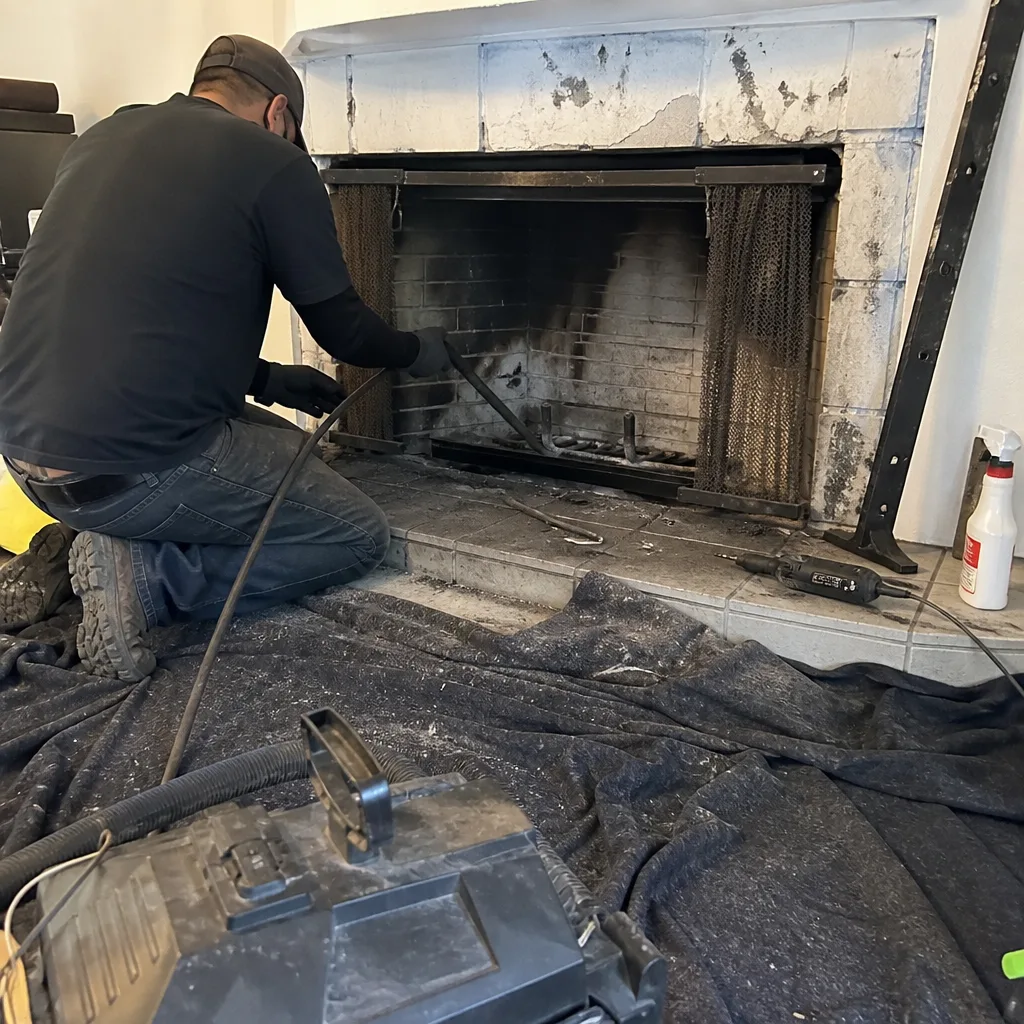 Before
 After
 Before
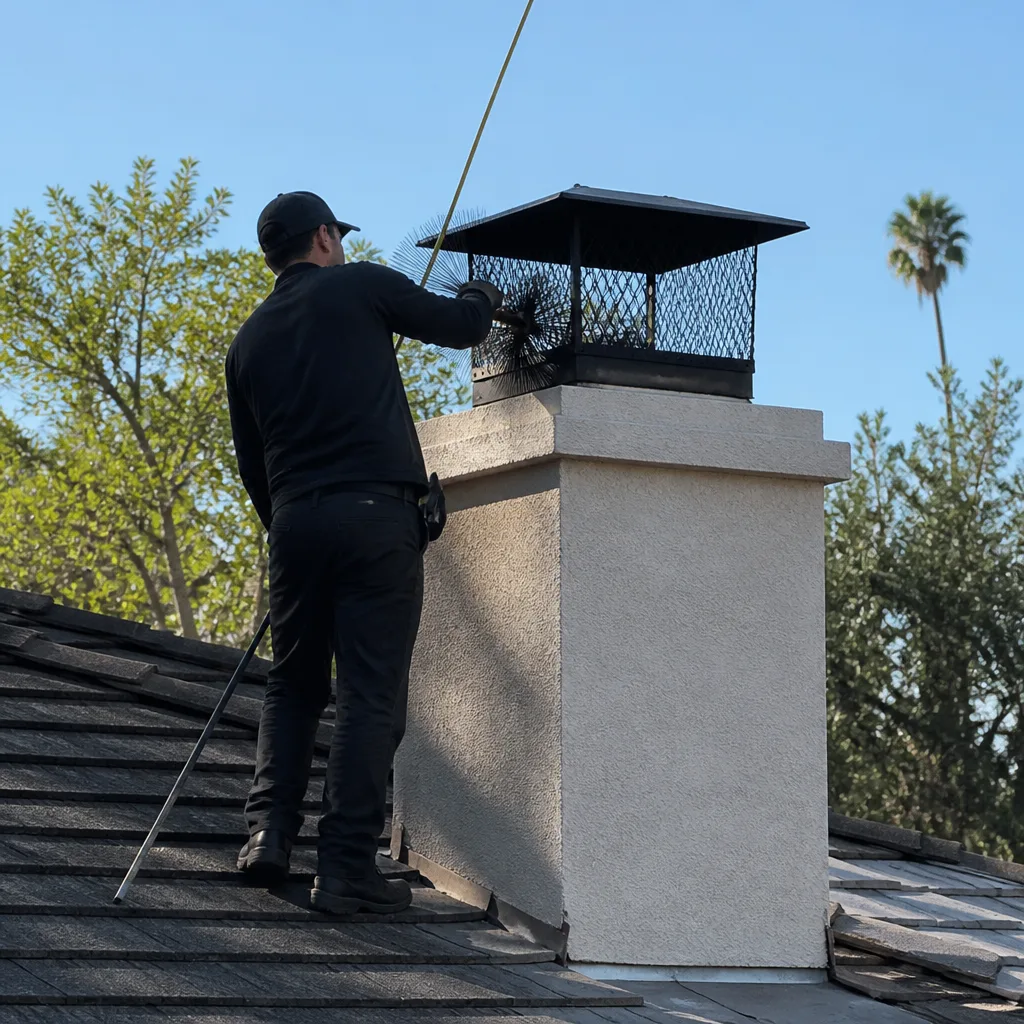 After
When to Call a Professional
Call a professional when you can’t answer the creosote stage question with confidence. Call when you haven’t had a camera inspection in two years or ever. Call when you burned more than two cords last season, when you see shiny deposits, when your damper sticks, when you smell smoke between fires, when the chimney is old and original, when you’re selling the house and need documentation, or when you simply don’t want to be on a roof with a brush. Any single one of these is sufficient. You don’t need to collect them all. Chimney Sweep Del Paso Park offers free estimates in Del Paso Park. Call (855) 341-8804 and we’ll give you an honest assessment of what your chimney needs, even if the honest answer is “nothing this year.”
Frequently Asked Questions
A professional chimney sweep in Del Paso Park typically runs between $150 and $350 depending on chimney height, creosote condition, and whether a camera inspection is included. DIY costs $30 to $80 for equipment plus your time. For an exact quote on your specific chimney, call (855) 341-8804. Estimates are free.
Yes, if your creosote is stage 1, your chimney is straight, you’ve had a professional inspection within two years, and you can clean from the firebox or a safe roof position. If any of those conditions is uncertain, the safer call is professional service. The risk isn’t the brushing itself. It’s brushing blind.
The NFPA recommends annual inspection and cleaning as creosote buildup indicates. For most Del Paso Park homeowners who burn a cord or two of seasoned wood per season, an annual sweep is sufficient. Heavy burners may need two per season. If you only use your fireplace occasionally, every other year may work, but get an inspection to establish baseline.
Visible cracks in the firebox, crumbling mortar, a cap that’s rusted or missing, water stains on the ceiling near the chimney, or a camera inspection showing cracked tiles or liner gaps. These are structural issues that brushing won’t fix. In our experience serving Del Paso Park, chimneys from the mid-century era often have original clay liners at the end of their service life.
Chimney cleaning logs chemically alter stage 2 creosote to make it easier to remove mechanically. They do not clean a chimney by themselves. If you use one, it should be followed by a physical brushing or a professional cleaning. Using a log and skipping the physical removal may leave treated creosote in place, which creates a different set of fire variables.
Creosote accumulates, and the risk of a chimney fire increases with each burning season. Stage 1 transitions to stage 2, which transitions to stage 3. At the same time, undetected structural problems like cracked liners get worse. The dangerous part is that none of this is visible from your living room. The chimney looks the same until the night it doesn’t.
The Bottom Line
The DIY chimney cleaning decision isn’t about confidence or money. It’s about information. If you know your flue has stage 1 creosote, no liner cracks, and a functional cap, a chimney brush is a legitimate tool and DIY maintenance is defensible. If you don’t know those things, brushing is risk masquerading as frugality. Get a professional baseline first. Get the camera record. Then decide. For Del Paso Park homeowners who burn wood, the smartest sequence is a professional sweep in early fall, an informed season of burning seasoned hardwood, and your own eyes on the firebox in between. Know exactly what’s inside your flue before the next fire season.
Written by the team at Chimney Sweep Del Paso Park, serving Del Paso Park since 2014.