
Last updated November 2, 2026
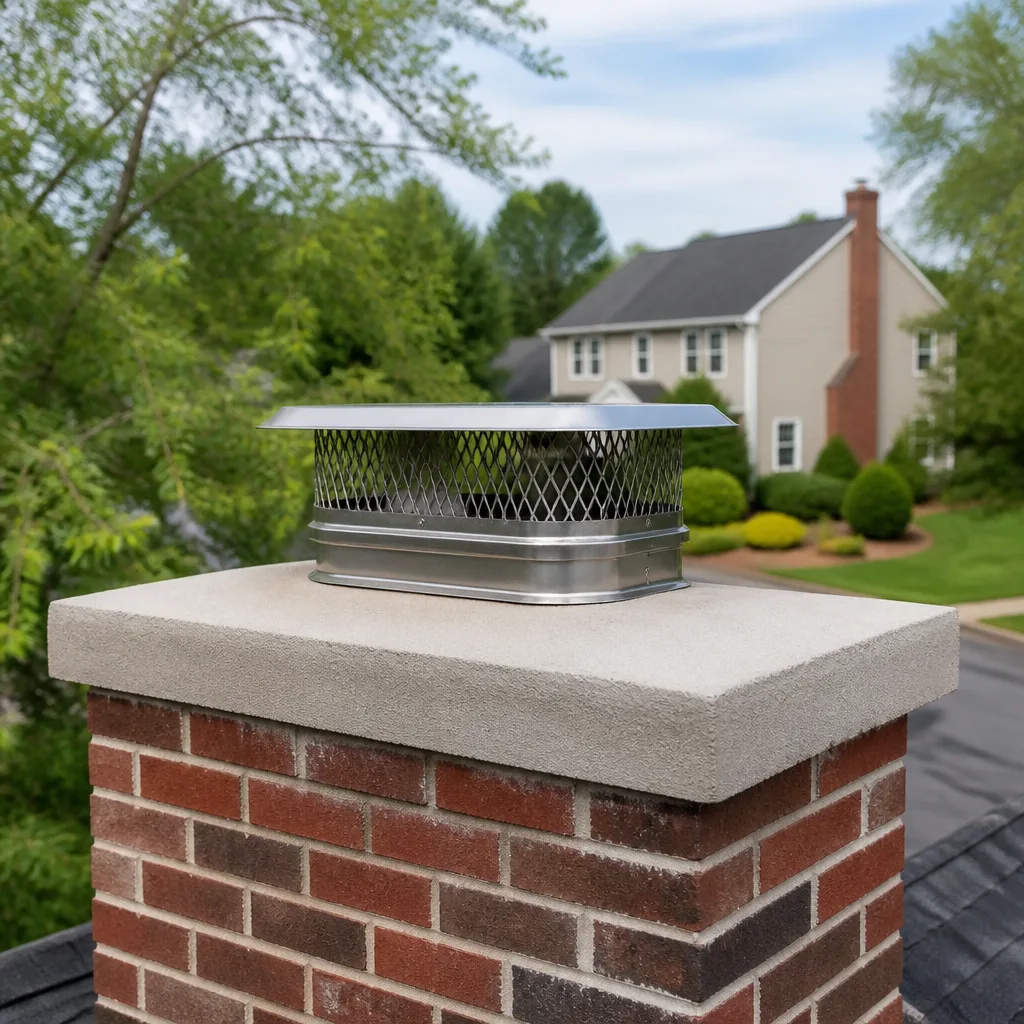 Sweep & inspection
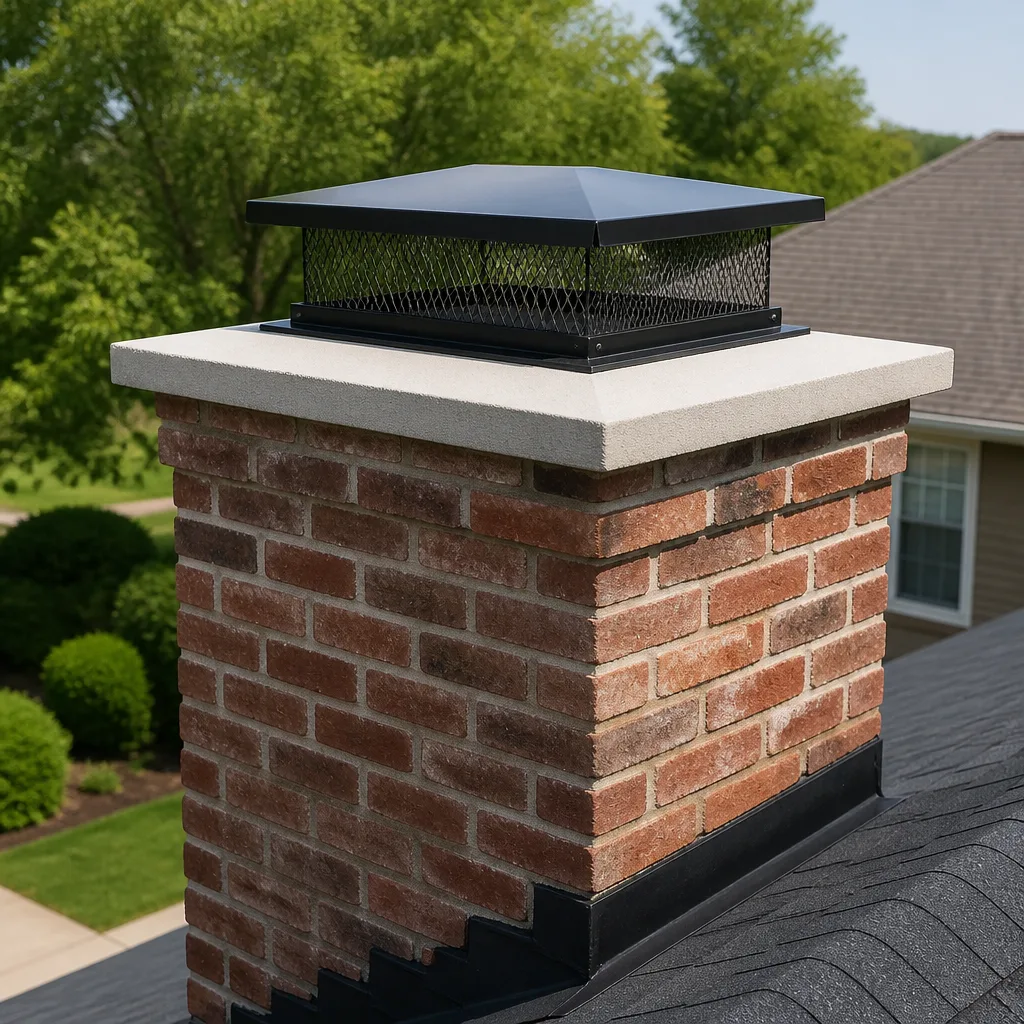 Caps & crowns
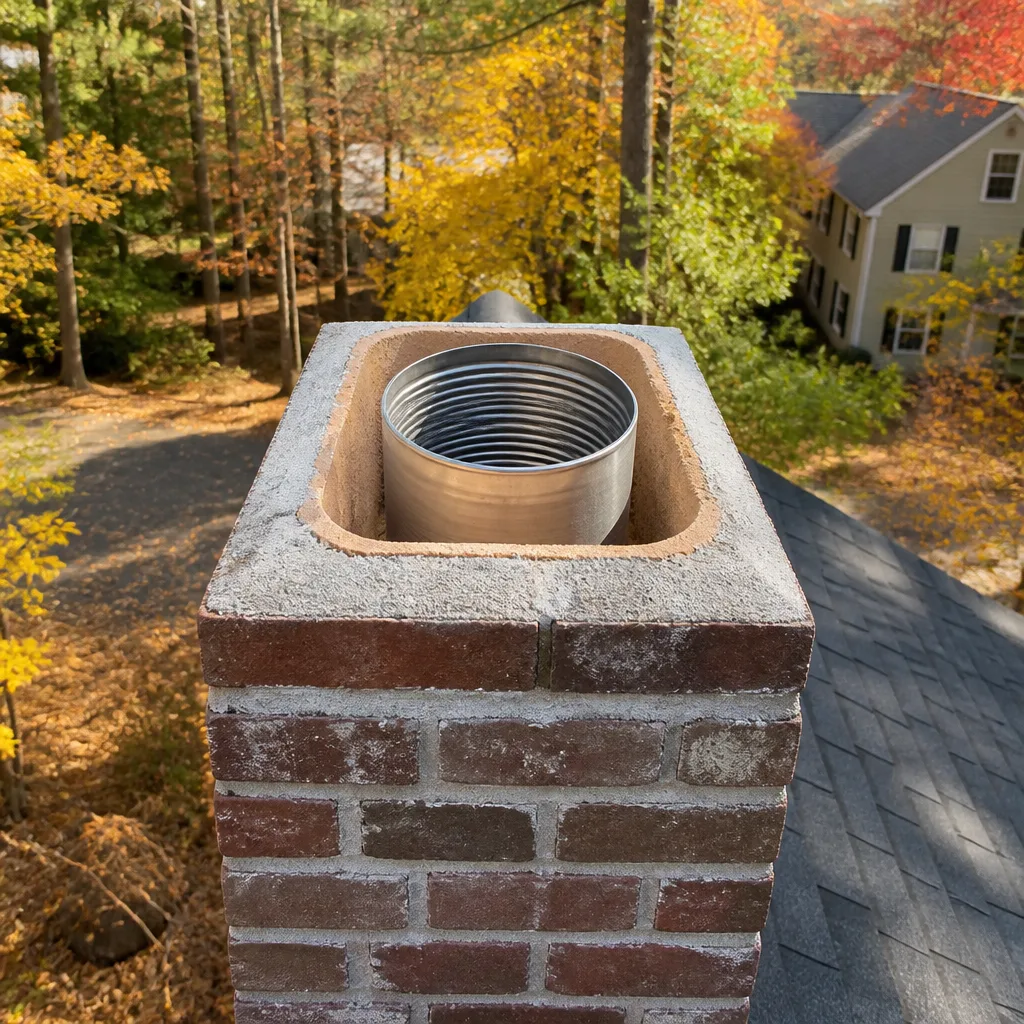 Flue relining
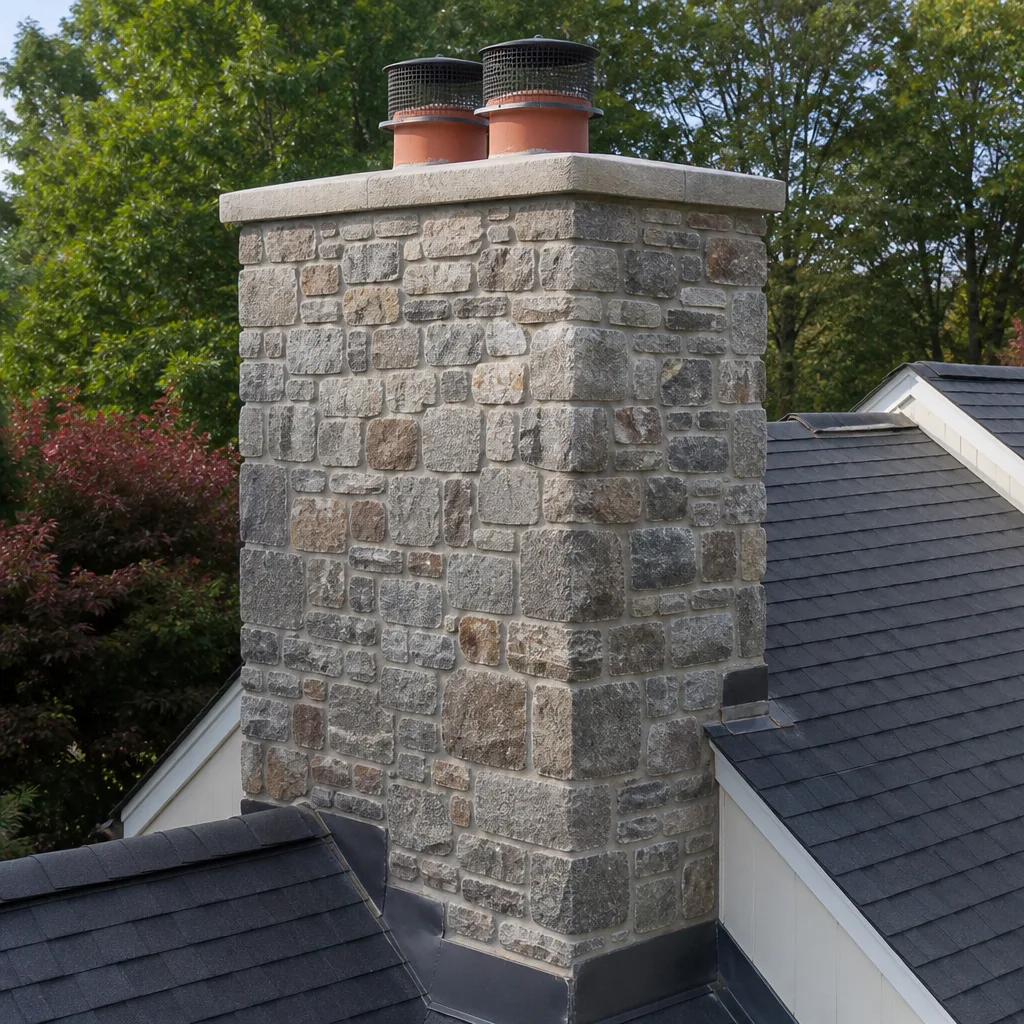 Masonry repair
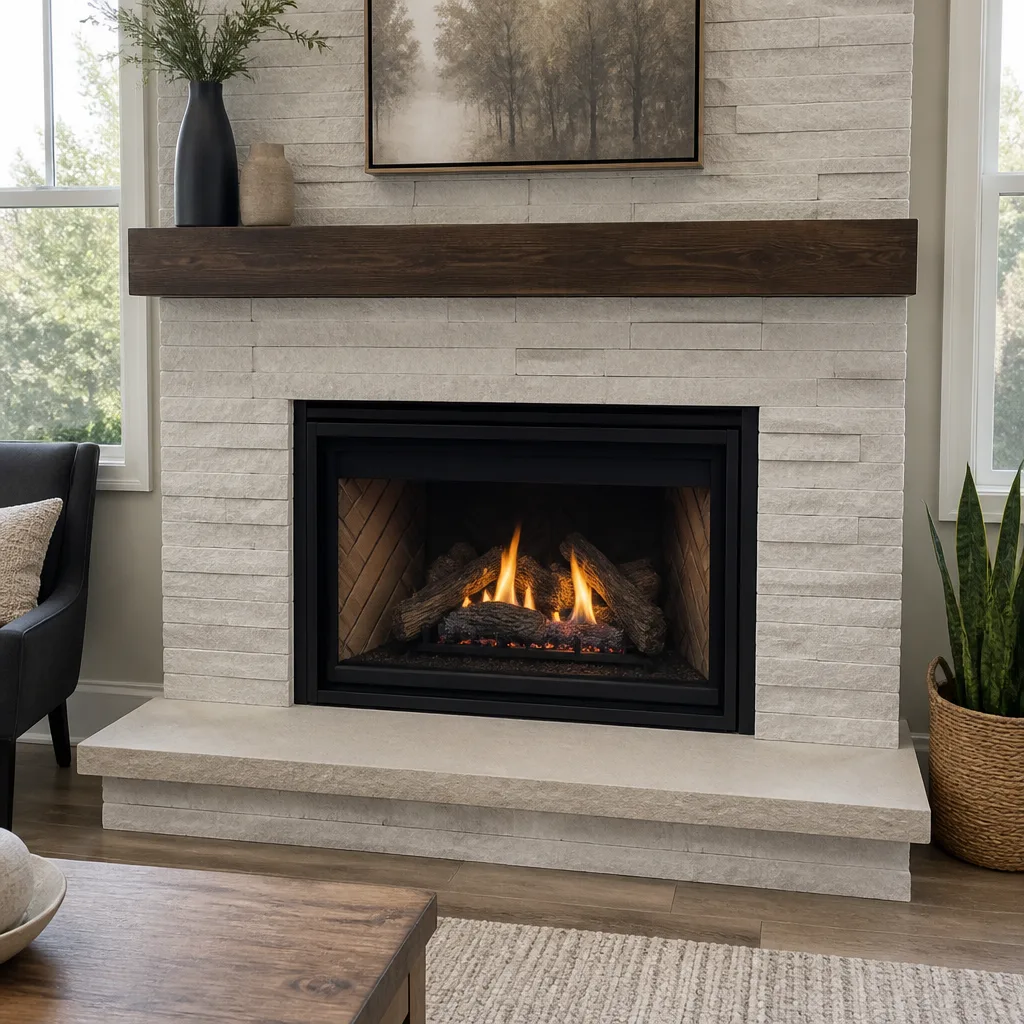 Gas fireplace service
Level 1 sweep and inspection to the NFPA 211 annual standard - flue, crown, cap, and flashing checked and photographed
Chimney sweep logs do not sweep chimneys. They loosen some creosote - which then falls where a brush and vacuum still have to collect it.
The Complete Chimney Sweep Guide for Del Paso Park Homeowners
Most chimney fires in California don’t happen because homeowners skipped cleaning. They happen because the inspection that should have followed the cleaning never did. Those are two separate steps, and most companies bundle them into one line item without explaining what you’re actually getting. This guide breaks down the full sequence, inspection to cleaning to repair, so you understand exactly what a chimney sweep in Del Paso Park should include and why the order matters. If you’ve ever wondered what’s actually happening inside your flue, or whether that quote you got was thorough or thin, this is written for you.
Quick Answer
A proper chimney sweep in Del Paso Park is a three-stage sequence: a Level 1 inspection to establish the system’s condition, a mechanical cleaning to remove creosote and obstructions, and a repair decision if the inspection surfaces damage. Expect to pay $180 to $340 for a standard sweep and inspection, and expect the whole job to take 60 to 90 minutes. The most important part isn’t the brushing. It’s what the technician documents before and after.
Styles & brands we work with
- Sweep & inspection
- Caps & crowns
- Flue relining
- Masonry repair
- Gas fireplace service
Table of Contents
- Why the Sequence Matters More Than the Sweep Itself
- What Del Paso Park Homeowners Burn (and What It Does to Your Flue)
- Stage One: The Level 1 Inspection
- Stage Two: The Mechanical Cleaning
- Stage Three: The Repair Decision
- Why a Camera Inspection Changes What You Know
- The Full-Cycle Advantage: Sweep to Repair, One Contractor
- Dryer Vents and Chimneys: The Same Physics
Why the Sequence Matters More Than the Sweep Itself
In our experience, the homeowners who get the most value from a chimney service are the ones who understand this: the sweep is just the middle step. What comes before it establishes what you know. What comes after it determines what you do. Skip the first step and you’re cleaning blind. Skip the third and you’re paying for information you never act on.
Here’s the sequence in plain terms:
- Level 1 inspection: A visual check of the accessible portions of the fireplace, flue, and exterior chimney. This establishes the baseline. It’s required before any cleaning.
- Mechanical cleaning: Brushes, rods, and a HEPA-filtered vacuum remove creosote, soot, and debris from the flue walls and smoke chamber. This clears the system enough to see what’s underneath.
- Post-clean findings: With the flue surfaces exposed, the technician can now see cracks, spalling, liner damage, or moisture intrusion that creosote was hiding.
- Repair decision: If findings are significant, a Level 2 inspection (which adds camera scanning) is the next step. If findings are minor, you schedule maintenance. If findings are none, you document the clean bill and move on.
The reason most Del Paso Park homeowners get shortchanged is simple: companies compress all of this into “sweep and go.” The brush goes up, the brush comes down, you get a receipt, and nobody mentions that the technician couldn’t actually see the top third of the flue or that the smoke chamber has a crack that’ll cost three times as much to fix next year.
Understanding the sequence means you can ask the right questions before you book: “Does your price include a Level 1 inspection?” “Will you document findings in writing?” “If you find damage, can you fix it, or do I need to call someone else?” The answers tell you everything about what kind of company you’re dealing with.
What Del Paso Park Homeowners Burn (and What It Does to Your Flue)
Sacramento Valley firewood is not the same as what national chimney guides assume you’re burning. The oak and almond wood common in Del Paso Park burns hot and dense, which is good for heat output and bad for creosote management in one specific way: it produces a hard, glazed creosote that forms faster than the fluffy, brushable kind most generic advice describes.
Here’s what matters for your chimney:
- Oak: Excellent firewood, but it needs a full two years of seasoning. Green oak smolders, and smoldering fires are the number one creosote producer. Many Del Paso Park homeowners buy “seasoned” oak that’s only been split for eight or nine months. That’s not seasoned. That’s a creosote factory.
- Almond: Common in the Central Valley, burns clean when dry, but the high sap content means any moisture at all creates sticky residue on flue walls. That residue catches and holds soot, which turns into glazed creosote faster than with pine or fir.
- Mixed loads: Burning oak one night and almond the next creates layered deposits. Each layer has different density and different burn-off temperatures. A brush removes some of it. A proper cleaning removes the layers before they fuse into a tar-like coating that requires chemical treatment or mechanical scraping.
The National Fire Protection Association recommends a sweep when creosote reaches 1/8 inch of buildup. In Del Paso Park, with oak and almond in the mix, we commonly see that threshold crossed in one season, not the two or three that national averages suggest. That’s not a scare tactic. It’s just what the wood does.
The practical implication: if you burn regularly from November through February, an annual sweep is not conservative in this specific area. It’s the correct interval. If you burn occasionally, every other year is defensible, but only if a camera inspection confirms the creosote is the brushable kind and not the glazed kind. The distinction matters more than most homeowners realize.
For a detailed look at what a standard service involves, see our Chimney Sweep in Del Paso Park page.
Stage One: The Level 1 Inspection
A Level 1 inspection is the entry point, and it’s the step most often skipped or skimmed. It involves examining all readily accessible portions of the chimney system: the firebox, the damper, the visible flue interior, the smoke chamber where visible, and the exterior chimney from the ground or roofline. The technician is looking for obstructions, creosote accumulation, and obvious damage.
Here’s what a technician is actually looking at, area by area:
- The firebox: Cracked firebrick, deteriorated mortar joints, gaps where the firebox meets the facing. These are the first places heat escapes into your home’s framing.
- The damper: Does it open and close fully? Is the metal warped from heat? A damper that won’t seal means heated air from your home escapes up the flue all winter, and a damper that won’t open means smoke backs up into the room.
- The flue interior: Creosote thickness and type, cracks in clay liners, spalling (flaking or breaking of the liner surface), any animal debris. This is where the brush will work, and where the camera matters most.
- The smoke chamber: The transition zone above the firebox where smoke compresses and accelerates. It’s the most common place for heat damage because the temperature change is most extreme here. If it’s never been parged or sealed, it’s often rough and creosote-laden.
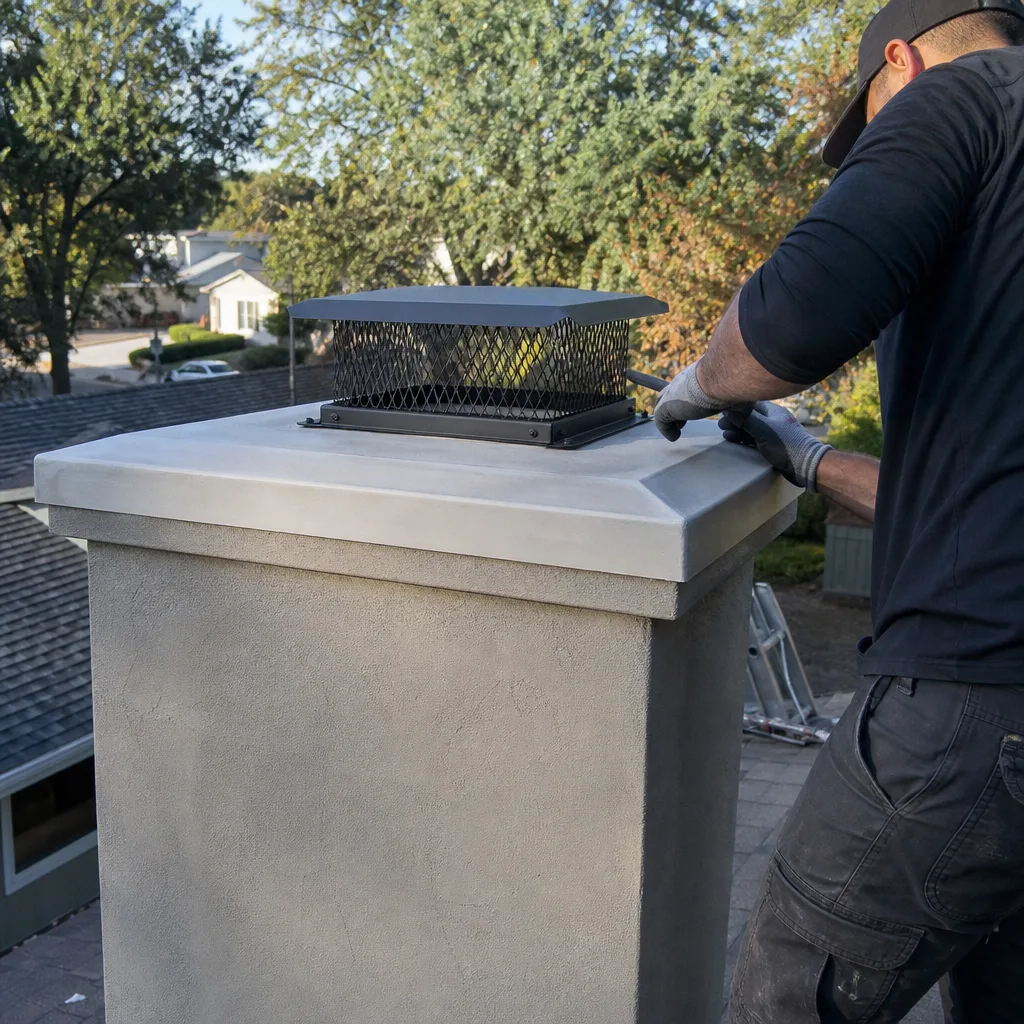
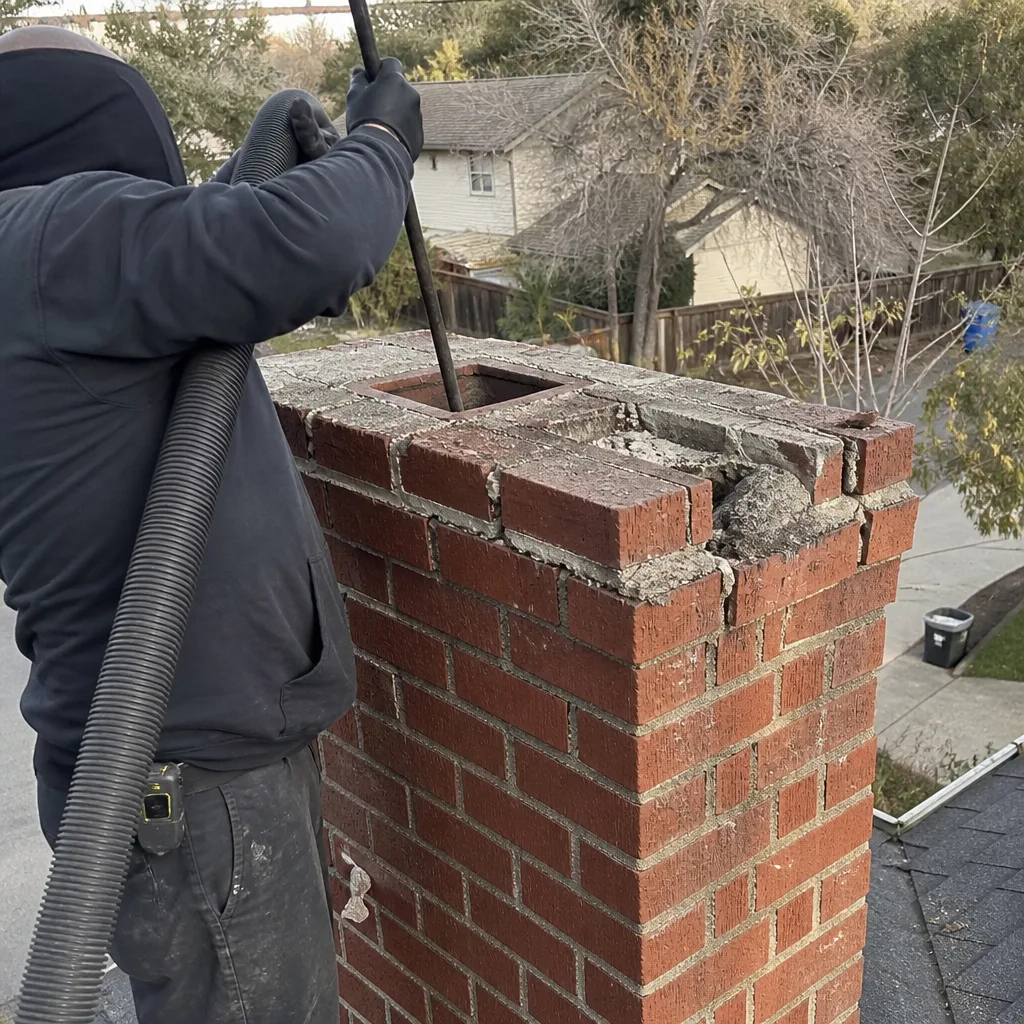
- The crown and exterior: The concrete crown at the top of the chimney, the mortar joints in the brickwork, the cap, and the flashing where the chimney meets the roof. Water entry through any of these points is the leading cause of structural chimney damage in Del Paso Park.
The Level 1 inspection is supposed to happen with every sweep. If a company isn’t doing one, or can’t describe what they’re looking for in each of these areas, they’re not offering the service you think you’re paying for. At Chimney Sweep Del Paso Park home, we treat the Level 1 as non-negotiable. We document what we find and what we couldn’t see, in writing, every time.
Stage Two: The Mechanical Cleaning
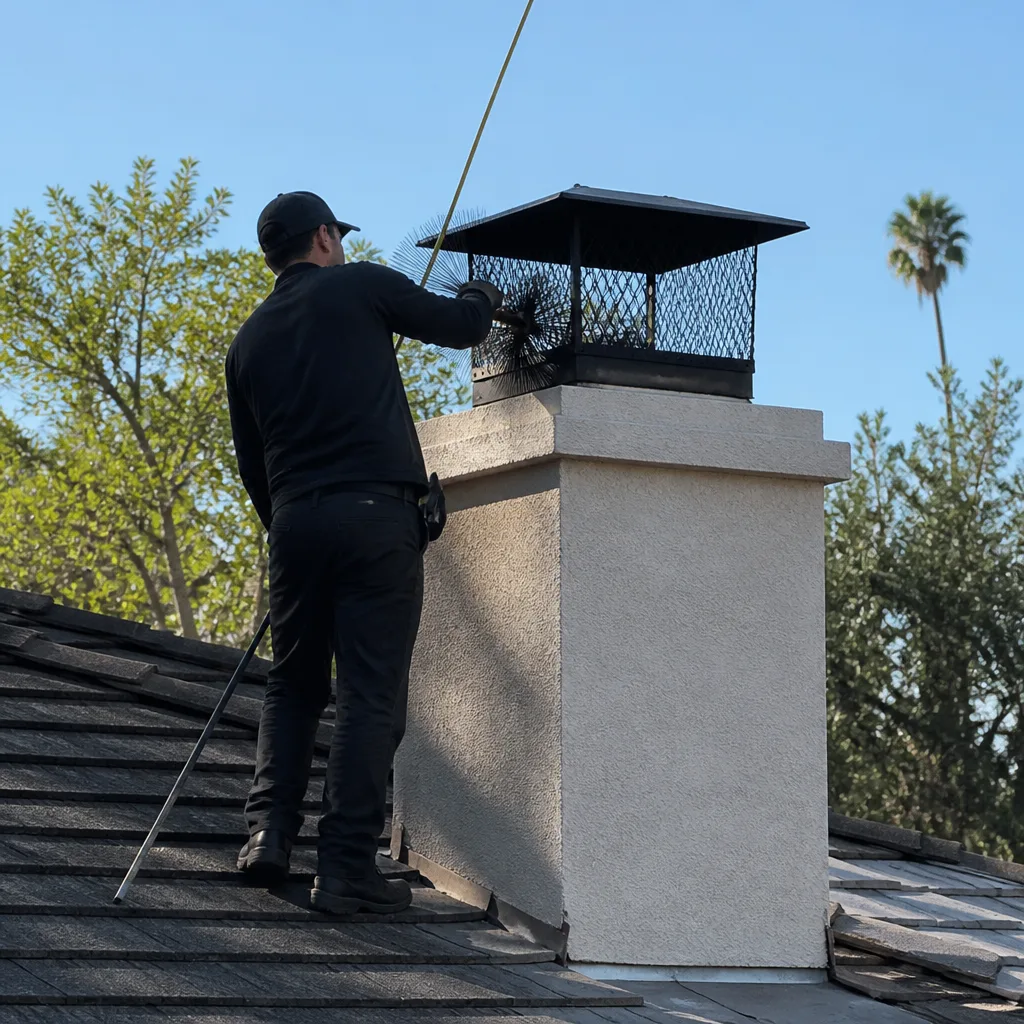
The cleaning itself is the most straightforward part of the sequence: wire or poly brushes sized to your specific flue dimensions, run from the bottom or the top depending on configuration, with a HEPA-filtered vacuum running to keep soot out of your living space. The goal is to remove creosote from the flue walls and clear the smoke chamber of accumulated debris.
Here’s the step-by-step of what should happen during a professional sweep in a Del Paso Park home:
- Protection setup: Drop cloths around the firebox opening, a specialized vacuum with a HEPA filter positioned to capture airborne soot, and the damper area sealed off. You should be able to run a white glove over furniture in the same room after the job. If you can’t, the setup was inadequate.
- Mechanical brushing: The technician runs appropriately sized brushes through the full length of the flue, from the firebox or the roofline. This is the core of the cleaning. Creosote that’s soft and powdery comes out with minimal effort. Glazed creosote may require repeated passes or a different approach entirely.
- Smoke chamber cleaning: This area often gets skipped by sweep-only companies because it requires different tools and positioning. But the smoke chamber collects creosote at the same rate as the flue, sometimes faster. A thorough cleaning includes this area.
- Debris removal: The vacuum captures what the brush dislodges. A good technician will show you the collection canister afterward so you can see exactly what came out of your chimney. You have a right to know what was actually in there.
- Final visual pass: After the brushing, the technician re-inspects the accessible flue surfaces. This is the moment when damage that creosote was hiding becomes visible. Cracks, liner damage, moisture staining, all of it shows up now in a way it didn’t before.
The cleaning is important. But in our experience, it’s the least interesting part of the job. What matters more is what cleaning reveals. The brush removes the buildup, and then you can finally see the structure underneath. That’s where the real decisions get made.
Stage Three: The Repair Decision
After a cleaning, every chimney falls into one of three categories, and it’s the technician’s job to help you understand which one is yours:
- Clean and functional: No damage found, creosote removed, damper working, no water intrusion. You document the result, you know your maintenance interval, and you’re done. This is the best-case scenario.
- Minor issues to monitor: Small hairline cracks in the crown, minor mortar degradation, a cap that’s aging but still intact, or a damper that’s slightly out of alignment. These aren’t urgent, but they’re on a timeline. Getting them addressed within a year prevents them from becoming category three.
- Repair required: Significant liner damage, a crown that’s failing, water intrusion that’s actively breaking down the masonry, or safety issues with the firebox. This is where a Level 2 inspection with a camera becomes essential, because the extent of the damage needs to be documented before a repair plan can be built.
The most common gap in the traditional chimney industry is the space between category three and the fix. A sweep-only company identifies the problem, writes it in a report, and walks away. You’re left holding a recommendation you don’t understand, a price quote from a company you’ve never met, and a chimney you can’t safely use until the work is done. That’s not how it should work.
Our chimney repair in Del Paso Park service exists specifically because our technicians kept running into this gap. When we find damage, we can discuss repair options on the spot. We know the same system we just cleaned. We’ve seen the inside of your flue. The repair conversation starts with that context, not from a cold-call quote.
HeatShield resurfacing is one example of a repair capability that changes the calculus. For a chimney where the clay liner has deteriorated but the structure is otherwise sound, HeatShield is a manufacturer-backed resurfacing system that restores a smooth, insulated surface without demolition. Most homeowners have never heard of it because most chimney companies can’t install it. But it can mean the difference between a multi-thousand-dollar relining and a restoration that costs substantially less.
Why a Camera Inspection Changes What You Know
Here’s the uncomfortable truth about chimneys: the human eye can only see so far. From the firebox, a technician can see the first few feet of the flue. From the roof, the top few feet. Everything in between is guesswork, especially on chimneys with clay liners and multiple offsets. On a chimney over 20 years old in Del Paso Park, what you can’t see is where most of the damage lives.
A Level 2 inspection adds camera scanning to the process. A high-resolution camera runs the full length of the flue, documenting the condition of every inch in real time. The technician isn’t describing what they think they saw. They’re showing you the footage.
This matters for three specific reasons:
- Verification: When someone tells you your liner is cracked and you need a repair that costs thousands of dollars, you shouldn’t be taking it on faith. Camera footage shows you the crack. You can see it with your own eyes. That’s the difference between a recommendation and evidence.
- Hidden damage: Cracks that develop mid-flue, between the firebox and the crown, are invisible from both ends. These are also the cracks most likely to allow heat and gases through to the chimney structure. A camera finds them. A visual inspection from the roof does not.
- Documentation: A camera inspection creates a baseline record. When we re-inspect in three years, we can compare against the previous footage and see exactly what’s changed. Without that baseline, every inspection starts from zero. With it, you can track deterioration objectively.
If your chimney is older than 20 years, or if you’ve bought a home with a chimney you’ve never had inspected, a sweep without a camera is incomplete by definition. The brush will clean the surfaces you can reach. But it won’t tell you what’s happening in the middle third of the flue, and that middle third is where the most serious thermal damage typically occurs in Sacramento Valley chimneys.
The Full-Cycle Advantage: Sweep to Repair, One Contractor
The most expensive words in chimney maintenance are nice and short: “call someone else.” Every time a problem gets identified but handed off, three bad things happen:
- Information loss: The second contractor never has the full picture from the first. They’re working from a summary, not from firsthand knowledge of your system.
- Delay: You call, schedule, wait, get quoted, maybe debate it, maybe put it off. Each lost month is a month of winter approaching. Del Paso Park fire season doesn’t wait for anyone’s schedule.
- Responsibility gaps: The sweep company says they cleaned it properly. The repair company says they fixed what they were told to fix. If something gets missed in between, nobody owns it.
The alternative is simple: the same crew that cleans the chimney also repairs it. The technician who sees the liner crack inside your flue is the same company that specifies the repair, orders the material, and does the work. There’s no handoff, no information loss, and no gap between identifying a problem and resolving it.
This is why we’ve structured the company the way we have. From sweep to repair, handled by the same crew. The DuraFlex and Olympia Chimney components we stock for relining jobs, the HeatShield products we install for flue resurfacing, the Gelco and Copperfield materials we use for crowns and caps, these are professional-grade lines used by certified chimney professionals nationwide. We use them because we’re accountable for the result. If the repair fails, we can’t blame it on a subcontractor. We did the work, we chose the materials, and we’re the ones who answer the phone.
Dryer Vents and Chimneys: The Same Physics
Dryer vents and chimneys share the same risk: blocked airflow and heat buildup. The source is different, but the mechanism is identical. A chimney fire and a dryer fire are the same event in different places: combustible material accumulates in a confined space, heat can’t escape, and eventually ignition happens.
According to the NFPA, clogged lint buildup in dryer venting is the leading cause of dryer fires. Lint is the dryer vent’s creosote. It’s highly flammable, it accumulates in layers, and it has a specific ignition temperature that is reached when enough of it builds up in a restricted space.
Our dryer vent cleaning in Del Paso Park service exists alongside the chimney work because the failure modes are the same, and the prevention is the same. You clear the blockage before it becomes a fire, and you inspect the venting to catch damage before it becomes a failure. A homeowner who understands chimney sequence immediately understands dryer vent sequence. The steps are parallel: inspect, clean, repair if needed.
Most chimney companies don’t touch dryer vents. Most dryer vent companies don’t touch chimneys. We do both because the person who understands airflow and fire risk in one system understands it in the other. Tightly scoping to these three interconnected services, chimney sweeping, dryer vent cleaning, and chimney repair, means the technicians are specialized, not spread thin across unrelated trades. It keeps the expertise narrow, not the coverage.
Common Mistakes to Avoid
- Burning green or wet wood: Del Paso Park oak that’s been split less than two years, or almond that got rained on and didn’t dry out, produces more smoke and more creosote than properly seasoned wood. If you’re paying for an annual sweep but burning wet wood, you’re working against yourself.
- Skipping the inspection to save money: A sweep without a Level 1 inspection is cheaper but tells you nothing about the system’s condition. You saved $40 and learned zero. The inspection is the valuable part.
- Accepting a quote without camera footage: If a company recommends a liner replacement and can’t show you the footage that supports it, get a second opinion. You’re not being difficult. You’re being a responsible homeowner.
- Ignoring water damage: A cracked crown or loose flashing seems like a roof problem, so people put it off. But water entering the chimney structure breaks down mortar through freeze-thaw cycles every Sacramento winter. Five years of ignoring a $200 crown repair becomes a $3,000 masonry rebuild.
- Running a dryer without knowing the vent is clear: You can’t see the inside of your dryer vent without a camera. The lint trap catches some lint, but not all of it. Annual cleaning is the only way to know what’s built up in the run to the exterior.
- Waiting until November to book: Every Del Paso Park chimney company gets slammed when the first cold snap hits. Book in August or September, when the schedule is open and there’s plenty of time to address repairs before burning season. When in doubt about what you’re dealing with, schedule an inspection before the season starts.
See the difference
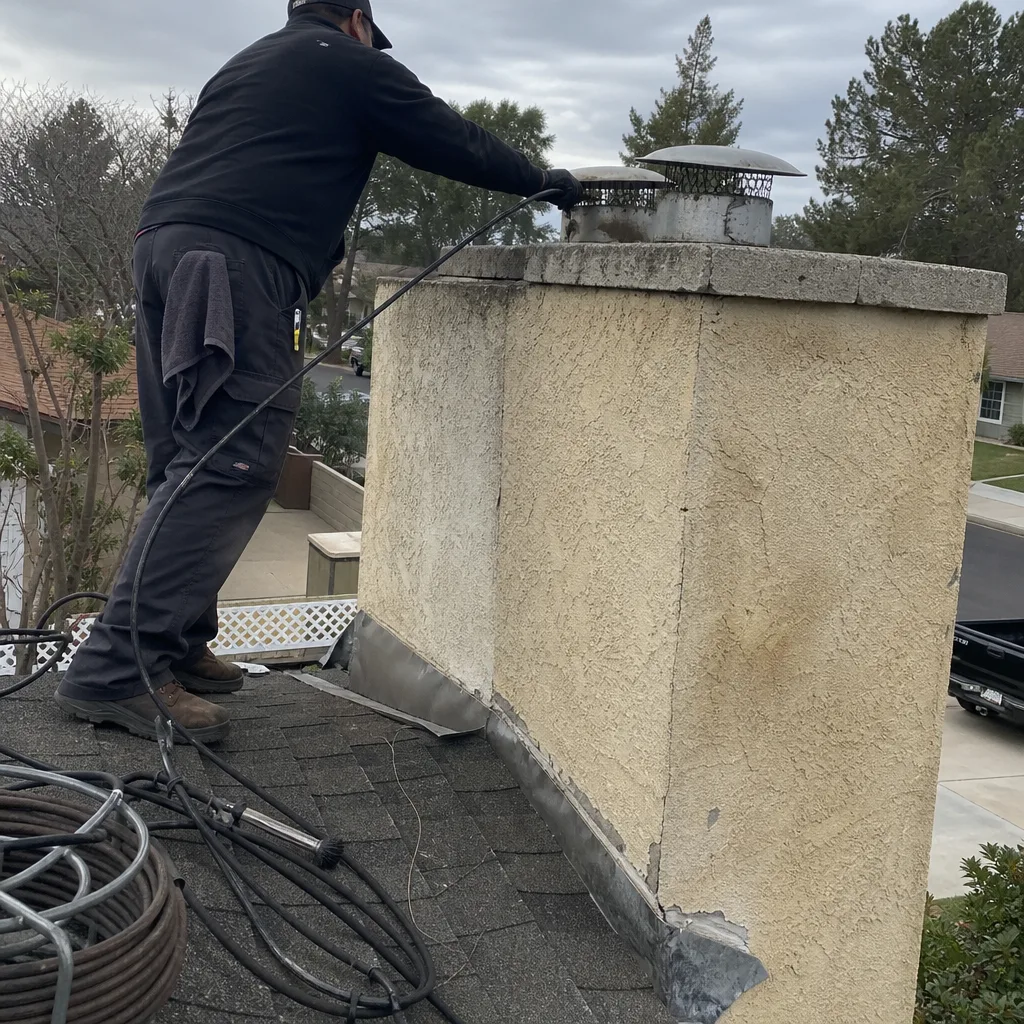 Before
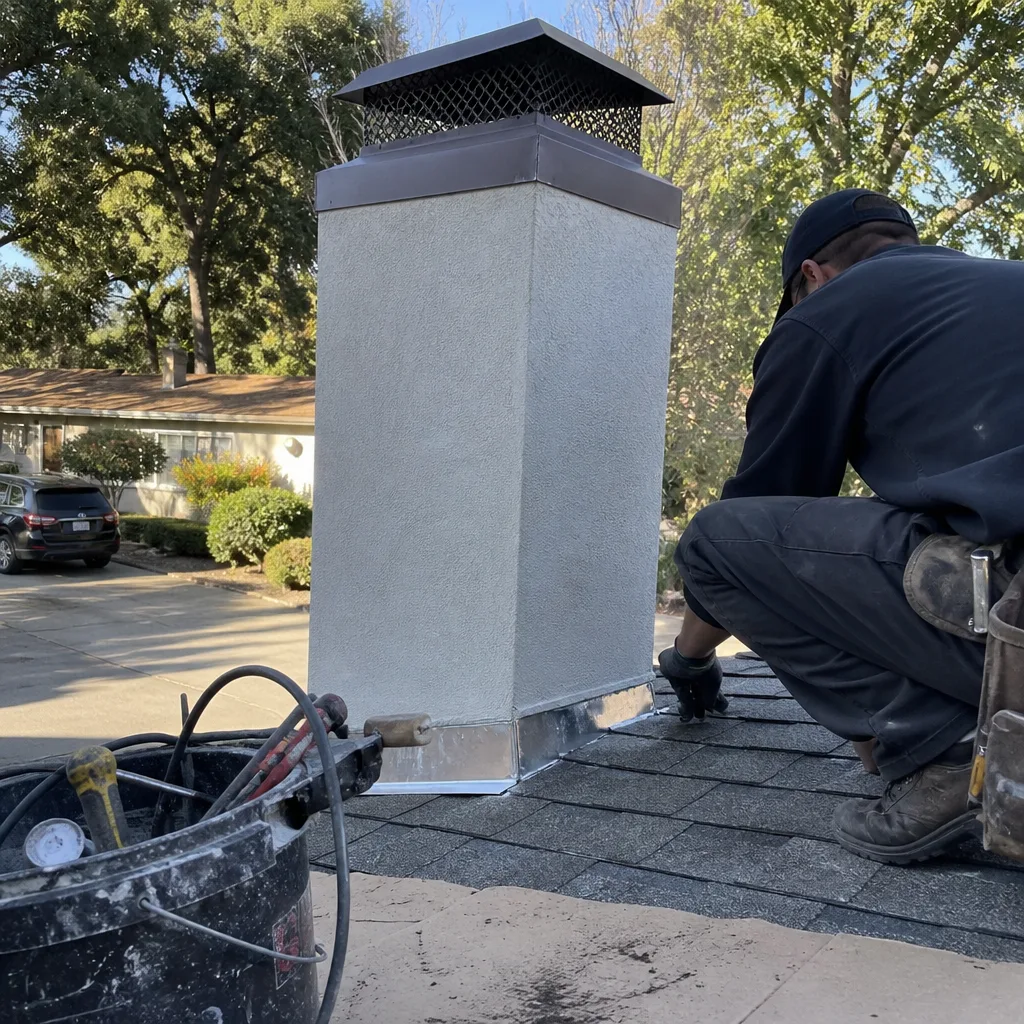 After
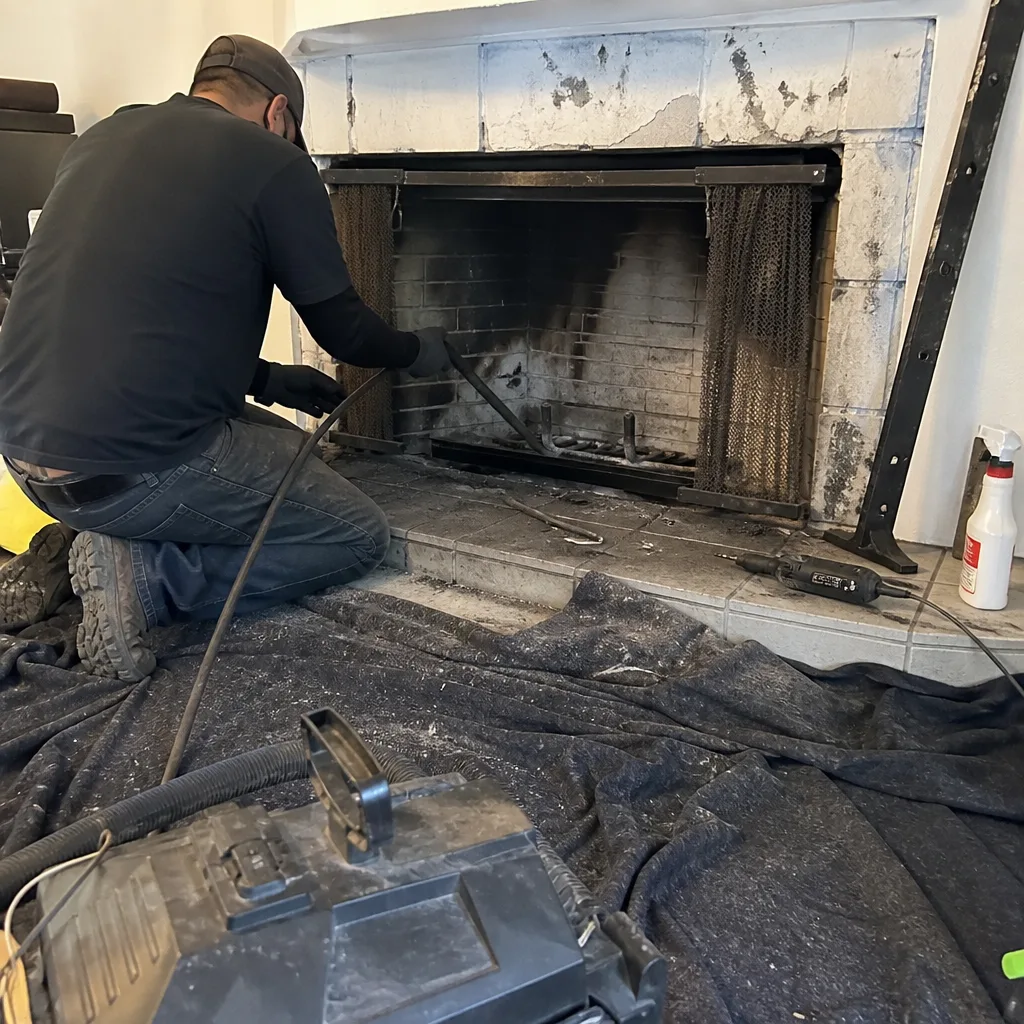 Before
 After
 Before
 After
When to Call a Professional
Call when you notice any of these: smoke entering the room instead of rising up the flue, a strong burning smell even when there’s no fire, visible soot staining around the firebox, water streaks on interior walls near the chimney, crumbling mortar on the exterior brick, or a dryer that takes longer than 45 minutes to dry a normal load. Any of these signals that the system isn’t venting properly. Chimney Sweep Del Paso Park offers free estimates in Del Paso Park. Call (855) 341-8804 and we’ll assess what you’re dealing with.
Frequently Asked Questions
A chimney sweep and Level 1 inspection in Del Paso Park typically costs $180 to $340, depending on the flue configuration, the amount of creosote present, and whether additional cleaning of the smoke chamber or crown is required. A Level 2 inspection with camera scanning adds cost to the base sweep. Call (855) 341-8804 for an exact quote. Estimates are free.
If you burn regularly through the fall and winter in Del Paso Park, an annual sweep is the correct interval due to the creosote-heavy nature of local oak and almond wood. If you burn occasionally or only during holidays, every other year may suffice, but only if a camera inspection confirms the buildup is the brushable kind. The NFPA recommends a sweep at 1/8 inch of creosote buildup, regardless of time interval.
Maybe, but not necessarily. A cracked clay liner in a chimney over 20 years old often does require attention, but it doesn’t always mean a full replacement. HeatShield resurfacing can restore many damaged liners without demolition, and it costs substantially less than a traditional reline. The only way to know is a camera inspection that shows the condition of the full flue, not just the ends. Don’t accept a liner recommendation without seeing the footage.
Creosote accumulates in layers, glazed creosote becomes harder to remove over time, and eventually the buildup reaches a point where a single hot fire can ignite it. A chimney fire can exceed 2,000 degrees Fahrenheit inside the flue, which is hot enough to crack clay liners and transfer heat through the surrounding structure. The fire may not burn your house down. The cracks it leaves behind might. Call (855) 341-8804 to get your chimney inspected before you light the first fire of the season.
Not always, but often. The cleaning and a Level 1 inspection happen in the same visit. If the repair is minor, crown sealing, cap replacement, mortar touch-up, it can sometimes be scheduled immediately or within days. If the repair is major, like a reline or HeatShield resurfacing, it gets scheduled as a separate appointment. The important part is that the same company handles both, so the repair starts from the technician’s firsthand knowledge of your system, not from a secondhand report.
Watch for these signs: drying time creeps past 45 minutes for a normal load, the dryer exterior gets unusually hot during a cycle, the laundry room smells musty when the dryer runs, or the exterior vent flap doesn’t open fully during operation. Any of these suggests restricted airflow from lint buildup. Annual dryer vent cleaning is the right interval for most Del Paso Park households, and it’s the single most effective thing you can do to prevent a dryer fire in your home.
The Bottom Line
A chimney sweep is not one service. It’s a sequence: inspect, clean, and repair if findings require it. Understanding that sequence protects you from the two most common failures in the chimney industry: paying for a cleaning that tells you nothing about your system’s condition, and being handed a repair recommendation you can’t verify. In Del Paso Park, where oak and almond wood create creosote faster than national norms suggest, the sequence matters more than most homeowners realize. Know what you’re paying for. Demand documentation. And when something needs fixing, use a contractor who can fix what they find. Call (855) 341-8804 to get your chimney inspected before the season turns. We don’t just clean, we inspect and fix what we find.
Written by the team at Chimney Sweep Del Paso Park, serving Del Paso Park since 2014.